









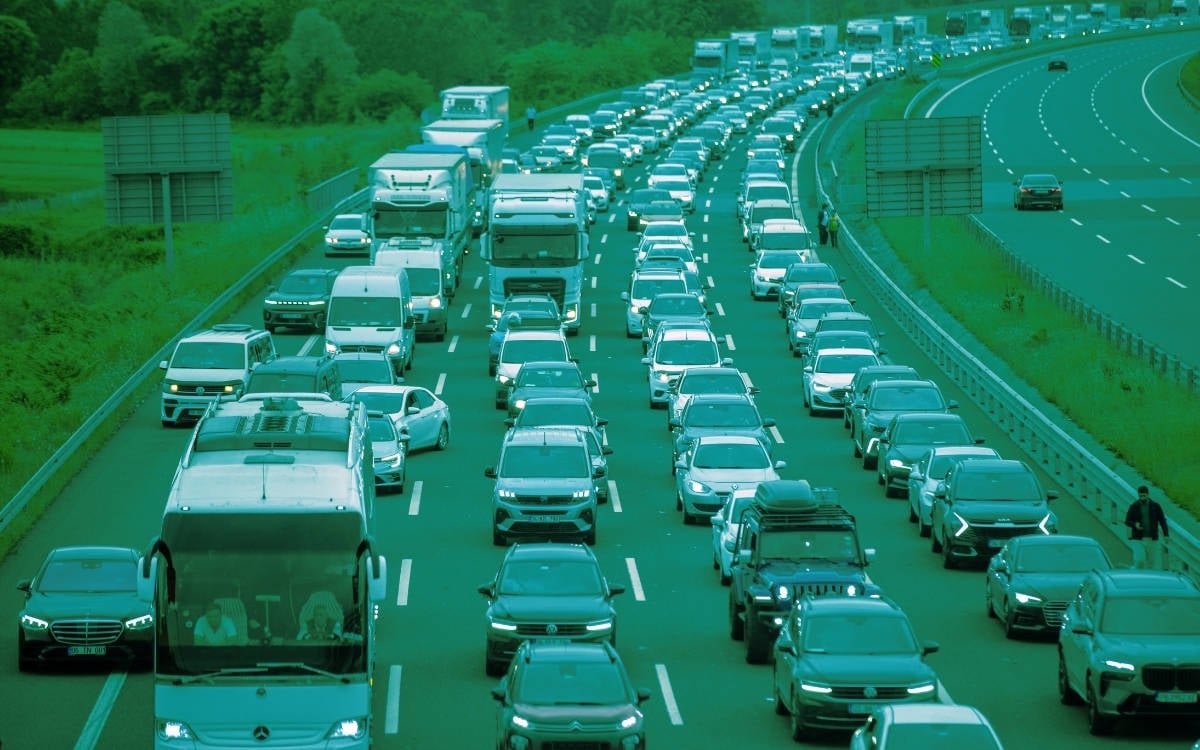



In line with its 2053 net-zero targets, Turkey must also achieve a comprehensive transformation in the transportation sector, which accounts for approximately 25% of its emissions. However, a study by Prof. Dr. Hediye Tüydeş Yaman and Dr. Gülçin Dalkıç Melek from Middle East Technical University (METU) reveals that the barriers to low-carbon transportation policies are not solely due to technical reasons. Various factors—such as rapid urbanization, rising private vehicle ownership, road-centric infrastructure, and negative perceptions of public transportation—are complicating this transition.
According to the study published in the special issue titled “Place-based Decarbonization” of the peer-reviewed journal Journal of Transport Geography, while transportation demand in Turkey is growing rapidly alongside economic growth and urbanization, this growth relies heavily on private vehicle use. The perception that public transportation systems are inadequate in terms of comfort, safety, and accessibility reinforces this trend. The study also highlights that incentives for air travel and decades-long road-centric transportation policies have limited the development of low-carbon alternatives such as rail and maritime transport.
The research emphasizes that Turkey also possesses significant opportunities for a low-carbon transportation transition. The tech-savvy nature of the young population, along with investments in smart transportation systems and electric vehicles, offers potential for this transformation. However, technical innovations alone are not sufficient for a lasting solution. According to the study, a genuine transformation in transportation can only be achieved by strengthening public transit, promoting pedestrian- and bicycle-oriented mobility, and developing policies tailored to the local conditions of cities. Achieving this transformation is critical not only for meeting climate goals but also for building more livable, accessible, and sustainable cities.
Second only to energy in emissions
The transportation sector, one of the most critical areas in the fight against climate change, is responsible for approximately 25% of global greenhouse gas emissions. However, the transformation of this sector is not an issue that can be resolved solely through technological innovations. Since transportation is a system directly shaped by economic growth, urbanization, and social preferences, policies aimed at reducing carbon emissions must also take this multi-layered structure into account.
In developing countries like Turkey, this balance is even more delicate. Economic growth, rising income levels, and urbanization are rapidly increasing transportation demand. While this growth supports mobility and economic vitality on one hand, it drives up energy consumption and carbon emissions on the other. Therefore, the fundamental question remains relevant: How can emissions be reduced while meeting the growing demand for transportation?
Private vehicle ownership is rising
The study reveals that private vehicle use is steadily increasing in Turkey. Economic growth, rising income levels, and the perception of the automobile not merely as a means of transportation but also as a symbol of social status are reinforcing this trend.
Negative perceptions regarding the quality of public transportation services, however, stand out as a significant obstacle. In particular, the fact that urban public transportation systems are not considered sufficiently comfortable, safe, or accessible is driving up demand for private vehicles.
This creates a vicious cycle in urban transportation: As private vehicle ownership increases, demand for and investment in public transportation may weaken; as the appeal of public transportation diminishes, private vehicle use becomes even more widespread.
Transportation infrastructure cannot keep pace with rapid urbanization
The rapid urbanization process experienced in recent years is also one of the most significant barriers to low-carbon transportation. The rapid growth of urban populations due to rural-to-urban migration and the horizontal expansion of cities are increasing travel distances. This situation not only makes it difficult to plan public transportation systems effectively but also makes private vehicle use more “necessary.”
Especially in cities growing without proper planning, the inability of public transportation infrastructure to keep pace with this growth is one of the key factors driving emissions increases.
Road-centric transportation infrastructure limits transformation
For many years, Turkey’s transportation infrastructure has developed largely with a focus on roads. This situation, which limits the development of lower-carbon alternatives such as rail and maritime transport, has resulted in high emissions in both passenger and freight transport.
The neglect of railway infrastructure in the past has increased dependence on road transport, particularly for freight. Gaps in connections between ports, logistics hubs, and railways further hinder the widespread adoption of more sustainable transportation options.
However, the issue is not limited to physical infrastructure alone. Institutional structures and policy design also play a decisive role in the process. The study reveals that measurable targets, concrete indicators, and monitoring mechanisms are often missing from policy documents.
Additionally, inter-agency coordination issues and the inadequacy of data collection and management systems make it difficult to develop effective policies. In particular, there is a lack of reliable and comprehensive data regarding transportation-related emissions. This makes it difficult to both accurately analyze the situation and measure the impact of policies.
Solutions tailored to local conditions must be developed
The transformation needed in Turkey’s transportation sector encompasses strengthening public transportation systems, developing rail and intermodal transportation, and setting measurable policy targets. However, perhaps the most critical point is the necessity for these policies not to be one-size-fits-all.
Cities in Turkey possess significantly different economic, spatial, and social characteristics. Therefore, low-carbon transportation policies must be sensitive to local conditions and developed through place-based approaches.
(TY/VK)

