









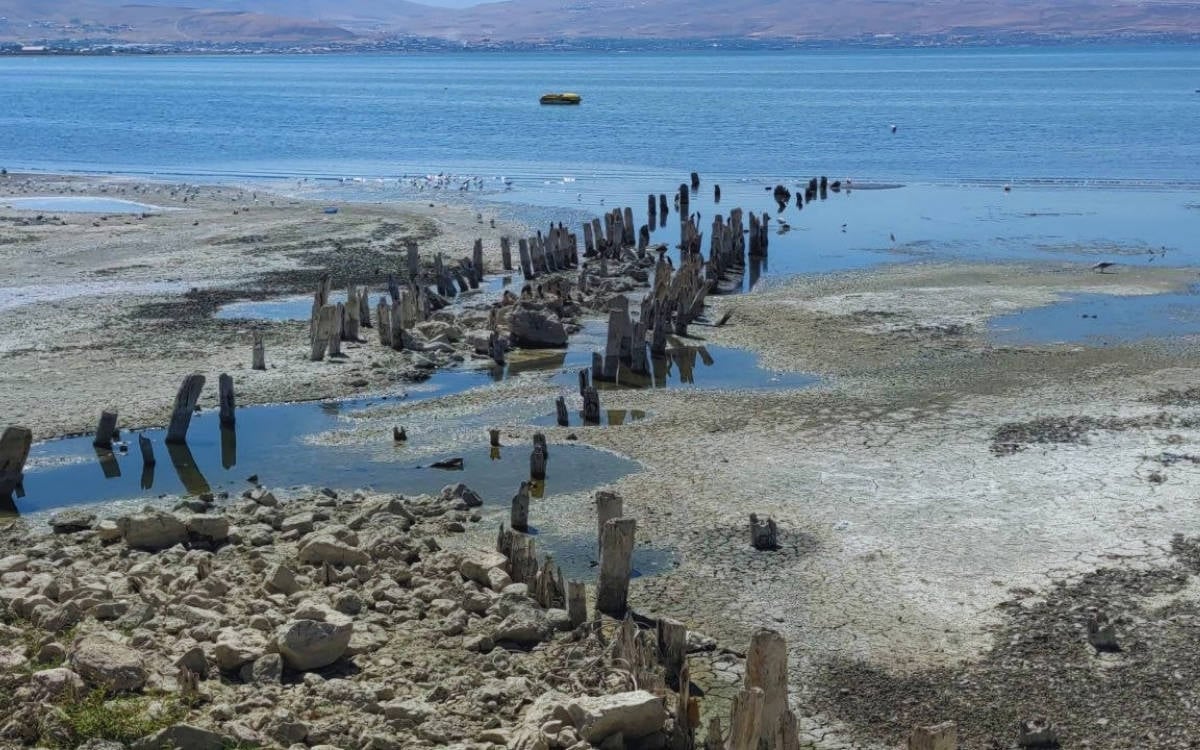



Although the heavy rainfall in the early months of 2026 and the observed increase in reservoir levels created a temporary sense of optimism that the effects of drought in Turkey were easing, long-term analyses of hydrological systems show that the picture is not as reassuring as it might seem. This is because the problem is no longer merely a decrease in rainfall during specific periods; rather, it is the soil, ecosystems, and the water cycle being driven into an increasingly deep and persistent drought regime.
Due to its location in the Eastern Mediterranean basin, Turkey is situated in one of the regions where the effects of climate change are felt most acutely. Rising temperatures in recent years, rainfall patterns signaling change, and prolonged heatwaves are making the country’s hydrological balance increasingly fragile. According to data from the General Directorate of Meteorology, the 2024–2025 period stands out as one of the driest phases of the past half-century. During this period, many major cities—particularly Istanbul and Ankara—faced severe water stress, and reservoir levels in many major cities dropped to critical thresholds.
However, the truly critical point is that even the rainy period in 2026 provided only limited relief in many regions. This situation indicates that drought in Turkey is no longer merely a matter of temporary meteorological fluctuations; it points to a more permanent and structural hydroclimatic transformation. Long-term drought index analyses reveal that, particularly since 2018, both the spatial extent and persistence of drought signals have increased significantly. In other words, Turkey is entering an increasingly widespread and chronic aridity regime.
The soil is drying silently
To understand the true extent of drought, looking solely at precipitation amounts is insufficient. This is because hydrological systems do not store and record precipitation instantaneously, but over long time scales. Therefore, soil moisture is one of the most critical indicators for predicting both drought and the resulting changes in wildfire regimes.
Regional soil moisture loss over the past 10 years based on Copernicus data (Prepared by: Bikem Ekberzade).
Analyses based on Copernicus’s latest soil moisture data indicate that a significant moisture loss has occurred across most of Turkey during the 2015–2025 period. It is clearly evident that these losses accelerate further during the summer months and the wildfire season. The drying trend over the past 10 years is also clearly reflected in a decrease of approximately 17.7% in the annual average soil moisture, 19.2% during the wildfire season, and 23.1% during the summer period.
This change is not limited to a mere numerical decline. The decrease in soil moisture increases water stress on plants, alters evapotranspiration processes, and makes forests far more vulnerable to fire. The trend of moisture loss observed in forested areas of the Black Sea Region indicates that fire risk is no longer limited to regions experiencing seasonal drought, such as the Mediterranean Region.
More importantly, ecosystems can no longer compensate for this loss in the short term.
'Drought memory': Nature does not forget the stress it has experienced
The concept of “drought memory” refers to the ability of hydrological systems to carry the stress of past droughts for years.
Our delayed correlation analyses across different time scales reveal that short-term (3–9-month) meteorological droughts weaken relatively quickly; in contrast, long-term hydrological drought signals (24–48 months) can persist in the system for years. Particularly in long-term drought analyses, it shows that water loss in the deeper layers of the soil does not disappear even after a year has passed, and that nature continues to carry this water crisis within itself, despite superficial short-term recoveries.
The practical implications of this situation are quite critical: Forest ecosystems enter the new fire season under water stress despite annual regional rainfall. In other words, the risk does not start from zero every summer; the accumulated hydrological stress from previous years carries over into new fire seasons. Therefore, a single rainy year is not sufficient to eliminate chronic drought conditions.
The carbon dioxide paradox: greener forests, greater risk
Climate change isn’t just causing a drying effect; it’s also creating a paradox. Rising carbon dioxide levels in the atmosphere can temporarily accelerate plant growth in some ecosystems. Forests may appear denser, more closed-in, and “greener.” While this process may seem positive at first glance, it brings a different danger to regions where drought persists: excessive fuel accumulation resulting from increased biomass and subsequent rapid drying.
In other words, more vegetation does not always mean a healthier ecosystem in the long term. Especially in areas where fragmentation of forested areas (due to road construction, infrastructure projects, urbanization, etc.) is significant, this biomass can turn into a massive fuel reserve for large wildfires as long as water stress persists.
The major wildfires that occurred around Bursa, Bilecik, and Eskişehir in 2025, resulting in loss of life, clearly demonstrated just how devastating the consequences of this hydroclimatic pressure can be. Drought, ecosystem degradation, and fire regimes have now evolved into a mutually reinforcing feedback loop: drought and forest fragmentation weaken vegetation cover; weakened ecosystems become more vulnerable to fire; and fires further disrupt soil water-holding capacity and hydrological balance. Unless this cycle is broken, it seems likely that we will face even larger and more destructive fire seasons in the future.
Turkey needs a new fire and water policy
The emerging picture shows that Turkey can no longer address climate risks solely through a “disaster management” perspective. This is because the current approach is largely reactive; that is, it only kicks in after a fire breaks out, dams run dry, or a crisis becomes visible. Yet under the new climate regime, risks manifest much earlier, through accumulations observed in early warning signals.
Therefore, it is now clear that the traditional management approach, based solely on past fire records, is insufficient. To anticipate future risks, it is necessary to jointly assess hydroclimatic trends, soil moisture dynamics, ecosystem stress, forest fragmentation, and the physiological responses of vegetation.
In particular, forested areas—especially those in watersheds, enclosed regions, and karstic zones that support groundwater—as well as old-growth forest systems and all ecosystems with high carbon storage capacity, must now be viewed not only as environmental assets but also as strategic hydrogeological security zones.
Could COP31 be a turning point?
The 31st Conference of the Parties (COP31) to the United Nations Framework Convention on Climate Change, to be held in Antalya in 2026, could mark a significant milestone for Turkey. This is because Turkey is no longer merely a country “affected” by climate change; like many countries in the Mediterranean region, it has become a hydroclimatic hotspot experiencing water stress, ecosystem fragility, and shifts in fire regimes.
For this reason, COP31 is not merely a diplomatic event; it could be a critical opportunity for Turkey to revisit and redefine its own climate adaptation strategy with future generations in mind. The approach that treats disaster management, forestry, water policies, and climate adaptation as separate, independent fields no longer appears sustainable. What is needed in the coming period is an integrated hydroclimatic risk management framework capable of evaluating ecosystems and climate together.
Because the situation we face in Turkey today demonstrates that drought is no longer merely a temporary meteorological event that can be explained solely by a lack of rainfall. The process has now evolved into a multi-layered hydroclimatic crisis spanning from soil moisture to forest ecosystems, and from water management to fire regimes. When considering the “drought memory” that ecosystems have developed over time, it is clear that a single rainy season is insufficient to alleviate the accumulated stress. This is a reality well-known to us researchers who study the new fire regimes emerging under the lens of a changing global climate. What Turkey needs in the coming period is a science-based, integrated approach to water and disaster management that centers ecological cycles.
(TY/VK)

