













This interview, conducted in Dec 2025 amid ongoing protests in Iran, was first published in Persian in May on the Iran-based website Neemaad.
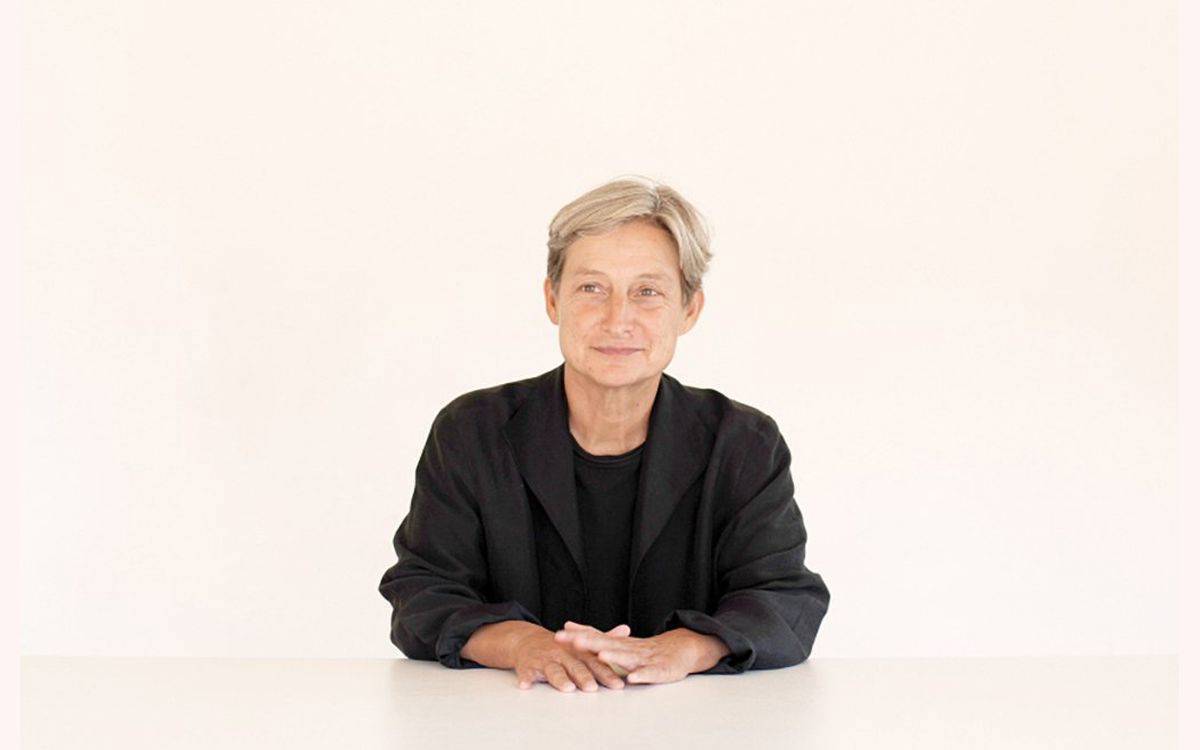
We spoke with Judith Butler, one of the world’s most influential contemporary thinkers, about mourning, survival and collective life under persistent violence. Drawing on their work on precarity, assembly and political grief, Butler reflects on how people preserve one another, build solidarity and sustain the possibility of a shared future amid repression, economic hardship and the threat of war.
Butler also argues that resisting war is an international responsibility, particularly for those outside Iran, warning that imperial expansion would deepen exploitation and create a new class of deprived workers rather than delivering freedom.
In Iran, many of those who have lost their lives in recent years were young people whose lives had barely begun to take shape. At certain moments, death has appeared not as a singular shock, but as an ongoing condition rather than an event. How do you think about mourning in such contexts—when what is lost is not only individual lives, but entire futures, and when grief itself risks exhaustion?
In situations of war but also in the ongoing state violence against the people, the scene of loss pervades the sense of past, present, and future. Those who have already died deserve to be mourned, but in the very time that is takes to mourn, new losses take place. So one is mourning and suffering fresh loss at the same time, which means that there is no proper time for mourning. Perhaps mourning becomes coextensive with life. In addition, one anticipates fresh loss in the future, since the killing and maiming is not stopping. So one tries to stop to mourn those one has loved and lost only to suffer a fresh violence and to anticipate, with ready rage and grief, the losses to come. It is important to remember that mourning is a collective activity, and collectives can renew one another through such gatherings. And the gathering is a form of equality, but also a way of honoring loss, and uplifting each other – or it should be!
In several of your works, you argue that political life emerges not only through demands or programs, but through bodies appearing together—often in moments of vulnerability, loss, or grief. In contexts like Iran, where collective gathering is dangerous and political organization is repeatedly disrupted, how can shared mourning give rise to a sense of political “we” without hardening into exclusion, retribution, or new forms of violence?
In Iran, you are struggling for a new economy, a new democracy free of imperial interventions and monarchic nostalgia. The people have a right to decent wages, food, freedom from political violence, and access to a public sphere in order precisely to determine their own political future and to discover, apart from any fear of retribution, who the people are and who they wish to be. So, outside the public sphere, in the networks that you have, is a nascent public sphere. You are still connected and engaging in collaborative action when you can, and each time that happens, a potential public sphere is illuminated. That you hold in each other’s hearts, I am sure.
For many people in Iran, everyday life unfolds under ongoing insecurity, unresolved trauma, and economic strain. Survival is not a temporary moment but a prolonged condition—yet it remains entangled with the desire for change or resolution. How can we understand agency in such contexts, where staying alive and preserving meaning coexist with, and often strain against, the repeated deferral of political and social resolution?
Staying alive is its own accomplishment under such dire conditions, under economic conditions that intensify deprivation and precarity, and under political and military conditions in which the people are regularly targeted by armed forces willing to maim and kill. Staying alive is not a simple act, since one stays alive for others, and one is helping others to stay alive. So if the state devalues the life of the people, the people can value each other’s life, through networks of care and support, but also of courage and persistence.
Can we think of persistence as part of 'staying alive'? And how do forms of collectivity emerge to help keep each other alive?
That is already a form of world-building. But the people can only build that world if the US and imperial powers leave it to the Iranian people to decide their political future and if the state relinquishes its power to exploit and deprive its people of a living wage. To take on such a struggle, one must keep each other alive – it is a way of laying a foundation for the future struggle.
With the possibility of war constantly looming—whether through regional escalation or foreign intervention—many people live in a condition of suspended time. How does ethical life take shape when planning, attachment, and commitment must all be made under the constant possibility that the future may be abruptly withdrawn?
My understanding is that you are living through this condition together, those of you who are still living. So the task may be to make sure you are not isolated in your anxiety, but gaining and giving strength to each other. Powers across the world should oppose the prospect of war, and that is an international obligation at this time. But there is so much wanton self-interest among the imperial powers, so much shameless imperial expansion into markets that will only produce a new class of deprived workers, that we have to fight at that level as well. Those of us who are outside need to assume that responsibility.
Many Iranians describe language itself as risky—to speak can be dangerous, but silence also carries loss.
Yes, to speak carries many risks if you will be punished intensely for having spoken. So it is important to find ways to speak, or to express oneself in ways that also secure your lives. It is an impossible bind, I can imagine. But it is necessary to “get out the word” and for many people outside of Iran to stand for the Iranian people, without supporting Trump or those who seek a restoration of anti-democratic powers.
What ethical challenges arise around speech when every available position seems compromised?
Ethics does not just address the question, “what ought I to do?” It also inquires into the world of shared values, our obligations to one another, the norms according to which we would like to build our common life. So even in everyday interactions, moments of care and solicitude are part of the making of ethical life. There is my anxiety and fear, but there is yours, and the person we do not know suffers it as well. Hence, it is a shared condition, and that allows to re-approach anxiety and fear as a social condition. We can then ask the critical question: what are these powers that instill in us such fear, and to insist that no one should have to live in a world in mortal fear, silenced by a punitive and repressive state power. Because that anxiety is social, and because it is part of a strategy of the state to control the people, we can take up both an ethical and a political position. To live in perpetual fear and mourning is not a good way to live; it is not a good life. And Iranians deserve a good life – this is an ethical principle. And those powers that undermine the power of the people to decide the course of their lives free of terror, they must be opposed by means that may or may not be public, but should engage all of us who live in this world, and want the freedom to live without fear, hunger, and endless mourning.
If you had the opportunity to send a direct message to the people of Iran, what would you want to say to them?
I do not know how to speak to an entire people! What I can say is that the global community outside of Iran should not hesitate to condemn the brutal violence of the Iranian state against its people. But as we do, we should make clear that we ally neither with the threats and imperial expansionism of Trump nor with those who demand a return to the days of the Shah. We stand with the people's struggle for freedom and to live without the fear of repression. (SAR/VK)


