









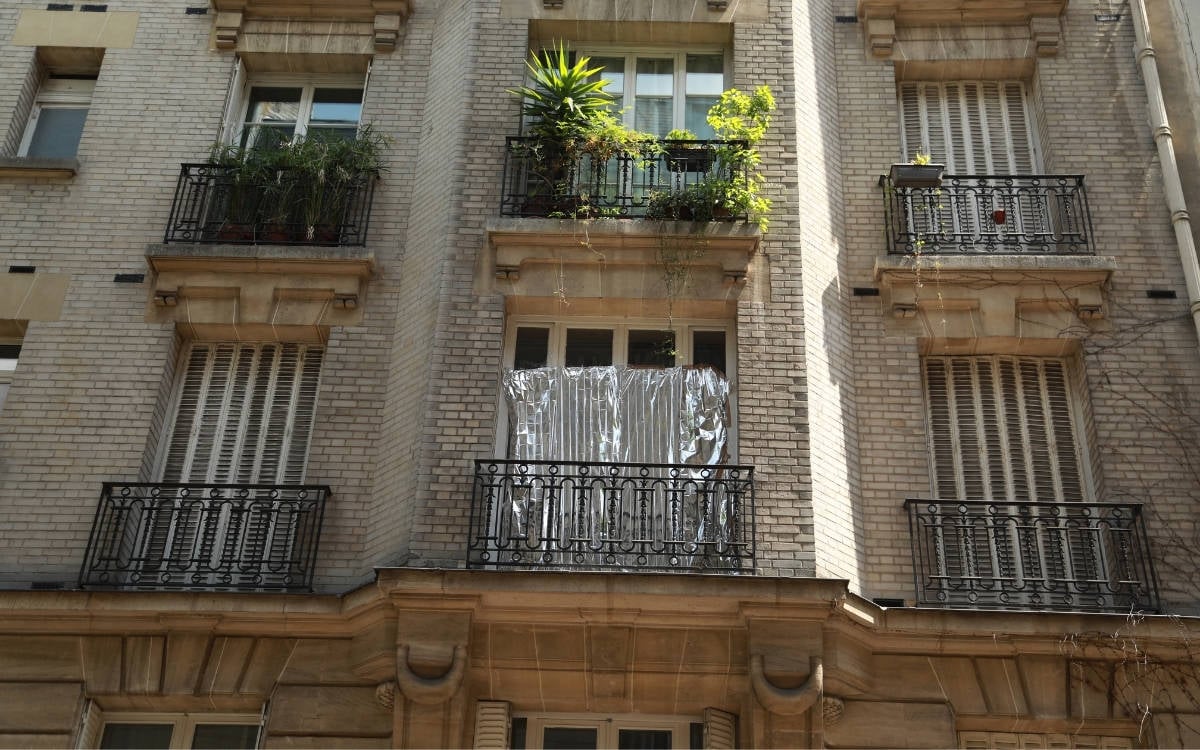



Europe is experiencing one of the most severe early-summer heatwaves in its history. France recorded its highest average nationwide temperature in nearly 80 years of record-keeping, prompting the Eiffel Tower and the Louvre to shorten visiting hours. The UK broke its June temperature record. In Italy, a red alert was issued for 16 cities, including Rome, while overheating underground cables caused power outages in Turin. Turkey, however, appears to be outside of this crisis for now.
However, the heatwave in Europe has also exposed several misconceptions about extreme heat. What factors make a heatwave more deadly? Why does Europe issue a red alert at 40 degrees while temperatures of 46 to 47 Celsius degrees are recorded in Turkey without much complaint? Does El Nino have anything to do with this? And perhaps most importantly, what lessons should Turkey draw for the summer months?
1. The number on the thermometer does not determine the danger of heat
News from Europe has raised a justified question. Europe issues red alerts at 40 degrees, while we in Turkey do not complain as much about temperatures of 46 to 47 degrees. Is all of this exaggerated?
The answer to this question reveals the least understood aspect of heatwaves. The temperature on a thermometer alone does not determine how dangerous heat is. There are factors that are often overlooked, such as humidity, nighttime temperatures, infrastructure, and even air cleanliness.
2. The source of the danger in Europe is a 'heat dome'
The human body sheds the thermal load accumulated during the day mainly at night, when the weather cools down. This physiological recovery during sleep is the most critical mechanism for enduring heat.
What makes the heatwave in Europe particularly dangerous is that it develops under a "heat dome." Hot air from North Africa is trapped over the continent like a lid by a high-pressure system. Air cannot dissipate under this stagnant system. Heat accumulates day after day on top of the previous day, and nights do not cool down sufficiently. Under these conditions, where nighttime temperatures do not drop and the body cannot find an opportunity to recover, the physiological burden of heat multiplies by the day.
This was also the primary cause of the disaster that led to nearly 15,000 deaths in France during the summer of 2003. It was a constant heatwave that lasted for days, did not end even at night, and struck elderly people living in homes without air conditioning.
3. European cities were not built for extreme heat
Another reason Europe is affected so heavily is structural. The continent was built for cool summers in the past, making it a region where air conditioning is not widespread.
Moreover, according to the World Meteorological Organization, Europe is the fastest-warming continent, heating up at twice the global average. This means the same atmospheric patterns, such as the classic high-pressure systems that bring summer heat, now translate into much more extreme temperatures on an already warmed ground and arrive earlier in the season.
4. The unexpected price of clean air
Another little-known but scientifically well-documented factor is the successful fight against air pollution that Europe has waged over the past few decades. As a result of this struggle, tiny airborne particles from industry and traffic, known as aerosols, have significantly decreased.
This is undoubtedly a positive development for the air we breathe. However, these particles also acted as a thin curtain, reflecting and scattering a portion of sunlight to reduce the radiation reaching the surface. As the air cleared, this curtain thinned, and the solar energy reaching the ground increased.
This phenomenon, which scientists call "solar brightening," means the surface warms more intensely, especially on clear and cloudless summer days. In other words, the cleaner skies of Europe inadvertently create a heating effect during heatwaves. This is an ironic side effect that does not overshadow the vital importance of reducing emissions in the long term, but it contributes to the severity of the heat in the short term.
5. El Nino is not the cause of the heatwave
Claims in some commentaries suggesting that the heatwave is occurring due to "this year's strong El Niño" are incorrect.
The tropical Pacific has not yet transitioned to El Nino. A strong, or even a potential "super" El Nino, is expected for the second half of the year, but it has not developed yet. Therefore, the heat in Europe in Jun 2026 cannot be directly caused by El Nino.
The driver of this event is a high-pressure system, known as an "omega block," and a heat dome that locks hot air from the Sahara over Europe. The effect of El Nino pushing global temperatures upward will be felt starting from the second half of the year, primarily in 2027. These factors must not be confused to correctly understand the situation.
Heatwave expected in Turkey in July and August
Turkey is not directly inside this heatwave for now. This is because the country sits on the relatively cool and rainy side of the omega block that has trapped Europe. The heavy rain and hail seen in Central Anatolia and the Black Sea region this week are a result of this positioning.
However, this protection is only temporary. According to forecasts by the State Meteorological Service, a high-pressure ridge will approach Turkey from the west starting in late June. Hot, arid, and stagnant air will take over once again. Temperatures in the western and southern parts of the country are expected to rise 1 to 3 degrees above seasonal norms. The main heatwave is expected to arrive in July and August.
Unlike the heatwave in Europe, looking only at the highest number on the thermometer will be misleading in Turkey. The European heatwave is fed by a relatively dry air mass coming from the Sahara. This means the main problem there is not high humidity, but rather extreme absolute temperatures that last for days without nighttime cooling. However, the danger multiplies when humidity enters the equation in river and coastal cities. The coastal regions of Turkey face exactly this threat.
1. Humidity prevents the body from cooling itself
The human body cools itself by sweating, which relies on sweat evaporating from the skin surface. This evaporation draws heat away from the body.
However, for evaporation to occur, the air must have the capacity to absorb this moisture. If the air is already saturated with humidity, sweat cannot evaporate and instead builds up on the skin. Consequently, the body cannot cool itself down. This is why a day with a temperature of 35 degrees and 60% humidity can be far more dangerous than a dry day at 40 degrees with 20% humidity.
2. The key metric to watch: Wet-bulb temperature
This is precisely why scientists use the wet-bulb temperature to measure the true danger of the weather.
The name comes from the measurement method itself. The bulb of a thermometer is wrapped in a wet cloth and exposed to the air. As the water on the cloth evaporates, the thermometer cools down. The resulting value reflects how much the air can cool. Higher humidity means less evaporation, which drives the wet-bulb temperature upward. As the wet-bulb temperature rises, the capacity of the human body to cool itself shrinks.
3. The critical threshold: A wet-bulb temperature of 35 degrees
When the wet-bulb temperature reaches 35 degrees, even a healthy person resting in the shade with unlimited water cannot survive for more than a few hours. This is because the body loses all ability to shed its internal heat.
Of course, this is a theoretical threshold. In real life, values that even approach this limit can be fatal, especially for the elderly, individuals with chronic illnesses, and outdoor workers.
Critical message for Turkey: The highest thermometer reading is not the only issue!
The main message for Turkey is clear: In the upcoming heatwaves, focusing solely on the highest temperature on the thermometer will be misleading.
- Because humidity is high along the Aegean, Mediterranean, and Marmara coasts, the heat index and wet-bulb temperatures could reach much more dangerous levels than in the dry interior regions. Coastal cities like İzmir, Aydın, Muğla, Antalya, Mersin, and Hatay are our most vulnerable areas in this regard.
- In Southeastern Anatolia, even though the humidity is low, the absolute temperature rises so high that the risk remains very elevated.
- Perhaps most importantly, tropical nights—days when the nighttime temperature does not drop below 20°C—have been increasing rapidly in major cities across Turkey in recent years. In urban environments dominated by concrete, with little green space and heated by the urban heat island effect, the inability to cool down at night is becoming a public health issue just as critical as daytime heat, if not more so.
- Furthermore, the burden of this heat is not distributed equally. Those who can use air conditioning and those who cannot experience the heat differently. The same goes for residents of green neighborhoods versus high-density concrete areas, or office employees versus those working outdoors in fields or construction sites. Therefore, heatwaves are not just meteorological events; they are also matters of social justice.
Preparing for heatwaves requires accurate information rather than panic. This involves protecting vulnerable groups and reducing outdoor activities between 11.00 am and 4.00 pm. Cities must also increase shade and green spaces. Most importantly, heatwave early warning systems must be established to factor in humidity and nighttime temperatures rather than just daytime maximums. We now know that the danger of a heatwave is determined by whether our bodies can cool down, not by the thermometer.
(TY/VK)

