





SOCIAL POLICY FORUM
Turkey Seconds Mexico in Unequal Income Distribution




"Turkey is the country with the second most unequal income distribution right after Mexico among all OECD countries," concludes The Bosphorus University Social Policy Forum (SPF) who mapped out a holistic picture of social inequalities in Turkey by utilizing different studies.
The report entitled "Inequalities in Turkey: Search for a Comprehensive Conceptual Framework" reveals how socio-economic inequality and discrimination nourish each other and also suggests a number of possible solutions.
The project team under the counselling of Prof. Ayşe Buğra included Assist. Prof. Ayşen Candaş Bilgen, Volkan Yılmaz and Dr Burcu Yakut Çakar.
"Inequalities became natural"
In the preface, Buğra says, "We see how socio-economic inequality is intertwined with discrimination and how these problems pave the way to a permanent exclusion of certain sections of society".
"This exclusion gradually became natural by passing it on from generation to generation and started to be accepted as commonplace. Even more deplorable, the people excluded started to see their situation with resignation. At this point, we are able to witness that the problems cannot be transferred into political demands. Their transformation is hindered by obstacles within the mechanisms of political participation and remains ineffective".
The report defines two kinds of permanent inequality:
Socio-economic inequality: This sort of inequality basically stems from objective socio-economic conditions such as the income level of a household. A person is born into a household with a certain income level for example and will accordingly benefit from certain health services, a certain level and quality of education and a certain position in employment. Even the degree and quality of access to political participation is influenced by this.
Discrimination: Regardless of the income level, the identity of a person is connected to ethnic roots and/or the mother tongue, depends on religion or denomination and is based on social gender and sexual orientation. This can be the reason for being looked down at and for not being considered as equal according to the degree of the differentiation relative to the majority's inclination or the dominating ideology. In societies that do not provide the public's legal security, a person's access to education, being made redundant and even the self-representation in politics can be determined by being born into a different situation than the majority of the society or by obtaining such a difference later on.
Evaluations
The report aims at handling inequalities concerning income distribution, employment, health and social security, education and political representation altogether. Read some of the findings as follows:
* In the middle of the first decade of the 21st century, Turkey is the country with the second most unequal income distribution right after Mexico among all OECD countries.
* The population in the regions of South-Eastern and Middle-Eastern Anatolia hold the lowest share of the total revenue.
* In 2008, the country's general poverty rate amounted to 17.11 percent and to around 40 percent for workers in the field of agriculture in particular.
* The lowest income group bears the biggest tax burden.
* In 2007, the participation of women in the labour force ranged below 30 percent. In comparison, the average of this ratio in the other OECD countries amounts to 62 percent.
* One out of two workers is being employed beyond legal limits.
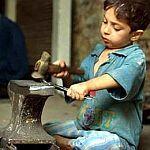
* In 2006, 318,000 children between six and 14 years old were working. (EÜ/VK)


Turkey's richest 20 percent has 46 percent of total income, İstanbul has highest inequality
95 Percent of Turkish Population Plunged in Debt

TURKISH MEDICAL ASSOCIATION
Health Standards in Turkey Lose in International Comparison
CHILD LABOUR
'Children into School, Women into Employment'
Report Reveals Deep Inequalities in Education

Poverty Forces Families to Let Children Work
Turkey's richest 20 percent has 46 percent of total income, İstanbul has highest inequality
95 Percent of Turkish Population Plunged in Debt
TURKISH MEDICAL ASSOCIATION
Health Standards in Turkey Lose in International Comparison
CHILD LABOUR
'Children into School, Women into Employment'
Report Reveals Deep Inequalities in Education
Poverty Forces Families to Let Children Work
SOCIAL GENDER EQUALITY
Women and Journalists Hand in Hand against Violence
EUROPEAN COMMISSION AGAINST RACISM AND INTOLERANCE
Discrimination and Racism in Turkey Fuel Concern
Unionists in Northern Cyprus Protest PM Erdoğan
Policeman who Beat Juvenile Claimed Self-Protection
HRANT DINK MURDER
Court fully Protects Istanbul Police