








The 16th Turkey Internet Conference was organized by the Internet Technologies Association in Izmir last week from 30 November to 2 December at the Aegean University Department of Computer Engineering.
Topics discussed this year were "Mobile Life", "Social Networks", "New Media", "Intellectual Property Rights", "Privacy", "Internet and Democracy", "Internet Bans", "The Fatih Project" and "Media/Information Literacy". A total of 56 sessions included 13 panel discussions, 15 seminars and 27 sessions on various papers and declarations. The issues of the internet filtering application, censorship and internet media regulations came up in sessions on technical matters as well as on information on developments, seminars and panel discussions.
In fact, these were the topics on the general agenda and two panel discussions on 2 December (Friday) were exclusively devoted to these issues.
The session entitled "Internet Media Regulations" organized by the Alternative Communication Association dealt with the corresponding draft bill that will be announced in parliament in January 2011. Potential contents of the draft bill were discussed besides the question how internet media institutions should react and how they could be involved in the process.
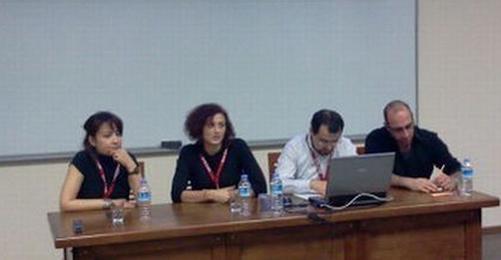
"Internet Bans and Filtering" was the heading of the last panel discussion that was hosted by Ebru Baranseli, member of Staff of the Anadolu University and co-founder of the 'Censoring Censorship' initiative. The session was joined by Ali Rıza Keleş from the Alternative Information Association, Deniz Tan from 'Censoring Censorship' and Erdem Dilbaz from the Netizens Movement.
At the beginning of his speech, Ali Rıza Keleş summarized the legal struggle and the activists' efforts carried out against the internet filtering system. The lawsuit filed by bianet against the "Draft Bill on Principles and Procedures for the Safe Use of the Internet" lead to a revision and the postponed introduction of the regulation. However, the Alternative Communication Association filed another trial upon the following basic objections:
* Access to information is a fundamental right. The filtering system constitutes an obstacle before the use of this right.
* Questions were asked like "Don't you want a secure internet" or "Don't you want to protect your children". This is deceptive and coercive. Many mothers and fathers cannot say 'no' to these questions.
* Sensitivities of the society such as "child pornography", "terrorism" or "security" are being exploited.
* The list of filtered sites is not clear. We do not know who will be part of the board to decide which sites should be filtered and the criteria are not known either. It is not being declared which filter (e.g. family or children) has been applied to a site.
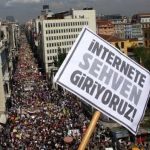
Keleş stressed that the mass demonstration against the filtering system in Istanbul on 15 May was successful and that internet users got organized due to the draft bill.
The head of the Internet Technology Association, Prof Mustafa Akgül, spontaneously joined the discussion and questioned how the extensive number of 525 million internet sites was going to be filtered.
Deniz Tan described in his speech how the 'Censoring Censorship' initiative was started. After access to YouTube, DailyMotion and videos of director Fırat Yıldız had been denied in 2008, the protest movement gained momentum within a short time. "More than 500 large and small-sized websites joined the protest at one weekend. The movement was initiated on 13 August 2008 and made it to the headlines of many foreign blogs and newspapers such as Hürriyet, Cumhurriyet, Radikal, the Guardian or Osocio. The blogs were put online on 20 August and Censuring Censorship started publishing".
Erdem Dilbaz, introduced as a "digital activist", pointed to the problem of standardization of the filtering system. "Standardization excludes the one who is different", he said and continued, "When we were not accredited to a meeting held by the Internet Technology Committee, a group opponents of the filter forced the entry. There and also later on at the protest on 15 May these people were scared by the fact that we demonstrated how people without common ground on policies and ideology who just want to use a free internet can initiate a common movement. However, we do not want to scare anybody. We have no intention of creating a society of fear. (...)
The session was concluded with questions from the audience. A student from the Aegean University asked "I do not understand this. Why are websites still being censored if there is a family and children filter? Why do they not give us a 'filter on a totally free internet'?" (HK/VK)
* Picture: Işıl Yılmaz