









Critical minerals and metals (CMM) are materials of vital importance in terms of green energy transition, new technologies, and national security. Among these materials, which carry a high risk of supply chain disruption, rare earth elements (REE) hold a significant position. For this reason, the ministry's announcement that Turkey holds the second-largest REE reserves in the world after China, with 694 million tons, was met with great enthusiasm and became the subject of political debate.
The ruling bloc describes the REE reserves discovered in Eskişehir’s Beylikova district as a matter of strategic pride and says they will be integrated into the economy through state-supported domestic technology. The main opposition, which emphasizes that the country’s salvation lies in REEs, wants a law passed that prohibits the handover of these reserves as raw materials to “foreigners.” It underscores the critical importance of Turkey developing processing technologies and transforming REEs into value-added products.
Indeed, the real potential for value creation and the geostrategic importance of REEs emerge in the advanced stages of the supply chain. Refining and purification processes generate 10 to 15 times more added value than mining. When the capacity to produce end products is added to this value chain, it becomes possible to generate over 100,000 to 150,000 dollars in economic contribution from just a few kilograms of REEs. Moreover, only technological and industrial superiority at this level creates strategic power. Even the US, one of the countries with the largest reserves in the world, remains 90 percent dependent on China for processed REEs and final products like permanent magnets.
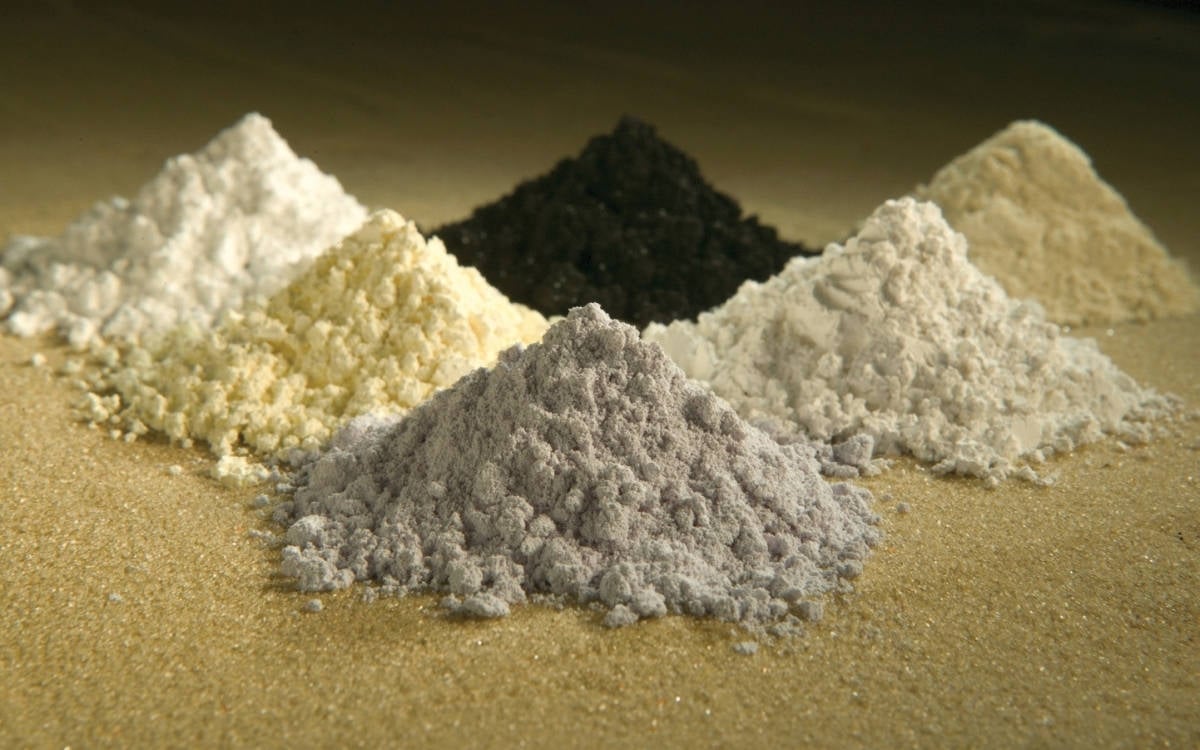
Rare earth element reserves in Turkey: What is known and what remains unknown
What are 'rare earth elements'?
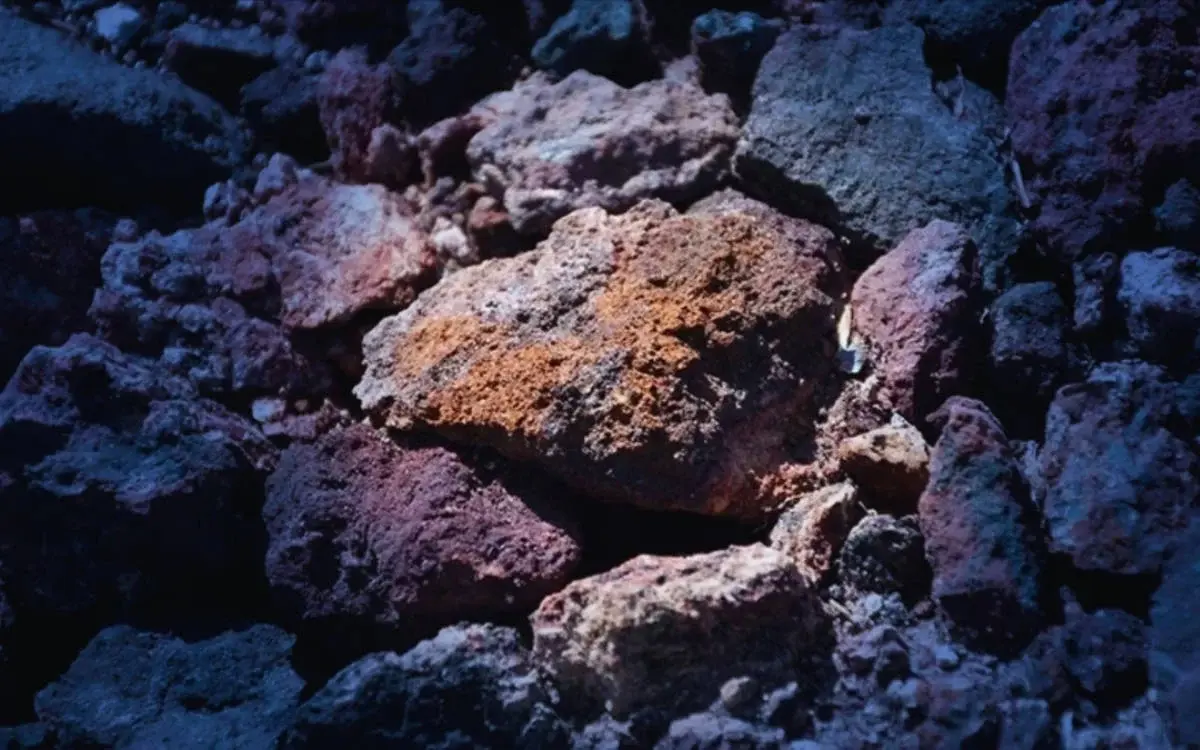
Rare earth elements, of which 17 are known to exist on Earth, are like small but vital “vitamins” of modern technology: they impart important magnetic, optical, and electrical properties to the materials they are used in, even in small amounts, and play an indispensable role in energy systems, magnets, and advanced technological applications. Without REEs, modern defense technologies cannot function and the clean energy infrastructure needed to combat climate change cannot be built.
Rare earth elements are divided into light and heavy categories. While light rare earth elements are relatively more abundant, heavy rare earth elements are rarer and of higher strategic importance.
Therefore, if Turkey wants to become a significant player in the REE supply chain, it must focus not only on reserve mining but also on the refining of these reserves and their transformation into final technological products. This is a costly and laborious process that includes requirements Turkey cannot fulfill alone, such as critical technology transfer, securing large-scale market financing, and ensuring access to global markets.
Another major issue is the high ecological cost of REEs. China's pursuit of low-cost production methods by disregarding environmental concerns has led to major ecological disasters and is neither geopolitically nor ethically acceptable. It is of great importance for Turkey to base its REE strategy, which it will shape through international cooperation, on environmental sustainability.
Not just raw material, but a geostrategic tool
Only 34 years ago, when then Chinese President Deng Xiaoping said, “The Middle East has oil, but we have rare earth elements,” many countries, including the US, were not even aware of what he meant.
The full implications of the situation became clear in 2010: the collision of a Chinese fishing vessel and a Japanese Coast Guard ship near the Senkaku Islands led to a diplomatic crisis. China decided to halt REE exports to Japan. Following this restriction, the prices of some REEs increased more than tenfold and caused a serious crisis in Japan’s economy, particularly in the high-tech automotive and electronics sectors.
This incident was the first flare that showed the world that REEs are not only economic raw materials but also geostrategic tools.
China as the sole dominant supplier
The urgency of the REE issue emerged after the pandemic. With the acceleration of modern technology and the goals of transitioning to a low-carbon economy, the strategic significance of REEs became globally recognized. However, it was realized—albeit belatedly—that China had become the sole dominant supplier in this field.
This situation caused a sense of panic in the US and Europe, which were far behind in REE supply. Moreover, China has reached near-monopoly power not only in terms of REE reserves, but also in refining these minerals and producing final technological products such as magnets, catalysts, phosphors, and other critical metal alloys.
Purification generates 10 to 15 times more added value than mining
Indeed, the real potential for value creation from REEs emerges in the later stages of the supply chain. At the mining stage, the global market value of concentrates extracted from economically viable ore was only in the range of 600 to 800 million US dollars as of 2025. However, there is a significant value jump in the refining and purification stages: when the same volume is converted into high-purity oxide and metal forms, the market size reaches 5.7 to 7.6 billion dollars. This creates 10 to 15 times more added value compared to the mining stage.
The size and quality of Turkey’s reserves are not yet clear
According to the US Geological Survey’s (USGS) 2025 report, the total global REE reserves amount to just over 90 million tons. The top five countries with the largest reserves are China (44 million tons), Brazil (21), India (6.9), Australia (5.7), and Russia (3.8), respectively.
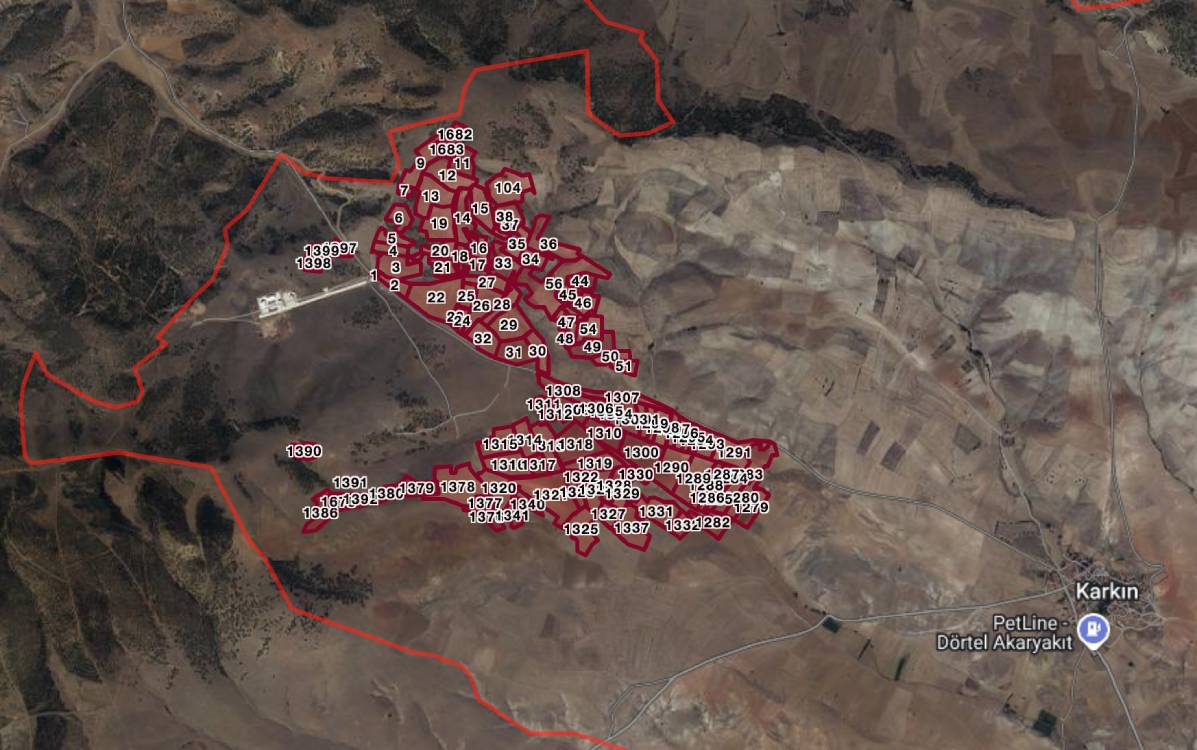
Since the geological and economic studies proving that the source in Eskişehir/Beylikova is a commercially extractable reserve by international standards have not yet been completed, Turkey is not currently on this list. To demonstrate the global significance of the reserve, Turkey is conducting a certification process under the internationally recognized JORC Code through the Australasian Institute of Mining and Metallurgy. Academic studies suggest that between 0.2 percent and 2 percent of the deposits in Turkey likely consist of rare earth oxides. This corresponds to a REE reserve between 1.4 million and 14 million tons.
It also remains unclear how much of Turkey’s reserves consist of light REEs and how much consist of heavy REEs. Although there is no official data on this matter, it is emphasized that light REEs are dominant. If this is the case, the economic contribution of the reserve would be limited, as these elements already have a good global supply and thus lower market value.
The permanent magnet market alone exceeds 30 billion dollars
The real economic transformation occurs at the final product stage, where purified REEs are integrated into advanced technology products such as permanent magnets, battery materials, and catalysts. For instance, the permanent magnet market—which includes critical components in a wide range of products from wind turbines to electric vehicle motors, from defense industry systems to smartphones—is estimated to exceed 32 to 35 billion dollars in 2025. When clean energy systems, defense technologies, and high-performance electronics are also taken into account, the total value of REE-based final products easily surpasses 40 billion dollars.
This three-stage value chain shows that a few kilograms of REEs in a ton of raw ore can generate over 100,000 to 150,000 US dollars in economic contribution. With the acceleration of the energy transition, this value is expected to multiply in the next 10 years.
Having reserves does not equate to strategic power
The most striking aspect of China’s dominance in REEs is that it controls approximately 90 percent of the refining and purification stage, which is the most technologically complex phase.
As of 2025, China’s share in global mining production is around 62 to 65 percent. It holds 87 to 91 percent of separation capacity and 92 percent of high-purity rare earth oxide production. Its monopoly power is even more pronounced in the final technological product stage: particularly in permanent magnet production, China’s share reaches 93 to 95 percent.
As a result, even the US, one of the world’s largest reserve holders, is forced to source 70 to 80 percent of its processed rare earth oxide needs and 85 to 90 percent of its permanent magnet needs, directly or indirectly, from China.
Therefore, merely possessing reserves does not translate into strategic power. What makes REEs one of the most effective geostrategic tools of the 21st century is China’s near-absolute technological and industrial superiority in refining and final product manufacturing.
China invested over 55 billion dollars
If Turkey wants to become a significant player in the REE supply chain, it must focus not only on reserve mining but also on the refining of these reserves and their transformation into final technological products. Indeed, mining is the easier part of the process. The real bottleneck is the refinement facility capable of separating 17 different elements at 99.999 percent purity. The design, construction, and commissioning of such facilities require tremendous engineering achievement. Consequently, on the technological advancement front, know-how transfer and R&D investments must be prioritized. However, such a long-term and integrated process will also require very high financial resources.
China’s control of 85 to 90 percent of global refining capacity was made possible through investments of approximately 57 billion dollars since 2000. According to experts, even the US and the EU would need at least 10 billion dollars in capital investment to establish an REE-based supply chain that could challenge China’s dominance. It is estimated that achieving such a goal would only be possible within 10 to 15 years.
Developing technological infrastructure is essential
The exact level of Turkey’s current infrastructure in terms of technological advancement is not clearly known; however, it is undisputedly inadequate against a competitor like China.
In this field, where know-how transfer and R&D investments are essential, China’s global share of patent applications related to REEs reached 65 percent as of 2025. While the US holds 10,000 patents and Japan 14,000, China’s patents number around 42,000.
Established in 2020 under the Turkish Energy, Nuclear and Mineral Research Agency (TENMAK), the Rare Earth Elements Research Institute (NATEN) is working to transform Turkey’s potential in strategic elements into scientific, technical, and industrial capacity.
Infrastructure such as the REE Ore Enrichment and Refining Laboratory and the Domestic Permanent Magnet Production Facility, established by NATEN in 2025, are important steps in enhancing scientific capacity. However, for these facilities to operate effectively, it is necessary to strengthen university-industry collaborations, increase the R&D budget, and encourage patent applications. Furthermore, in order to train qualified human resources, it is essential to develop REE-focused specialization modules in engineering and materials science programs, ensure know-how transfer through international scholarship programs, and accelerate innovations with incentives aimed at the start-up ecosystem.
(EK/TY/VK)