



Sometimes it's a colorful bag, sometimes it's painted nails, sometimes it's a hair on the chin.
Being LGBTI+ in Turkey is often a form of existence condemned to both invisibility and being a target. Due to state policies, the language of the media, and everyday violence on the streets, people with this identity are forced to constantly defend their lives. In a region where you can be labeled based on the body you inhabit or the pin you wear, and questioned simply for existing, every act of visibility is also a risk.
Nevertheless, every year, despite all the bans, threats, and police blockades, LGBTI+s find a crack and reach out to each other. Because in this country, sometimes the most radical act is to show that you are still alive.
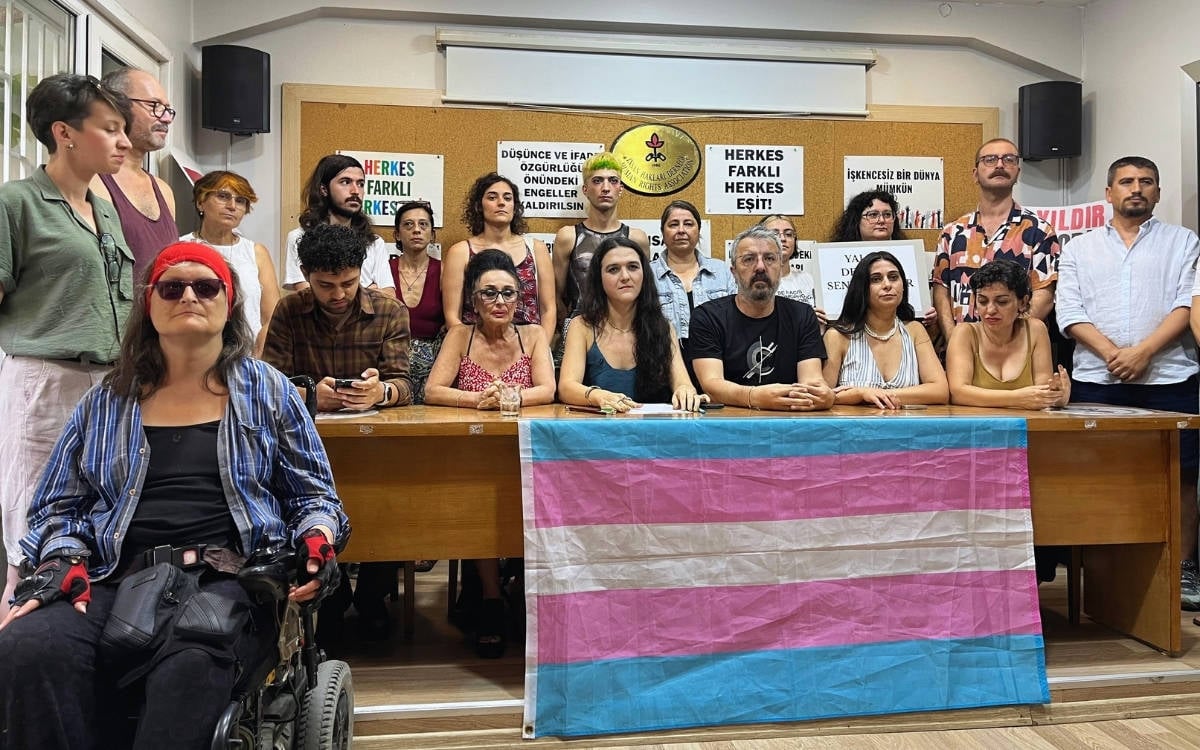
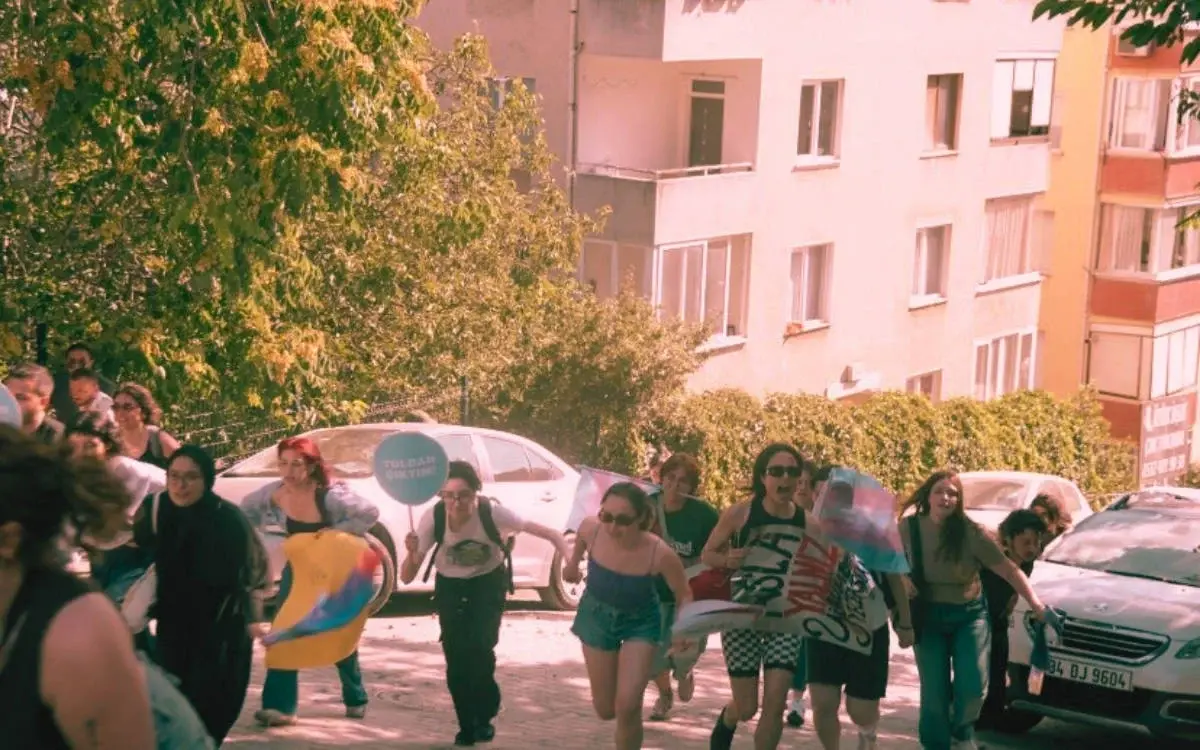
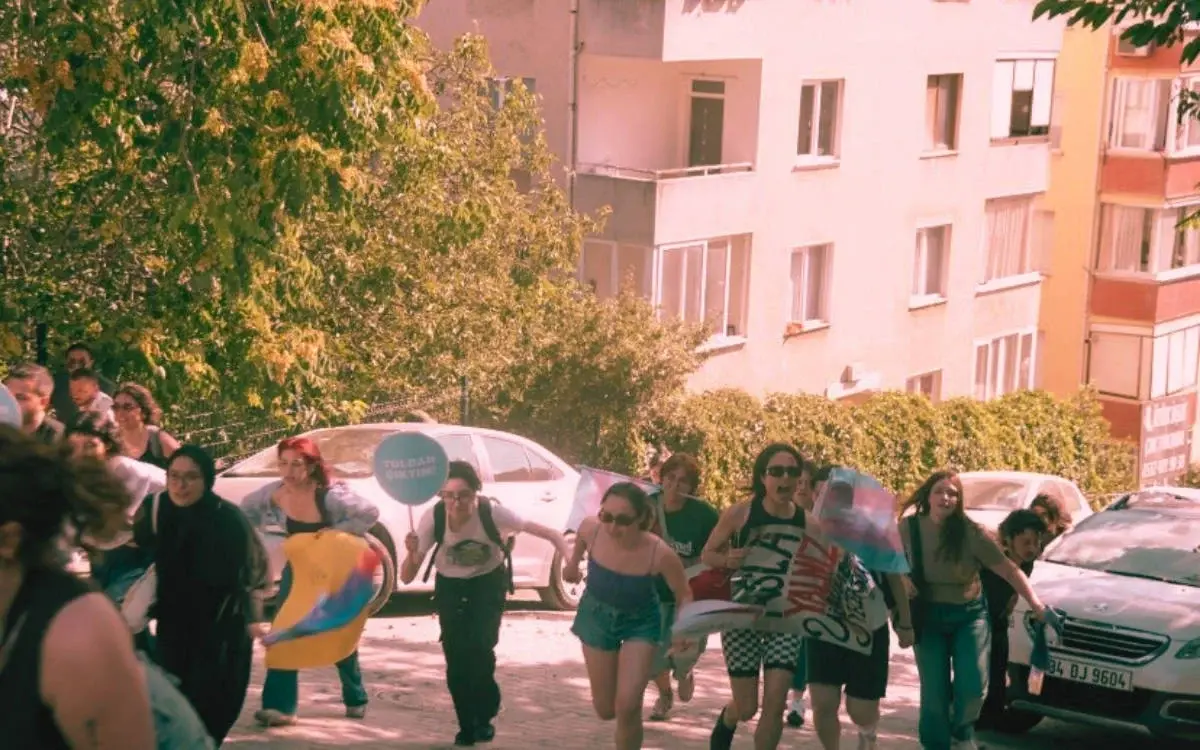
On Jun 22, police cracked down brutally on trans+ activists who gathered in Kadıköy as part of the 11th Trans Pride March in İstanbul. The police surrounded the group gathered on the streets of Acıbadem neighborhood, beat them, and detained 46 people. Thirty-nine of those detained spent the night at the İstanbul Police Headquarters on Vatan Street. The detainees were released on Jun 23. Five people were placed under judicial control with a ban on leaving the country and a requirement to sign in at the police station.
'Colors symbolizing LGBTI+'
The lawlessness that occurred on the day of the march reached new heights. In the morning, before the march even began, three activists were detained on Kadıköy streets after ID checks known as “General Information Gathering" (GBT). There was no news from the activists for a long time . The 11th Trans Pride Week Committee announced, “We were unable to obtain any information about our friends for hours, meaning that our friends were temporarily forcibly disappeared.” The detentions were not limited to the march and its preparations. After the march, police flooded into the Rasimpaşa neighborhood, where they detained 11 people they had "singled out.
In Beyoğlu, another “strange” situation unfolded. Patrol police at Galata Bridge stopped people they deemed suspicious for wearing colors symbolizing the LGBTI+ community and detained four individuals with no connection to the march. Thus, four people, including a tourist simply walking down the street, spent the night in custody.
In other words, on that day, the police detained people based on their appearance, hair, eyebrows, nail polish, clothing, and sometimes without even having a warrant.
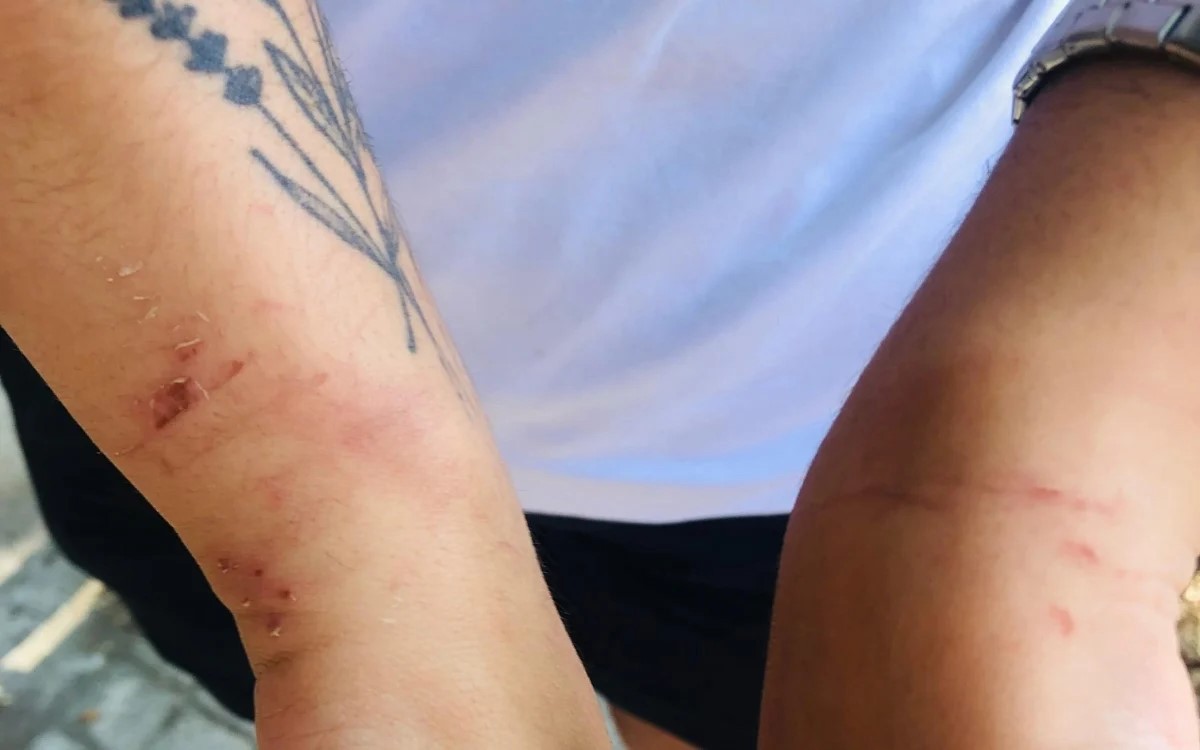
Three children among those detained were released during the night. Lawyers, relatives of activists, and journalists were unable to get any news about those detained for hours. In the morning, while it was still unclear which courthouse the activists would be taken to, it was announced that they had been brought to the hospital for medical examinations with their hands cuffed behind their backs. The use of handcuffs is considered a violation of the prohibition of torture and ill-treatment under both national and international law. According to a study by the Turkish Human Rights Foundation (TİHV) covering the years 2018-2021, this practice causes serious physical and psychological harm, leading to shoulder, wrist, and nervous system damage, as well as psychological trauma. Article 93 of the Criminal Procedure Code allows handcuffs only in exceptional circumstances, while consistent decisions by the Constitutional Court clearly consider handcuffing behind the back a violation of the prohibition of torture. However, this practice, which has no legal basis, has become a systematic violation of rights.
Significant human rights violations also occurred during the detention process prior to the use of handcuffs: Activists were not given water or food for hours. During interrogations, most of them were faced with transphobic remarks and forced to answer detailed questions that violated their privacy. On the instructions of the prosecutor's office, an activist's phone was confiscated without any reason being given, clearly violating the activist's right to digital security.
Is Sırrı Süreyya Önder here?
Activists were asked in their statements: "In the area where meetings and demonstrations are held, ‘I love you for your resistance to kissing, for your revolutionary love, you are a person from my struggle, my love, I love you,’ 'This is my identity, not your ideological apparatus,' ‘This is the year to fight the palace, not LGBTI+’, ‘Sırrı Süreyya Önder is here’, ‘Not an object of capitalism, but a subject of revolution’, ‘None of us are truly free until we are all free’, ‘I’m not here to fit into your world, I’m here to fight for mine’. Did you carry these banners and placards or were you part of the activist group?"
In other words, the activists were asked about song lyrics and poems, statements that did not contain any calls for violence or crime. The content of the banners and placards, which were the subject of questions directly targeting freedom of thought and expression, was used as a kind of evidence. The state's official interlocutor in discussions on the Kurdish issue, Sırrı Süreyya Önder, who passed away on May 3, 2025, was commemorated by the activists, but this was presented as a criminal act. After these questions, which had no connection whatsoever to any crime, the human rights defenders were released one by one from the Kartal Courthouse. The courthouse I went to in order to follow up on the outcome of the detentions was, unsurprisingly, under police siege. Even those who had “normal business” at the courthouse had their IDs carefully checked, and the police again decided who would be allowed in based on their “appearance.” Moreover, the police maintained their threatening attitude throughout the process: “No clapping, no slogans, no flags,” “Look, we will arrest you all again!” Of course, no permission was given for a press statement.
Perhaps a conclusion
The selective interventions of law enforcement based on identity, clothing, or banners are, of course, aimed at undermining the public visibility and courage of LGBTI+s and those who stand in solidarity with them.
So the issue is not just the arrests, but breaking the courage of LGBTI+s who can walk in places where no one else can, isolating those who speak out, and criminalizing resistance. However, on Sunday, Jun 29, the traditional Pride March will take place as part of the 33rd Istanbul LGBT+ Pride Week. Despite the police blockade surrounding the entire city, LGBTI+s will likely gather from all corners of Istanbul—despite the possibility of arrests and perhaps even harsher interventions.
In the book “Go Tell It on the Mountain” I recently read, American Black gay writer and activist James Baldwin said: "He opened his eyes on the morning, and found them, in the light of the morning, rejoicing for him. The trembling he had known in darkness had been the echo of their joyful feet—these feet, bloodstained for ever, and washed in many rivers—they moved on the bloody road for ever, with no continuing city, but seeking one to come: a city out of time, not made with hands, but eternal in the heavens. No power could hold this army back, no water disperse them, no fire consume them. One day they would compel the earth to heave upward, and surrender the waiting dead. They sang, where the darkness gathered, where the lion waited, where the fire cried, and where blood ran down: My soul, don’t you be uneasy! They wandered in the valley for ever; and they smote the rock, for ever; and the waters sprang, perpetually, in the perpetual desert."
I think that today, despite the bans, blockades, and threats, being on the streets is still the loudest hymn sung by LGBTI+s in Turkey. So let us all join hands to calm the spirits that are troubled. (TY/VK)