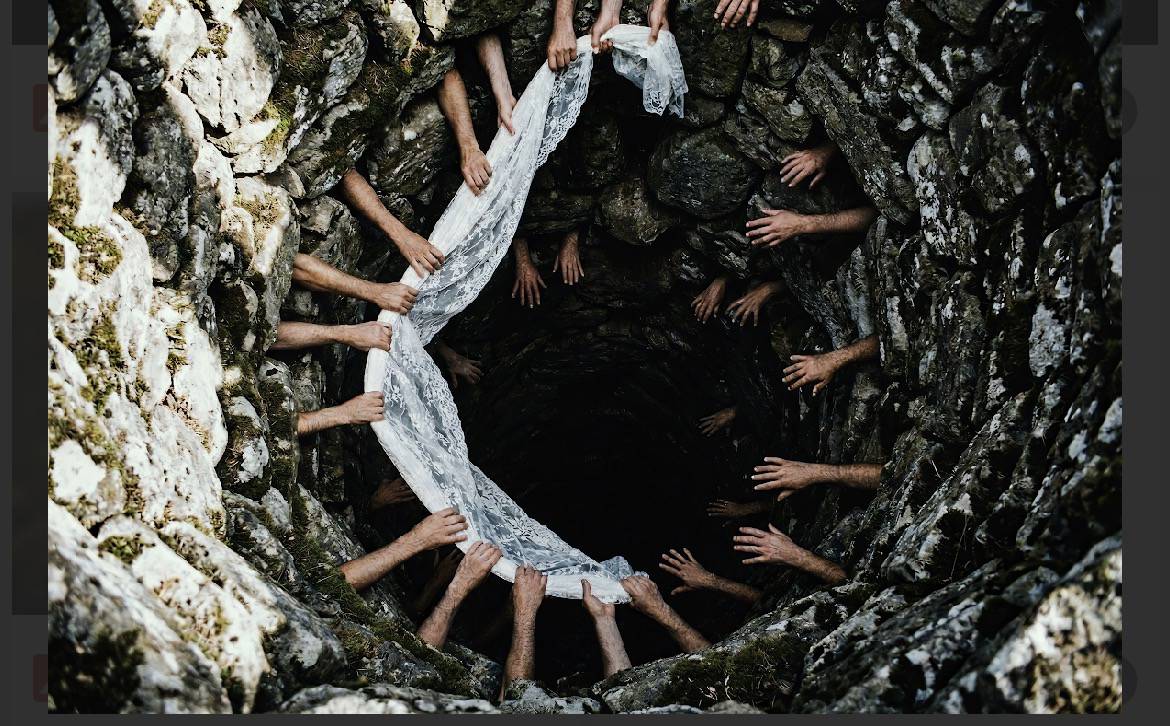







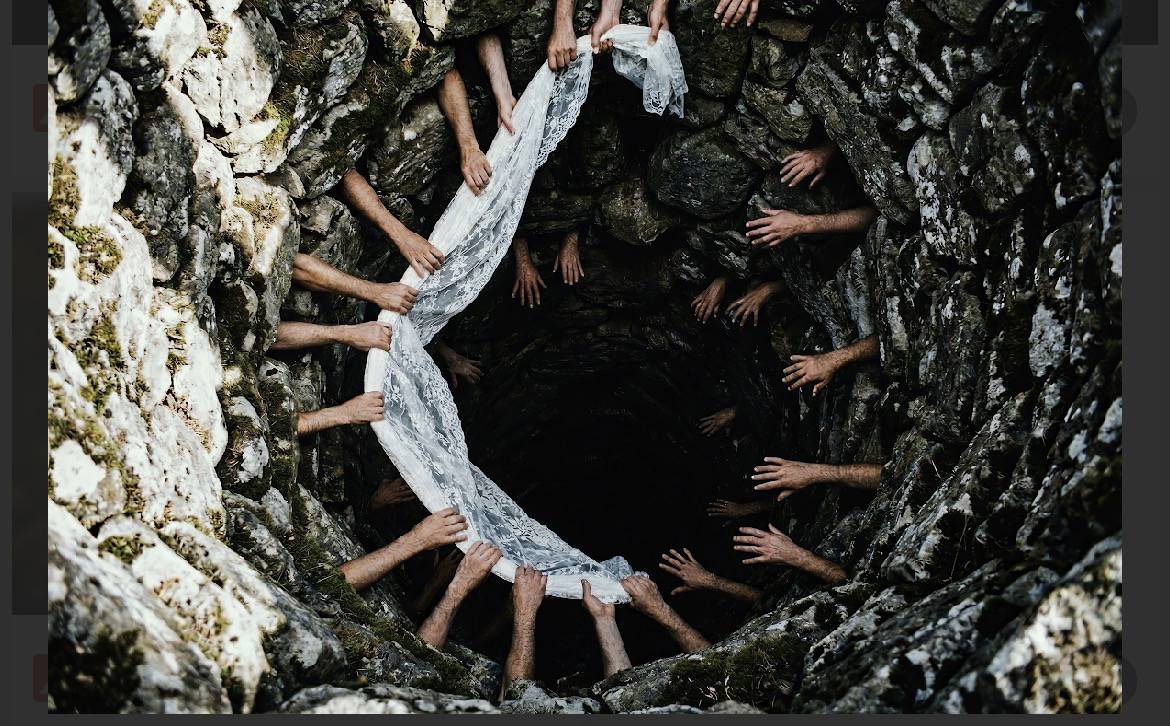



Trenčín Castle has an imposing presence overlooking a tiny town in western Slovakia. Since the Roman Empire, the castle has been the residence of various royal figures, and not surprisingly, stories of war, destruction, and love have revolved around it. The most well-known narrative concerns a water well within the precincts of the lower part of the castle, also known as the “well of love.” After the battle with the Turkish army, the duke Zápolský took the captives to the castle, including beautiful Fatima, whom Omar, a Turkish aristocrat, loved. Omar was willing to do anything to free her. He offered all his treasures in exchange for his mercy, but the duke demanded only one thing: a well in the castle. The water from the well would ensure enough water for all his soldiers, peasants, and cooks if the enemy attacked the castle. According to legend, it took more than three years for Omar and his companions to dig an 80-meter-deep well. Eventually, Omar came up out of the well with a whole jar of water, handed it to the duke, grabbed Fatima’s hand, and said to the duke: “Zápolský, now you have the water, but not the heart.” They got on the horse and rode off. The other side of this story might not be that romantic. In fact, the well was dug by soldiers in the 16th century and took them around 40 years. At the end, they never found the water.
A group of artists from Turkey challenges this romantic narrative with various site-specific multi-media installations. They shed light on the unheard voices of laborers, the untold story of Fatima, and revisit the legend's narrative from a critical perspective: as a commodity that silences women’s voices and erases traces of nature's memory. The Well of Love projects open a space for revisiting this legend not as a fixed narrative but as a fluid, ever-changing, and multi-dimensional story.
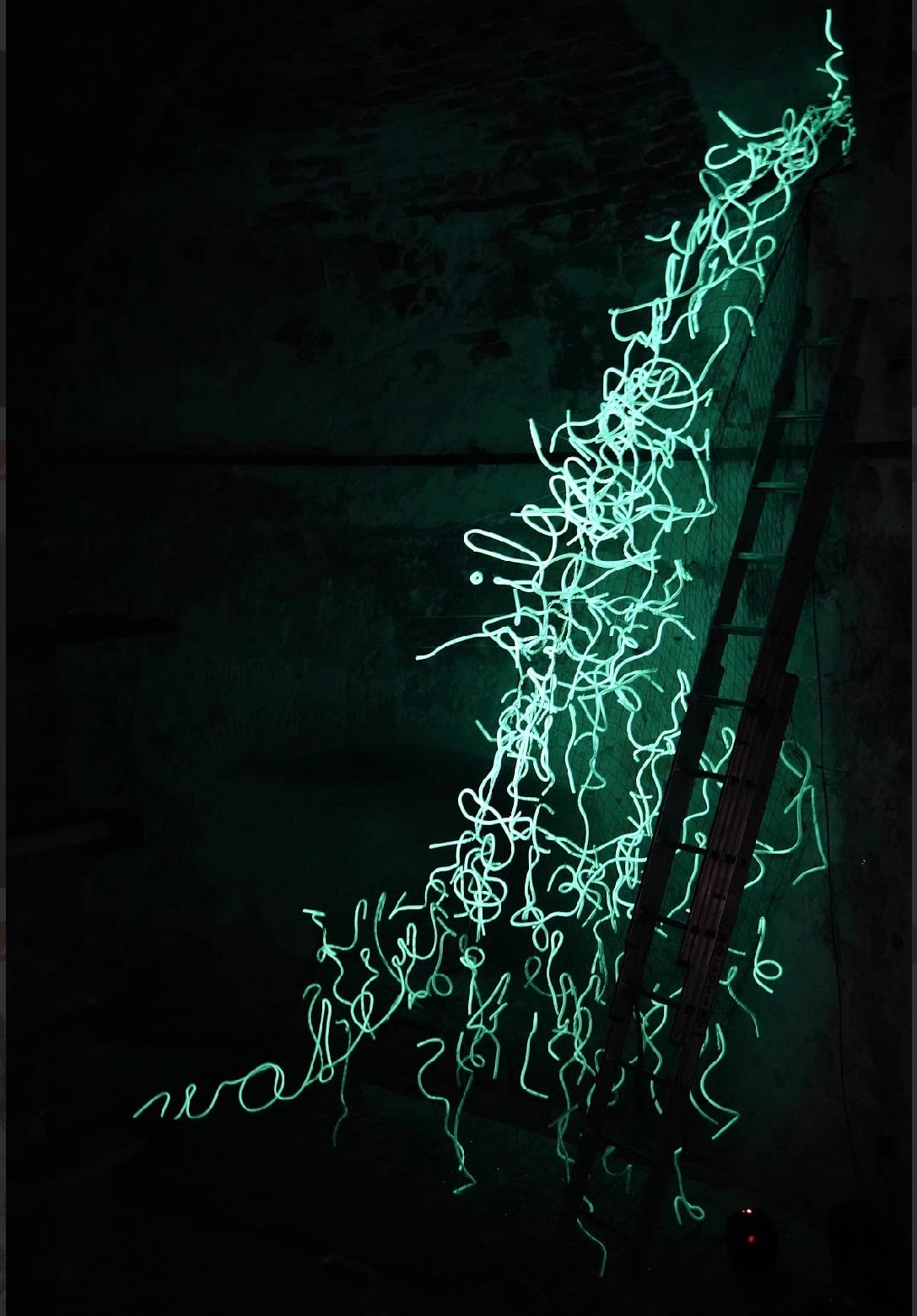
The curator, Ekmel Ertan, along with dramaturg Miran Bulut, beautifully stitched all six projects into a cohesive whole around this solid conceptualization. In this breathtaking historical venue, Buşra Tunç, with her work titled Ooze, creates letter-like forms and symbols that flow throughout the castle. They are intentionally not readable, randomly scattered, resembling the flow of water. Everything seems fluid, detached from its roots, and free from fixed historical references. Also, a voice installation accompanies the symbols like the whispers in the wind, adding an extra dimension to this powerful work.
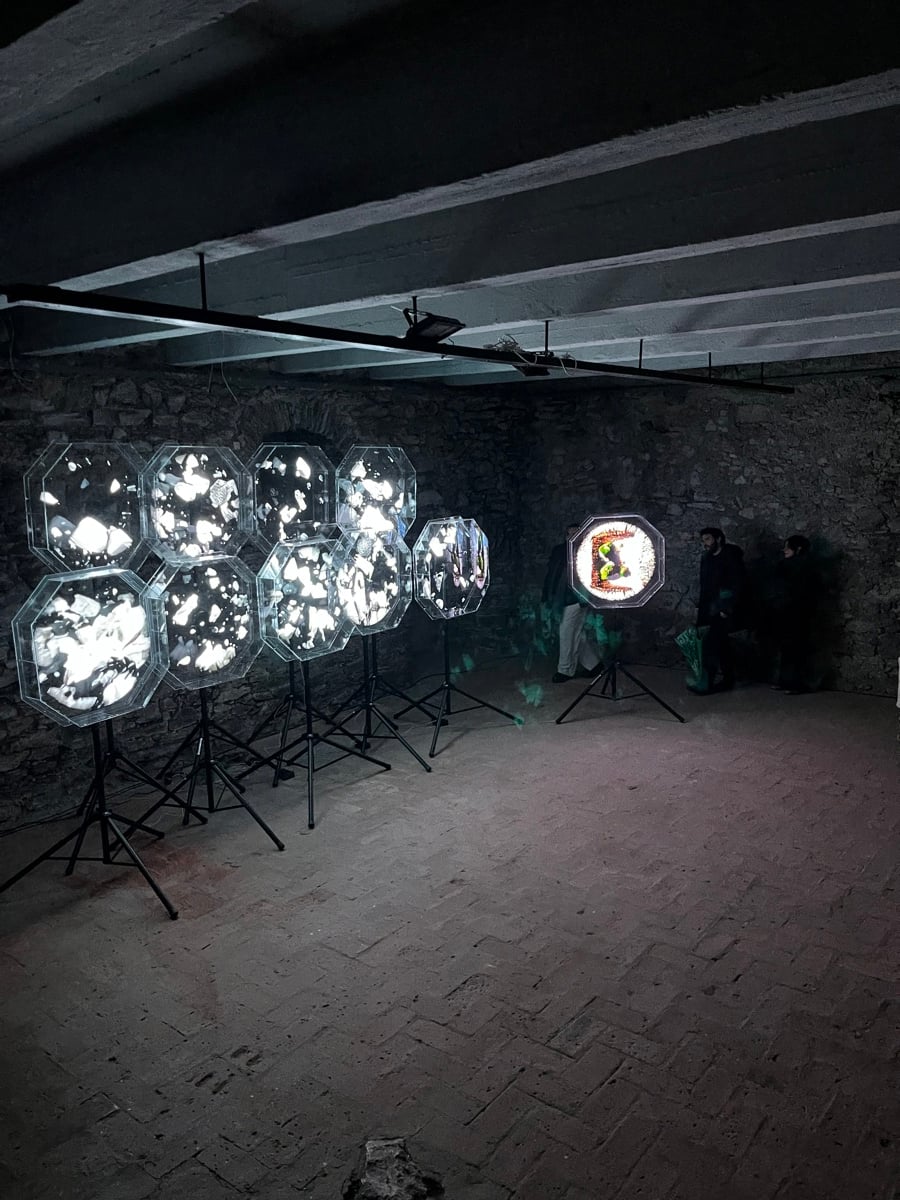
In his work Echoes, Ekmel Ertan reproduces the sound of digging from the well. This is the interpretation of the sound of soldiers' unseen labor as they dig. Ahmet Rüstem Ekici and Hakan Sorar, in their work Palimpsest and Whispers of the Well, focus on the memory of stone and seek to reveal its traces through digital images. Ten holographic fan units create an optical illusion and build an inter dialogue. This technology plays with our perception, just as the different variations of the legend do.
Kerem Ozan Bayraktar, in his video installation Ground, gives the romantic narrative a twist by gradually turning the stone castle into mud. He focuses on the layers of truth and deception and the ambiguities in between. The last project is a web-based application, called Rewrite the Well, by Ekmel Ertan and Miran Bulut. This interactive application allows the user to rewrite the story with different words and sentences with the help of AI. With every new addition of a word, the so-called original legend is written all over again, just like with every person’s retelling of the story, with infinite variations.
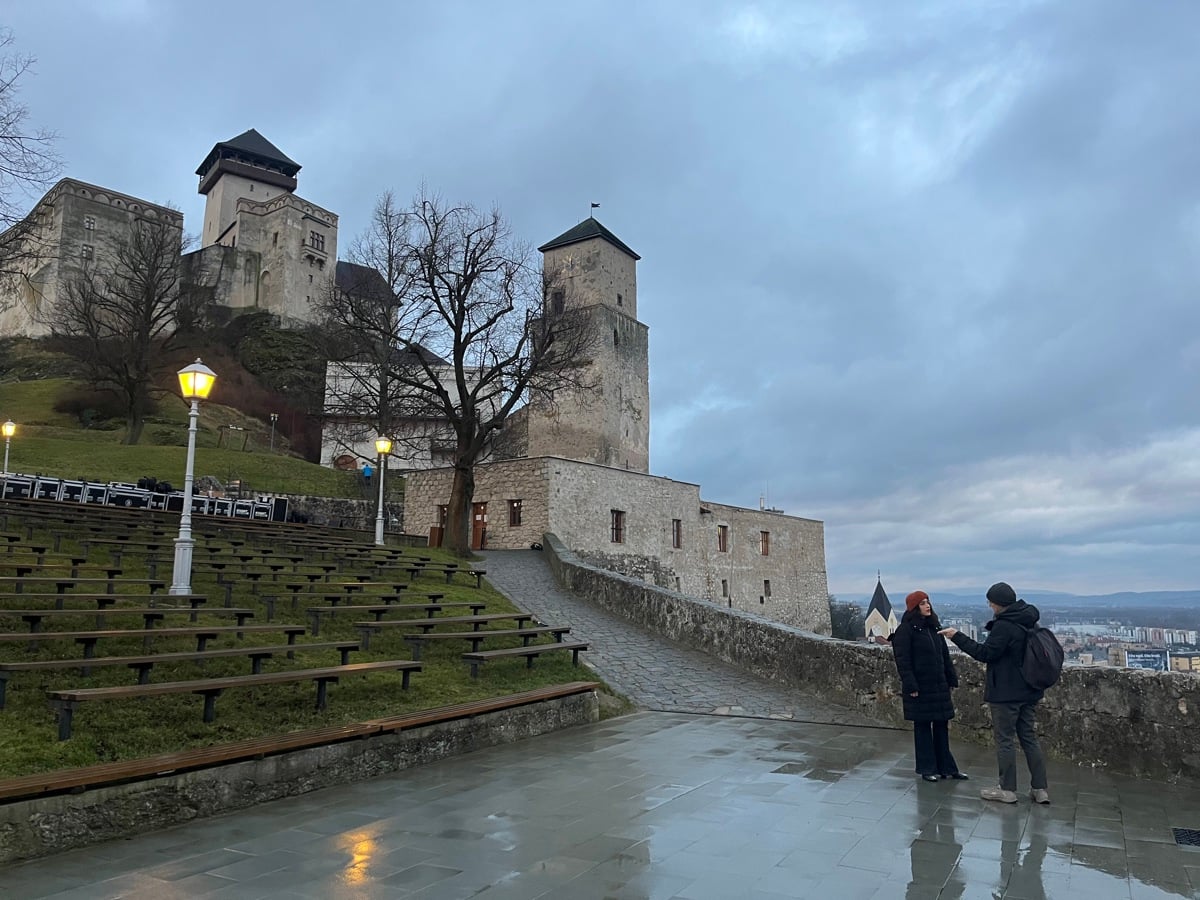
This compelling exhibition, held in the historical setting of a Roman Castle, offers a refreshing contemporary approach to a legendary narrative. Now with art, it is time to remember the forgotten, hear the mute, and see the invisible that has been kept through the centuries.
The exhibition opened on February 6 and will continue until August 28, 2026, at Trenčín Castle-Gothic Chapel and the underground of the Cannon Bastion. This exhibition is a part of the European Capital of Culture project.
(AT/VK)