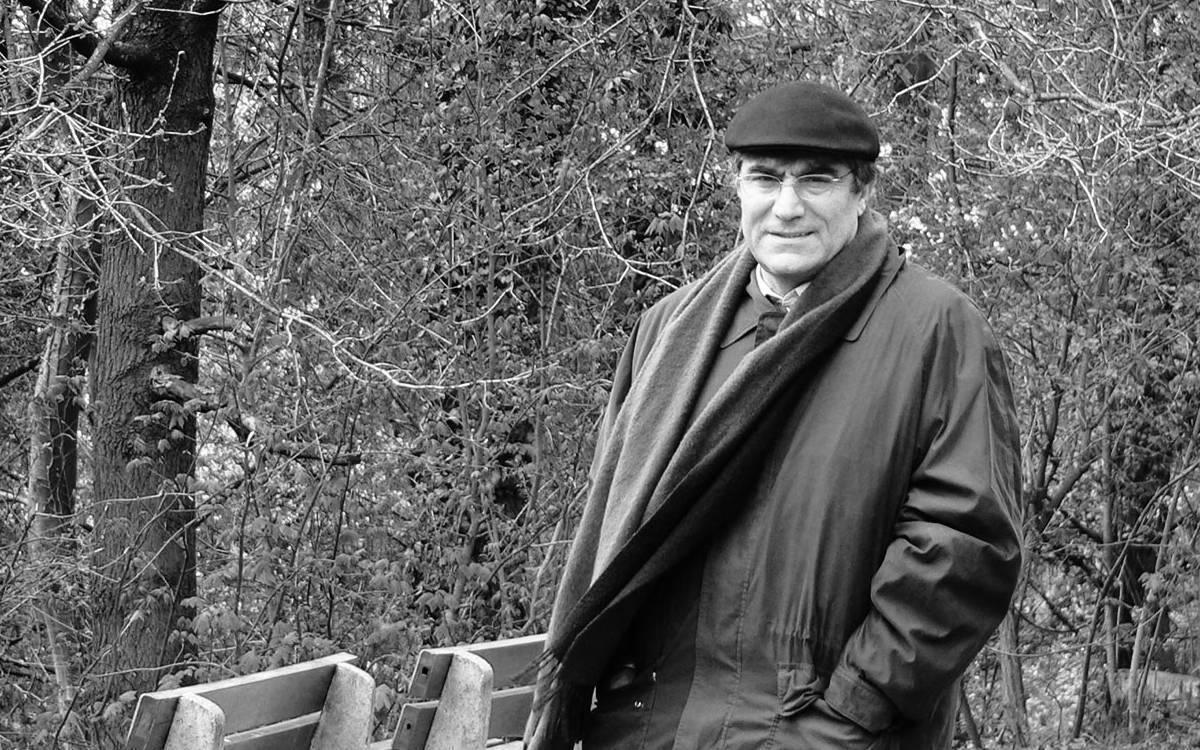









Hrant Dink was murdered 19 years ago. Every year on Jan 19, thousands of people gather in front of the Sebat Apartments, which housed the headquarters of the Agos newspaper when Hrant Dink was its editor-in-chief. They listen to the speech delivered in Hrant’s memory, following the sorrowful greeting of Rakel Dink, and commemorate him.
Years have passed. As squabbles unfolded within the ruling bloc, new suspects were gradually added to the case, and a series of never-ending trials followed one another in courthouse corridors.
On Feb 7 of last year, eight suspects serving in the gendarmerie intelligence unit were sentenced to life imprisonment. It turned out that these individuals were state officials who had been serving in the area where the murder took place. The case is still under review by the Court of Cassation and remains open. Ogün Samast, who was arrested as Hrant’s murderer, has already been released after completing his sentence.
The murder was committed before the eyes of all levels of the state. The law enforcement officers who treated the captured killer not as a perpetrator but as a hero, posing with him while he held a Turkish flag handed to him, already signaled at that time what this case was really about and how it would proceed.
Turkish historical consciousness has been shaped and founded upon the belief that nearly all nations are enemies of the Turks. The fear of the last Turkish state being destroyed, and the notion that “the Turk has no friend but the Turk,” were inherited from the Ottoman era and played a key role in the formation of the Republic of Turkey. When this “fear” merged with hatred, what remained was nothing but hostility toward the “gavur” (infidel).
The Ottoman understanding of nationhood was based on religion. The concept of the “nation of the gavur” included Christians and Jews, and during a period when Turkishness had not yet fully developed as a conscious identity or gained dominance, the emphasis on the “Muslim nation” served as a unifying foundation. Although the treatment of Alevis posed a problematic area within this framework, the general definition was as such. Gradually, the notion of the “Muslim Turkish Nation” was adopted, and depending on the context and audience, either Turkishness or Islam was emphasized.
In the 19 years since Hrant’s murder, perceptions toward Armenians have not changed. Even in the eyes of those who appear most “modern” or describe themselves as leftists, Armenians were seen as traitors who had stabbed us in the back during the War of Independence, collaborating with imperialists.
Over time, this approach turned into a powerful argument used to cover up, deny, or even distort the events of 1915. The existence of this segment—those who, without questioning the lies told for years, believe them to be the truth, lack the ability to analyze historical processes and events, and show no sign of change—is undoubtedly frustrating. However, the hundreds of thousands who attended Hrant’s funeral and the thousands who join the commemoration each year contribute, even if only slightly, to carrying hope into the future.
Over these 19 years, all democratic achievements in the country have been destroyed, and the process has regressed even further. The perpetrators of past massacres were never truly brought to justice. During this time, massacres continued. On Oct 10, 2015, 109 people lost their lives in the Ankara Train Station massacre. The longstanding impunity and the glorification of bullets fired in the name of the nation at the “other” remain as current as ever. Therefore, this reality shows that what happened in the past can easily happen again today. There should be no doubt that those who once praised murderers and perpetrators of genocide and took pride in it could commit the same crimes under a different set of circumstances.
Since the founding of T.R., the Kurdish struggle for equality and rights stemming from their identity has continued on another plane for more than 40 years. This struggle, which emerged as a mass demand for rights, has for years been suppressed with bloodshed. The perpetrators of dozens of crimes against humanity were either acquitted or lost in the labyrinths of time within courthouse corridors.
We are supposedly in the midst of a new, unnamed process that has been ongoing for 15 months. Allegedly, it is a time for peace with the Kurds. Yet during this period, not a single development has occurred that could be seen as a sign of goodwill. On the contrary, through relations established with the jihadist Jolani regime in Syria, the intolerance toward the Kurdish presence in Syria has reached its peak.
There is a desire for the Kurds, divided across four regions, to not exist or wage an equality struggle in any geography. The most primitive attitudes once directed at the “gavur” are now long directed at the Kurds. This time, the most powerful argument is the claim that “they collaborate with Israel and America, they work with imperialists.”
Turkey, one of NATO’s most important allies, whose entire military power largely depends on America, and whose economy is largely tied to the EU and the US—where imperialism is considered an internal dynamic and which was identified by Trump as one of the two most important countries along with Israel—is now preparing for an uncertain struggle in alliance with the Jolani regime in Syria against the Kurds.
Although different in nature, hostility toward the “gavur” and “nationalism” converge through the Turkish-Islamic synthesis and create a common ground. On this shared basis, supposedly in the name of the fight against imperialism and nourished by historical fears, they justify all forms of tyranny for the sake of preserving the existence of the state.
Nineteen years on, as we commemorate Hrant Dink, it is worth remembering that the mindset that killed him still prevails and remains current. (KA/EMK/VK)