




"True socialism unites individual freedom with social solidarity. Not forced equality, but voluntary cooperation and mutual aid are the foundation of a free society." — Peter Kropotkin
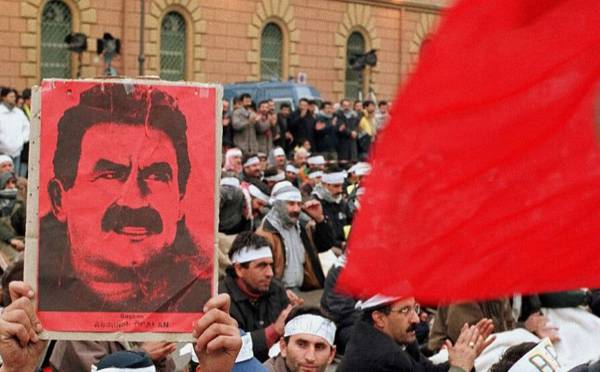
In the “Perspective” text presented to the PKK’s 12th Congress, Abdullah Öcalan states: “Marx begins history with class. Yet the real problematic begins not with class, but with the sociality of women.”(1) One of his most original and in-depth critiques of real socialism lies in the fact that these systems regarded women’s freedom as a secondary issue and failed to sufficiently question patriarchal structures during revolutionary processes.
According to Öcalan, even though Soviet-style socialism integrated women into production, it did not achieve the ethical, ideological, and organizational transformation necessary to make them political subjects(2). This shows how sexist structures were reproduced without being critically addressed within revolutionary movements. Öcalan argues that the true measure of the idea of freedom is the level of women's liberation. Women should be seen not just as a class or identity, but as the first colonized beings of civilization's history—and should therefore play a central role in overcoming all forms of domination.
This approach overlaps directly with anarchist feminist critiques, which highlight patriarchy as a structural form of domination persisting not only in capitalism but also in socialist systems. The concept of Jineolojî, developed by Öcalan, introduces a new scientific framework centered on women's historical and social knowledge, redefining the paradigm of freedom not only in economic or class terms, but as a gender-based revolution(3).
In the same text, Öcalan continues: “I believe it is more accurate to rethink Marxism rather than apply it directly. History is not a history of class struggle, but of conflict between state and commune... If Marx had understood Bakunin, and Lenin had understood Kropotkin, the fate of socialism would certainly have evolved differently.”(1) Here, Öcalan replaces Marxist class theory with communal organization.
This theoretical tension between Bakunin and Marx should not only be read as a divergence within 19th-century revolutionary thought, but also as a strategic split that continues to influence social movements in the 20th and 21st centuries. It also resonates deeply in Öcalan’s own ideological evolution. While originally advocating a Marxist-Leninist view that the state was a tool of class domination and needed to be seized by the proletariat, after 1999 Öcalan shifted toward a position that critiques the state as the institutional ground of all forms of power and domination(4).
This transformation indicates a synthesis between Bakunin’s anti-statism and Bookchin’s concepts of social ecology and libertarian municipalism(4). Rejecting the state not as a means of liberation but as a form of domination to be overcome, Öcalan also departs radically from classical Marxist strategy. Under the concept of democratic modernity, he sets out to construct a new paradigm of freedom(5).
Öcalan’s concept of “democratic modernity” is a holistic counter-paradigm to capitalist modernity’s centralized state apparatus, industrialist economy, and nation-state formation. It proposes not only an economic or political alternative but also an ideological rupture aimed at transforming human-nature relations, gender regimes, and historical narratives.
This theoretical orientation draws heavily on the thought of Murray Bookchin and forms strong ties with anarchist theory(6). Against centralized state power, Öcalan proposes models of local self-governance based on popular assemblies, which become foundational within his system of democratic confederalism.
Öcalan’s definition of democratic modernity represents a clear break with the Marxist-Leninist modernization path while also overlapping significantly with anarchism’s historical critiques(7). For Öcalan, modernity is a multilayered system of domination, reinforced not only by capitalist relations of production but also by patriarchy, nationalism, and positivist science. In response, democratic modernity centers on an anti-capitalist, anti-authoritarian, anti-hierarchical, and ecological form of life(8). In this sense, Öcalan’s paradigm shares core assumptions with anarchist ideals of statelessness, decentralization, and direct democracy.
However, Öcalan’s understanding of democratic modernity does not entirely coincide with anarchist theory but stands in creative tension with it. While anarchist thought categorically rejects the state, Öcalan conceptualizes it as a “historical necessity” that today must be transcended as a form of power. His critique of the state thus aligns more with Bookchin’s approach of “power withering away” through local structures than with Bakunin’s outright rejection.
Additionally, Öcalan’s paradigm places significant emphasis on the collective identities and historical memories of peoples, which sets him apart from more universalist and individualist tendencies in some anarchist theories(9). Therefore, democratic modernity can be read as a project of freedom that reinterprets anarchist principles within the historical, cultural, and political context of the Middle East.
I - Will the revolution be with or without the state?
II - The construction of actually existing socialist practices
III - The codes of democratic modernity through the critique of capitalist modernity
Notes
1 - Abdullah Öcalan, “The PKK’s 12th Congress Perspective”, 2025.
2 - Abdullah Öcalan, Current Problems of Sociology, Aram Publishing, 2007.
3 - Dilar Dirik, The Kurdish Women’s Movement: History, Theory, Practice, Pluto Press, 2022.
4 - Janet Biehl, Ecology or Catastrophe: The Life of Murray Bookchin, Oxford University Press, 2015.
5 - Abdullah Öcalan, Manifesto for a Democratic Civilization, Volume 1, Aram Publishing, 2009.
6 - Murray Bookchin, The Rise of Urbanization and the Decline of Citizenship, Black Rose Books, 1992.
7 - Mikhail Bakunin, Statism and Anarchy, Cambridge University Press, 1990.
8 - David Graeber, Fragments of an Anarchist Anthropology, Prickly Paradigm Press, 2004.
9 - Peter Marshall, Demanding the Impossible: A History of Anarchism, HarperCollins, 1992.