









Orientalism is not so much about misrepresenting the East as it is about monopolizing the authority to define it. It speaks from the place where knowledge and power converge in a single sentence. It constructs the East as backward, irrational, emotional, deficient, and “not yet formed,” while the West is presented as complete, rational, and guiding. In this way, inequality is portrayed as natural, intervention as necessary, and domination as almost a moral duty.
Yet this perspective is not merely a lens held at a distance by the West toward the East. In some societies, this lens is brought inside, localized, internalized. It is reproduced among people who live within the same national borders and share the same historical burden. Orientalism thus ceases to be an external gaze and becomes a regime of thought that legitimizes internal hierarchies within a society. At this point, we speak of internal orientalism.
The way Kurds are viewed in Turkey is precisely a product of this internal orientalism. With the founding of the Republic, the political imagination built around secularization, centralization, enlightenment, and civilization did not position Kurds as equal founding subjects. Instead, they were seen as a community to be modernized, tamed, and transformed. The East became not just a geographic direction but the name of backwardness, belatedness, and “the problem.”
Over time, this perspective spread from the state to society. Open denial was replaced by more “polite” words: underdevelopment, unreadiness, untimeliness. The Kurdish issue was reframed not as a matter of equality and rights, but as a problem of development, a pedagogical deficiency. The center spoke, the periphery listened. The center defined, the periphery waited.
This mental construct did not circulate only in constitutional texts, security reports, or official discourse. It advanced on a deeper, more lasting trajectory: it seeped into cultural and artistic production. Because power becomes most invisible when it hides itself within aesthetic forms.
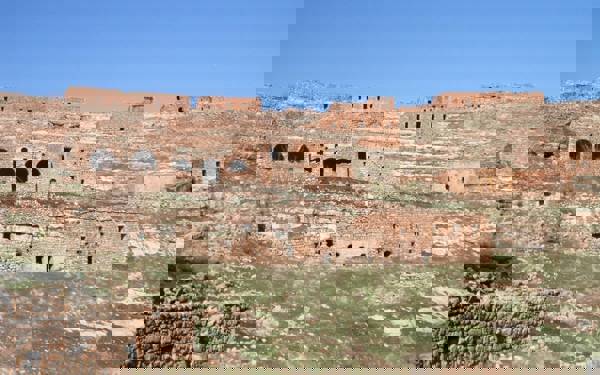
In Turkey, the gaze directed at Kurds and Kurdistan in literature, cinema, television, and theater became one of the most refined manifestations of internal orientalism. For many years, Kurdistan was used as a backdrop in narratives. Misty mountains, dirt roads, stone houses, stern-faced men, silent women, endless blood feuds… Kurds were reduced not to individuals, but to an “atmosphere.”
Films set in Kurdistan were often made for the audience at the center. The camera looked at the region not as a witness, but as an inspector. Mountains symbolized nothing but poverty, villages nothing but ignorance, and people nothing but traditional oppression. Kurdish characters were cast either as “tough but well-meaning” father figures or as part of a darkness surrounded by honor killings, blood feuds, and silent women. While state violence faded into the background, the “internal problems of the East” were placed at the heart of the narrative. Thus, structural oppression was rendered invisible, and historical inequality was presented as a cultural fate.
The most troubling aspect of these representations was that they did not contain open hostility. On the contrary, most claimed to speak in the name of “realism.” Kurdish poverty, rural life, and tribal structures were portrayed as a frozen destiny, detached from historical and political context. State violence faded into the background, and inequality was portrayed as a cultural trait. In this way, art reproduced domination through an innocent narrative language.
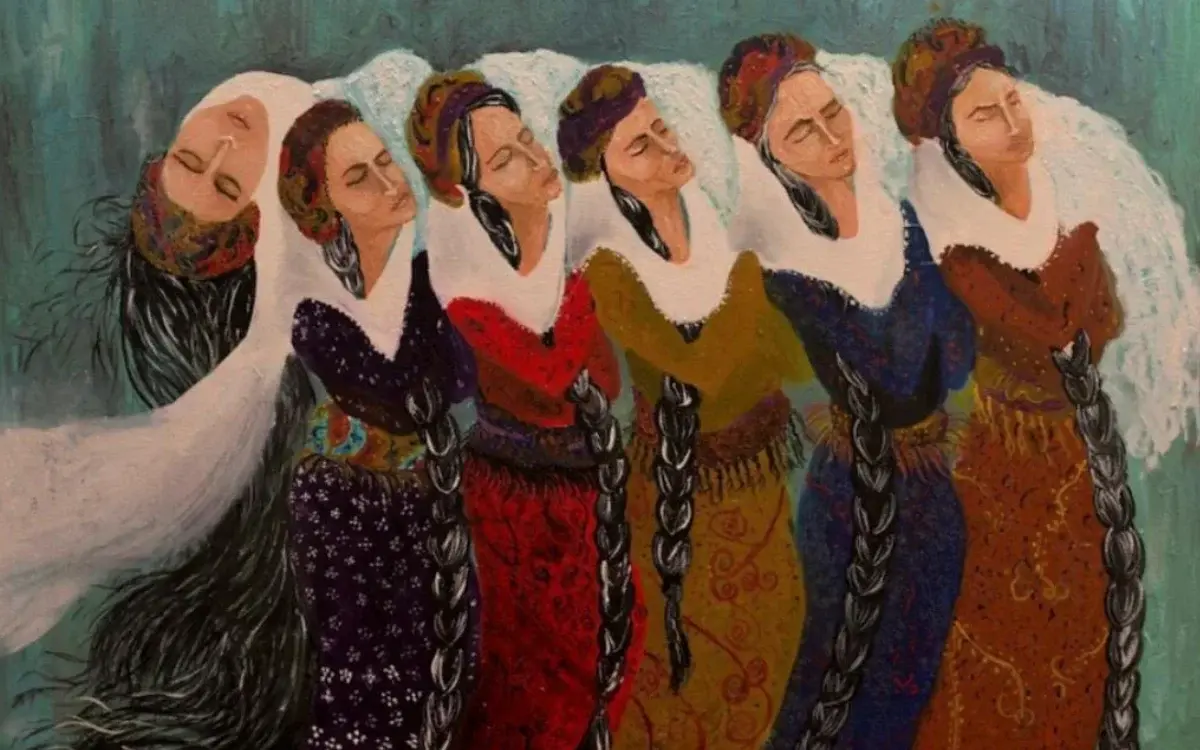
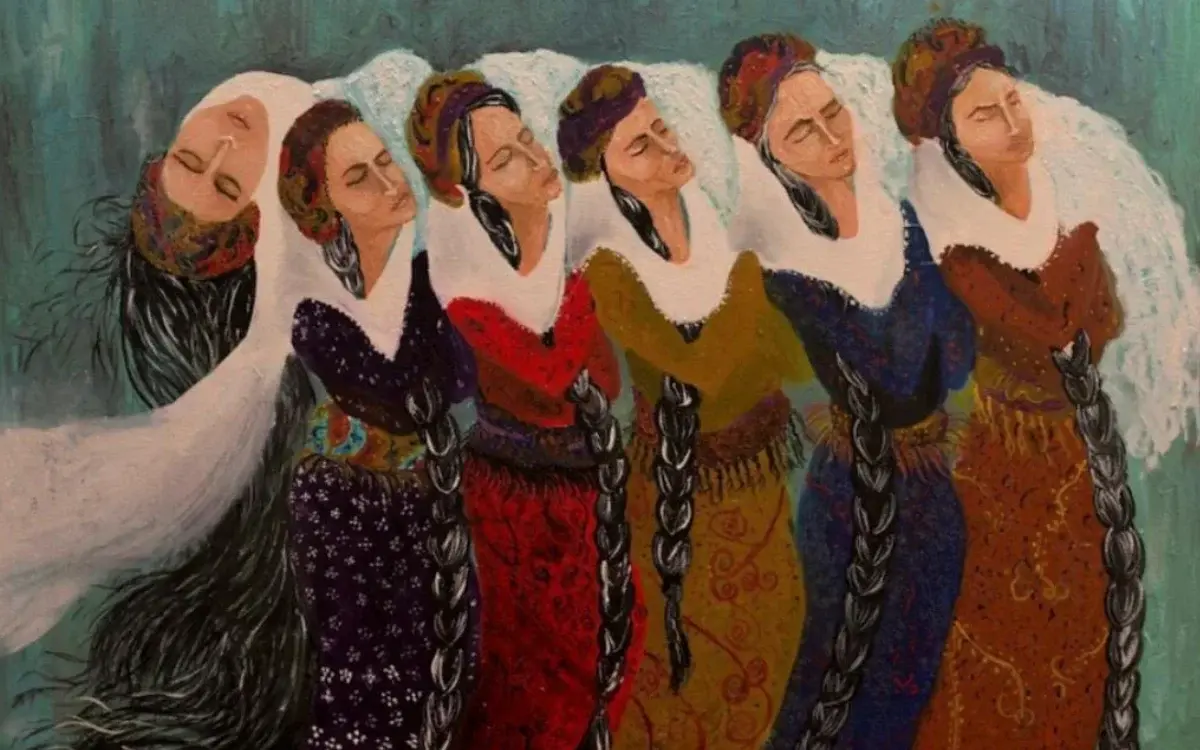
What was even more unsettling was that over time this perspective was internalized by Kurdish artists themselves. In order to gain the center’s approval, become visible, and enter circulation, some Kurdish writers and filmmakers were forced to view their own society through the center’s lens. Pain was aestheticized, poverty romanticized, resistance reduced to folkloric ornamentation. The Kurdish subject was once again pushed out of the center of the narrative.
This is not a matter of intent, but of mentality. A community accustomed to being viewed from the outside eventually begins to see itself that way. Art ceases to be a liberating space and becomes a tool for gaining acceptance and legitimacy.
Yet this is precisely where the true power of art should lie: in its ability to disrupt the language established by the center. The story of the Kurds is neither merely a tragedy nor an exotic folklore. It is neither frozen in the past nor waiting at the doorstep of modernity. Kurds are living, thinking, conflicted, and producing subjects of this country.
This also reveals why the Kurdish issue in Turkey cannot be resolved through political negotiations alone. The problem lies not only in what the state does but in what society—particularly art and literature—regards as normal, possible, and speakable. Without overcoming internal orientalism, while Kurds are still positioned as objects of representation, the idea of genuine equality cannot take root in this land.
If Turkish cinema and literature want to confront the Kurdish issue, they must first break this mirror. Without ending the metaphorization of the East, without moving beyond seeing Kurds as folkloric figures or tragic characters, true confrontation is not possible. The liberating power of art emerges only when the subject is called back. Otherwise, even the most aesthetic sentences and the most striking scenes turn into refined forms of domination.
Abandoning internal orientalism is not an aesthetic choice, but an ethical and political necessity. Any language of resolution built without confronting internal orientalism will remain incomplete, and every narrative of peace will remain fragile. As long as the aesthetic perspective that sees Kurds as objects of narrative, décor, or pedagogical addressees is not overcome, political equality cannot find its counterpart in the cultural sphere either. What must be done is to stop treating the East as an exotic stage and to recognize Kurds not as those who are explained but as those who speak, not as those who are represented but as those who represent themselves. This is precisely where the true transformative power of art begins: where it reverses the gaze, disrupts the language of the center, and turns equality into not a theme but a method. (CE/AB/VK)