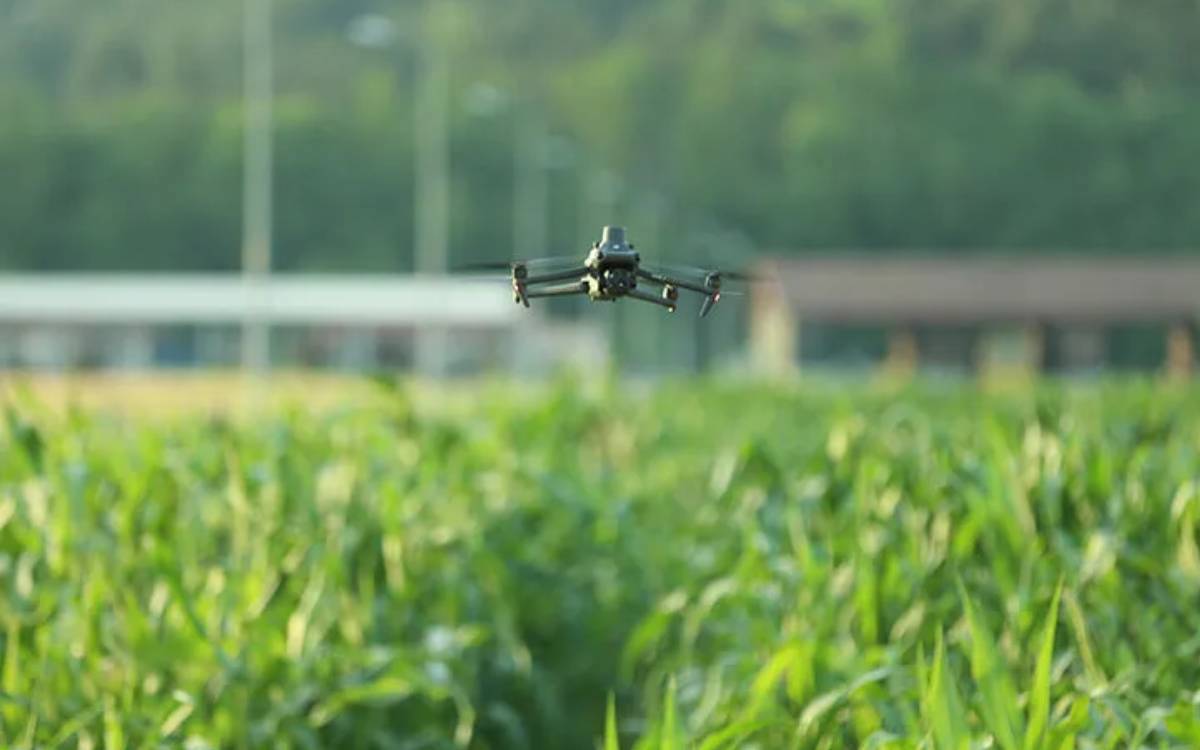

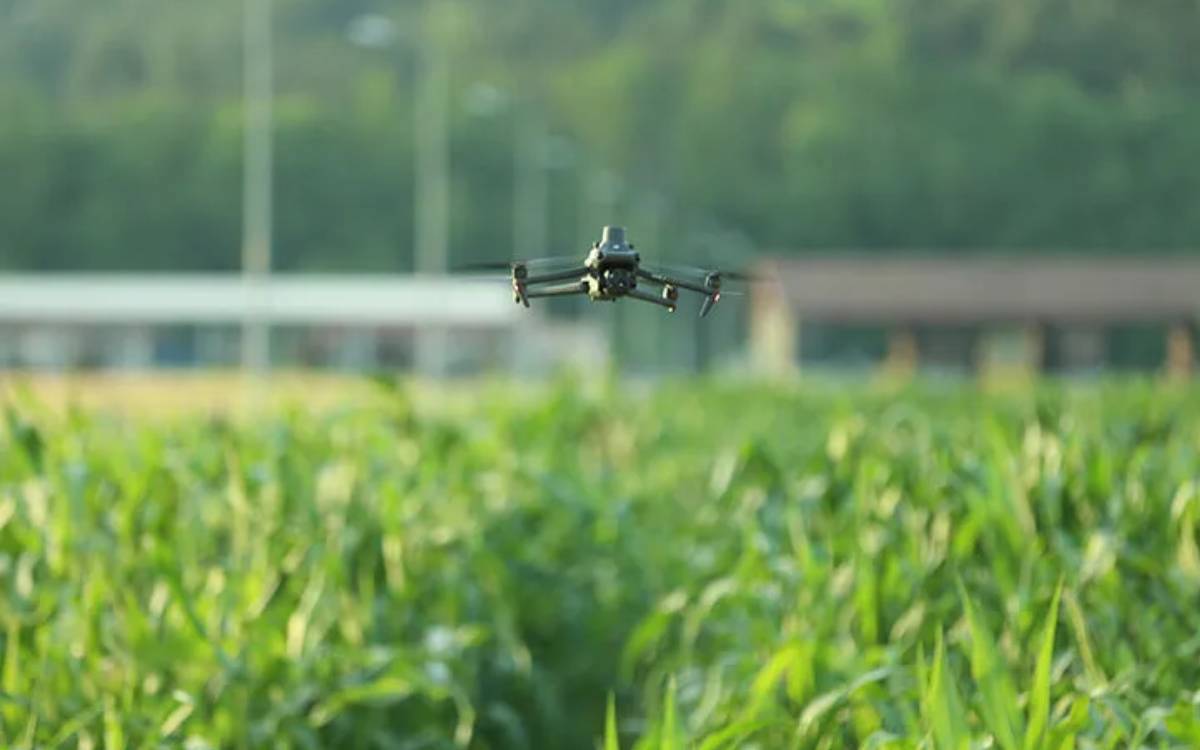



For quite some time now, we’ve had the opportunity to observe the effects of digitalization on us. While the convenience brought by technology makes us feel good, we are also faced with a system that reproduces capitalist production relations. Of course, the implications of digitalization vary by sector, but our most fundamental need—the digitalization of food production—seems likely to leave us at the mercy of corporations in the long run.
The reshaping of the agricultural sector through technology involves policies that will not only put an end to small-scale family farming but also, by dehumanizing agriculture, strip us of our ancestral agricultural knowledge. The mapping of all fields using drones, the reduction of agriculture to mere data, and the transition to “smart farming” through AI-powered agricultural machinery essentially constitute a plan to turn vast rural areas into components of a surveillance system. Under this plan, farmers will be reduced to “data slaves,” while their dependence on large-scale capital companies will increase. Furthermore, connecting tractors to cloud systems also brings with it the risk of cyberattacks, such as the sabotage of farmers’ fields or the theft of their data.
The technology, marketed under names such as “smart agriculture,” “soilless agriculture,” and “digital agriculture,” is promoted as a mechanism to take industrial agriculture to the next level—to achieve higher yields, generate greater profits, and, in particular, address the aging of the rural population. Having all decisions regarding the field made by artificial intelligence not only leads to a loss of production skills for farmers but also causes them to become alienated from their land and the crops they grow, results in the homogenization of produced goods, and ultimately displaces farmers, driving them into poverty. At the same time, smart agricultural machines equipped with artificial intelligence—which lock themselves against any external intervention—are allowing capital to take control of farmers’ means of production.
A monopolistic company like John Deere (1), which built its reputation by manufacturing agricultural machinery, has introduced autonomous tractors to the market in recent years. These tractors have effectively turned the farmer’s most basic means of production into computers. As a result, farmers can no longer intervene in any malfunctions that occur on their own tractors, nor can they take their tractors to a repair shop of their choice. The digital locks installed by the company on the tractors prevent farmers—who are seen as the last bastion of free labor—from having a say over their means of production or taking initiative. Realizing that they only possess the right to use the tractors they purchased, farmers are developing various strategies to counter digital capitalism. First, farmers filed “Right to Repair” (2) lawsuits, which they won, forcing the monopolistic company to pay $99 million in damages.
Furthermore, under the terms of a settlement presented to the court, the company was compelled to make all diagnostic software, error codes, emissions reset tools, and technical manuals—which it had previously provided exclusively to its authorized service centers—available to farmers and independent repair shops for a period of 10 years. (3)
These struggles raise the following question: Is it possible to build “solidarity technologies” that allow us to use technology to our advantage in the face of this digital exploitation? Can we develop fair distribution algorithms based on the collective ownership of the means of production? Our goal, of course, is not to reject technology entirely, but rather to seek ways and methods to build technology from the ground up for the benefit of the people.
In fact, solidarity practices built from the ground up for the public good—such as the Ahilik tradition and the culture of imece—are not foreign to these lands. There is considerable accumulated experience in this area, particularly through the cooperative movement. However, when it comes to the shared use of software, digital sales channels, and the like in the digital sphere, there are still serious shortcomings. Existing commercial applications are not only monopolized by corporations but also not designed in accordance with the principles of the solidarity economy. While digital sales channels increase the number of interactions with products and services, they diminish the underlying political depth and fail to transform product purchases into conscious political acts.
On the other hand, various initiatives have been implemented in this field through platform cooperativism. For example, the Sementler (4) application developed for the MST (Landless Rural Workers’ Movement) in Brazil—an open-source software created through direct dialogue with MST members—has facilitated the movement’s division of labor and management. Similarly, Grownby (5) in the U.S. and Fairmondo (6) in Germany are paving the way for farmers to engage in fair trade and make digital sales through an easy-to-use interface. While the development of digital platforms for the public good—from the grassroots up and tailored to specific needs—is a matter of formulating a policy in response to technology, collective ownership also frees farmers from heavy financial burdens.
However, just as capitalist companies turned to “toxin-free” food production through organic farming and launched a new certified agricultural process once the effects of industrial agriculture became clear, in the same way, robots (7) have now been developed that mechanically pull weeds, sow seeds, know exactly which natural fertilizer to inject into which part of the plant—in short, nourish the plant and harvest the crop at the end of the season.
These robots also perform planting and sowing tasks based on coordinates uploaded to the cloud. One might naturally ask, “What’s so bad about being able to easily perform these labor-intensive tasks—such as weeding, plant feeding, and harvesting, which are often seen as drudgery in agriculture—without using agricultural pesticides?” However, the fact that data from all rural land can be processed and viewed in real time—and that this data, under the guise of “defense systems,” could serve militarization—is truly concerning, as it will transform into a massive surveillance and control system over geography and people. Other issues we need to consider include the linking of surveillance systems to public agricultural subsidies, the shift of agriculture under corporate control, the disconnection of farmers from production—reducing their labor to mere buying and selling—and the monopolization of knowledge. Another issue that must be taken into account is the cost to nature and the environment of our use of artificial intelligence. It is clear that the water and fossil fuels consumed in the production process of these generative AI systems (8), as well as the soil and natural vegetation destroyed through energy extraction, will affect the climate and damage the environment in the long term.
This technology, which leaves us at the mercy of corporations, allows the environment in which we breathe to become increasingly polluted day by day and enables the irreversible depletion of clean water sources. With every operation performed via artificial intelligence, more electricity is generated from fossil fuels, and more potable water is used to keep cooling systems running. The narratives we’re told often portray AI systems as beneficial to the planet and suggest that these technologies will also protect us from climate change. (9) Yet what we’re being told is not the whole story. We must reflect on the ways and means to view and interpret these issues from the public’s perspective, to turn the policies imposed on us on their head, to rewrite the story from our own perspective, and to rebuild our approach to technology from the ground up. Concerns about technology are growing, particularly regarding issues such as artificial intelligence taking rare books from bookstores and destroying them (10) and monopolizing knowledge.
Recently, a large number of collectives and activists have been calling for new regulations, transparency, and greater accountability in the development of artificial intelligence and other emerging technologies. Furthermore, anti-technology activists are being referred to as the “new Luddites,” taking the place of the 19th-century machine-breakers. (11) These collectives and activists, who engage in direct action, target companies operating in sectors such as mining and the defense industry while sabotaging infrastructure systems. Anti-technology sentiment is shaped by three key factors. First, it is viewed as an economic threat stemming from the seizure of the means of production and the reshaping of production methods; second, it is seen as contributing to the dissolution of our bonds with one another and with nature; and finally, it is perceived as a threat that will ultimately eradicate human existence in the long term. We don’t have to look very far. The fact that the occupying Israeli regime uses hunger as a weapon against Palestinians, poisons fields with drones, and turns digital technologies into weapons of war to displace Palestinian farmers is proof that these concerns are not unfounded. (12)
For centuries, we have possessed the agricultural skills that have sustained us and enabled us to produce our own food. By taking control of our own food systems, we can collectively decide—from the perspective of food sovereignty—what to produce, how, when, and for whom. We are not bound by autonomous systems and algorithms created through artificial intelligence—such as “smart farming,” “soil-less farming,” and “robotic farming”—that are imposed on us in the name of productivity and market conditions. Moreover, when we consider the effects of industrial agriculture on our health, it is clear that these systems are not the way to sustain our lives. A long life depends on plenty of physical activity, working the land, and living in harmony with nature. The international farmers’ organization La Via Campesina has conducted studies showing that if food sovereignty is established, wise peasant farming can prevent hunger. (13)
While producing our own food, we can adapt technology to our own benefit in the areas where we need it. We must envision a new structure where this process—which currently favors corporations—is transformed through collective wisdom. Solidarity technologies should be an integral part of the people’s food sovereignty and must serve the public interest and the people themselves.
Sources
1) https://www.croplife.com/smart-tech/more-farmers-are-adopting-john-deeres-see-spray-he res-why/
2) https://www.kqed.org/news/12077465/to-hack-a-tractor-how-farmers-won-the-right-to-repair
4) https://policyreview.info/articles/analysis/platform-cooperativism-brazilian-solidarity-economy
6) https://geo.coop/articles/fairmondo-cooperatively-owned-online-marketplace
7) https://farmdroid.com/products/farmdroid-fd20/
8) https://geo.coop/blog/cooperative-case-against-ai
9) https://yerdenizkooperatifi.org/index.php/2026/07/16/tarim-teknolojisi-karsisinda-ozerklik/
11) https://icct.nl/publication/stop-machines-rise-anti-technology-extremism