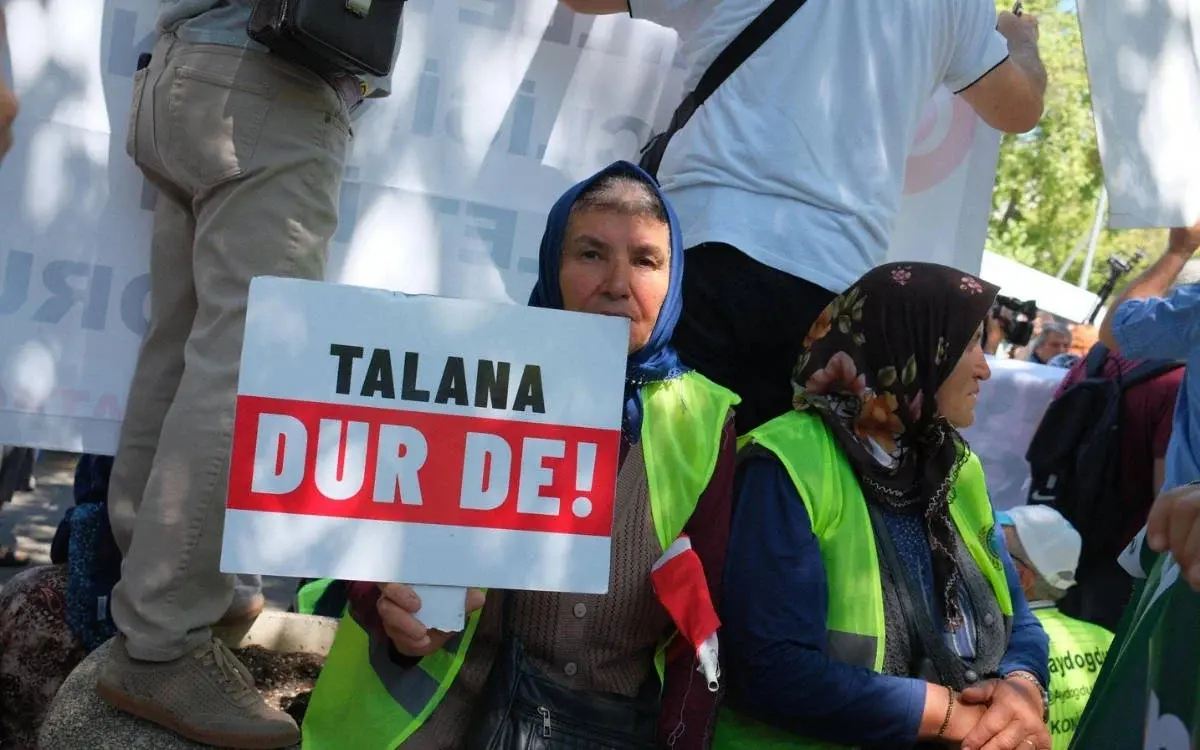







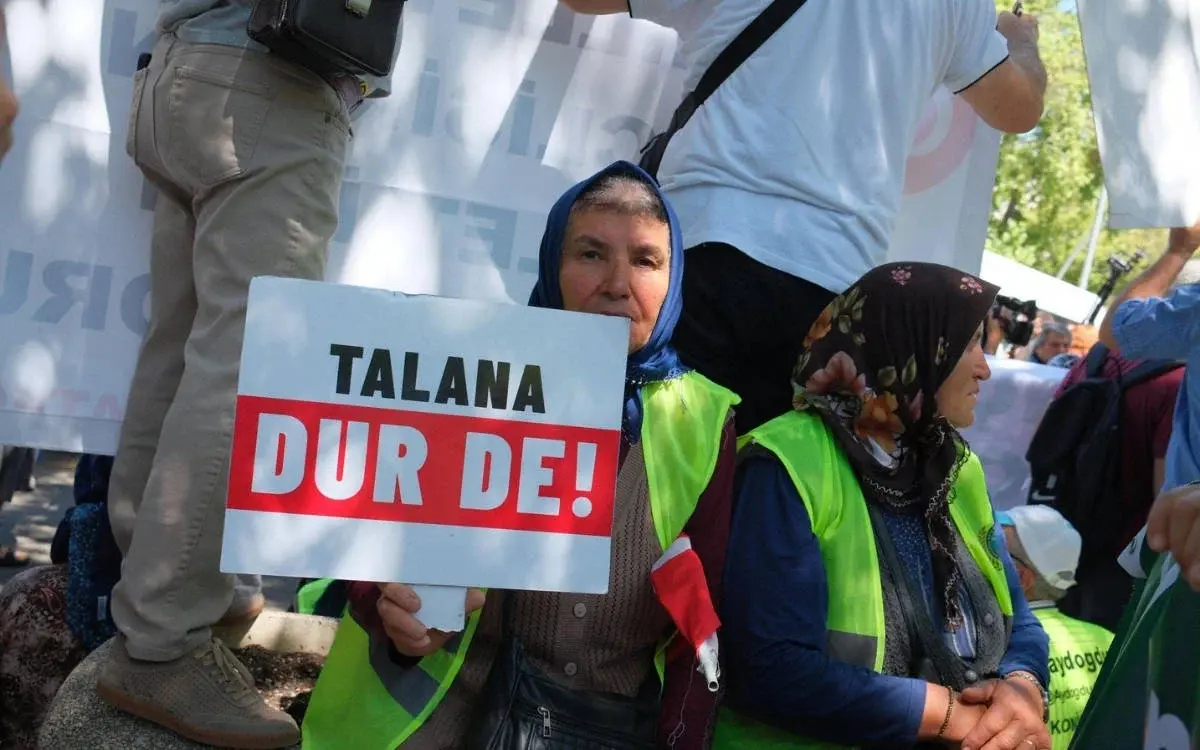



To the Honourable Minister of Treasury and Finance, Mr. Mehmet Şimşek,
According to publicly available documents and official correspondences reaching our attention, it has come to light that YK Enerji—a joint venture established by Limak Holding and IC Enerji—has submitted a formal petition to the Privatization Administration under the Republic of Türkiye’s Ministry of Treasury and Finance. The petition is registered under Reference No. 213 and titled “Legal and Factual Impossibilities Regarding the Yeniköy and Kemerköy Thermal Power Plants”, and was officially submitted to the relevant authorities bearing the signatures of YK Enerji Board Members Birol Ergüven and Murad Bayar.1
In the aforementioned petition, the company outlines how its ongoing projects have been hampered by:
• Law No. 3573 on the Protection of Olive Groves,
• Injunctions issued through administrative judicial proceedings,
• Oversight mechanisms regarding expropriation procedures, and
• Environmental protection provisions.
These legal provisions have been characterized as “risk factors for the investment environment”.
The petition further calls for either the relaxation or full repeal of these regulations on the grounds that the current legal framework constrains company operations. Accordingly, legal norms of significant public interest—such as those governing olive grove protection zones, urgent expropriation procedures, and environmental impact assessments—are explicitly targeted.
Subsequent to this petition, a legislative proposal titled Bill No. 2/3159, which aims to amend the relevant legislation, was submitted to the Grand National Assembly of Türkiye by the AK Party Parliamentary Group. It has also not escaped public attention that some of the parliamentarians endorsing the bill allegedly have commercial or familial ties to mining and energy companies.
This development necessitates thorough scrutiny and evaluation from the standpoint of legislative transparency, judicial independence, and the public interest.
International financial background and institutional risks
Honourable Minister,
International financing for energy and mining investments in Türkiye mandates not only economic but also environmental, social, and legal risk assessments on a global scale. Within this context, the Limak Holding and IC İçtaş partnership stands among the top recipients of foreign financial support for energy projects in Türkiye.
By way of illustration, the Italian financial institution UniCredit has emerged as the foreign bank with the highest level of involvement in coal-related investments in Türkiye. In 2014, through its Turkish affiliate Yapı Kredi and joint venture Koç Financial Services, UniCredit extended a total of USD 834 million to Limak and IC İçtaş across two loan packages for the post-privatization acquisition of the Yeniköy and Kemerköy thermal power plants.2
The Milas-Şekköy lignite mine—linked to these facilities—is currently undergoing expansion, threatening the displacement of 21 villages. During the period from 2015 to 2019, when the plants were exempted from environmental regulations, they caused severe environmental and public health consequences: scientific reports document 45,000 premature deaths, 46,000 hospital admissions due to respiratory and cardiovascular conditions, and approximately 12 million lost workdays.3
As a result, UniCredit resolved in 2019 to withdraw from coal investments in Türkiye under mounting public pressure from European civil society. It must be noted that this decision was guided not only by financial considerations, but also by commitments to corporate reputation, human rights, and environmental responsibility.4
Similarly, the European Bank for Reconstruction and Development (EBRD) invested USD 100 million directly in İçtaş Sustainable Energy Investments Inc., a renewable energy affiliate of IC Enerji Holding.5 However, as of February 2022, all shares in this company were transferred back to IC İçtaş Construction Industry and Trade Inc., thereby consolidating full control of the financing under the holding group.6
Nevertheless, the EBRD’s past operations in Türkiye have also drawn public scrutiny. Particularly controversial was the tenure of EBRD Türkiye Director, who simultaneously served on the Board of Directors of Migros Ticaret A.Ş., during a period when the company received substantial financial support from the bank. This dual role sparked significant concerns regarding “conflict of interest”. The financing extended to IC Enerji must also be re-evaluated through the lens of EBRD’s own Environmental and Social Policy (ESP) standards, as it appears to contravene these principles.
The continuation of so-called “climate-friendly” renewable energy projects under the same corporate umbrella responsible for some of the country’s most environmentally destructive coal operations warrants serious ethical and institutional scrutiny.
Legal and financial compliance risks of the omnibus bill
Honourable Minister,
It is well established that YK Enerji, operating under the Limak–IC İçtaş partnership, has sought legislative intervention to override what it describes as administrative and judicial “obstacles” encountered in the post-privatization phase. The subsequent tabling of an omnibus bill before Parliament, explicitly addressing these concerns, constitutes not only a challenge to domestic law but also a breach of international legal and financial compliance regimes.
Outlined below are the primary areas of regulatory misalignment that would arise should the omnibus bill be enacted:
1. EU HREDD (Corporate Sustainability Due Diligence Directive – CSDDD)
This EU directive mandates both companies and public authorities to:
• Prevent human rights violations,
• Avert environmental degradation, and
• Formulate policy in accordance with transparency and independence principles.
The current form of the Omnibus Bill:
• Facilitates the destruction of olive groves, carbon sinks, and biodiversity zones,
• Undermines the enforceability of court decisions,
• Reconfigures urgent expropriation mechanisms in favour of investment, and
• Emerges directly from corporate lobbying efforts,
—thereby constituting a flagrant breach of HREDD obligations. It serves as a textbook case of “policy capture”, whereby public policymaking is subordinated to private interests.
2. EBRD Environmental and Social Policy – Performance Requirements
Regarding IC Enerji and its affiliated projects, the Omnibus Bill is expected to systematically violate the following EBRD performance standards:
• PR1 – Environmental and Social Impact Assessment: The bill nullifies project-related environmental review mechanisms, rendering impact assessments obsolete.
• PR5 – Land Acquisition and Involuntary Resettlement: It revives widespread use of urgent expropriation without the consent or participation of affected communities, thereby posing serious risks to property and housing rights.
• PR6 – Biodiversity Conservation: It directly threatens ecologically sensitive areas, such as olive groves and forest zones.
• PR10 – Information Disclosure and Stakeholder Engagement: Legislation shaped by investor demands circumvents democratic participation and transparency obligations.
3. Paris Agreement and EU Taxonomy Regulation
Türkiye, as a signatory to the Paris Climate Agreement, is bound by its commitment to limit global temperature rise to 1.5°C. The bill’s facilitation of mining, thermal power plants, and aggressive land use policies directly undermines this target.
Moreover, the EU Taxonomy Regulation defines “environmentally sustainable investment” as excluding projects that destroy carbon sinks or threaten biodiversity. This bill risks redefining the notion of “sustainable investment” in Türkiye in a manner wholly incompatible with EU norms.
Honourable Minister,
This proposed legislation, which so clearly contradicts Türkiye’s international commitments, poses grave implications not only for the environment and public welfare but also for the equilibrium of international financial flows.
A vast majority of projects carried out by companies such as IC İçtaş, Limak Holding, and YK Enerji are funded—either directly or indirectly—by European public and private capital.
To reiterate, in 2014, a total of USD 834 million was provided to Limak and IC İçtaş via UniCredit, Yapı Kredi, and Koç Finansman for the acquisition of the Yeniköy and Kemerköy thermal power plants. These facilities have caused irreversible damage to health, agriculture, and ecosystems over several decades. Reports document the displacement threats faced by 21 villages in the Milas-Şekköy basin alone, the atmospheric release of millions of tons of sulphur, mercury, NOx, and particulates, and tens of thousands of premature deaths.
Subsequent “green investment” funding provided by the EBRD to the same project owners has not only shocked Turkish public opinion but has also triggered outrage across Europe. It is worth recalling that former EBRD Türkiye Director’s concurrent role on the Migros board, alongside preferential loans and grants to the company during his tenure, undermined the institution’s accountability and transparency.
A similar controversy is now brewing with the EBRD’s February 2022 disbursement of USD 100 million to IC İçtaş—a company widely regarded as one of Türkiye’s most polluting thermal power operators. Public perception frames this investment as a flagrant violation of the EBRD’s own PR1, PR5, PR6, and PR10 standards.
Likewise, development finance institutions such as the International Finance Corporation (IFC), KfW (Germany), FMO (Netherlands), Swedfund, Proparco (France), Finnfund, and DEG—among others—currently support numerous projects in Türkiye’s energy and mining sectors.
We must therefore underscore the following:
Should the Omnibus Bill be enacted in its present form:
• The environmental and agricultural devastation caused by energy and mining projects will not only harm local communities,
• But will also place all EU-based banks and investment institutions financing these projects at serious risk of non-compliance.
This is because the HREDD Directive, the Paris Agreement, EBRD ESP principles, the EU Taxonomy Regulation, and other standards of institutional responsibility explicitly prohibit:
• The tailoring of public policy to corporate interests,
• Property violations through expropriation and displacement, and
• The mischaracterization of carbon sink–destructive projects as “climate-friendly”.
Accordingly, it will become inevitable to:
Review all EU-based financial commitments to Türkiye’s energy, mining, and infrastructure projects,
Suspend or cancel these obligations where necessary,
Activate formal complaints and grievance mechanisms under international finance institutions,
Explore country-based investment boycotts, similar to those imposed against Uzbek cotton.
In conclusion,
While this so-called “Omnibus Bill” may appear to serve the short-term interests of domestic capital groups, it in fact generates an atmosphere of uncertainty that threatens the very international investors funding these operations.
Such reckless steps—driven by primitive accumulation motives—portend not only environmental and social catastrophe but also destabilization of international financial balances.
It is therefore both urgent and imperative to withdraw this legislative proposal without delay in order to uphold Türkiye’s commitment to the rule of law and to safeguard the sustainability of its international investment relations.
For these reasons, we urgently call for the immediate withdrawal of Bill No. 2/3159.
Respectfully submitted for your attention.
References
[1] https://www.gazeteduvar.com.tr/limak-ic-holdingten-skandal-mektup-para-ve-zeytinlikleri-istediler-makale-1729409
[2] https://beyondfossilfuels.org/wp-content/uploads/2020/03/Unicredit_briefing.pdf
[3] https://caneurope.org/content/uploads/2019/08/The-Real-Costs-of-Coal-Mugla_Full-Report_Final.pdf
[4] https://www.banktrack.org/article/unicredit_s_prime_role_in_turkey_s_coal_hell,
[5] https://www.icholding.com.tr/TR/enerji/haberdetay/ic-ictas-enerji-ye-ebrd-den-100-milyon-dolarlik-yatirim-18
[6] https://www.bloomberght.com/ebrd-ictas-surdurulebilir-hisselerinin-satisi-icin-onay-aldi-2299552
(BSÇ/TY)