










If you want a one-word summary for Jul 11, 2025, I would say “unbelievable.”
If that's not enough, let's leave a small record of history by describing it extensively before, during, and after.
Before the historic ceremony...
- We have to leave our place in Hewler at around 7 in the morning. For this, about 150 people need to have finished all their work early. I went to bed late and set the alarm early; if only sleep would come now, that'd be nice. Naturally, I end up being the first one down at the breakfast area in the morning. There’s no harm in being early. We leave at the designated time, but with an incomplete group… Some friends overslept. Anyway, they catch up later.
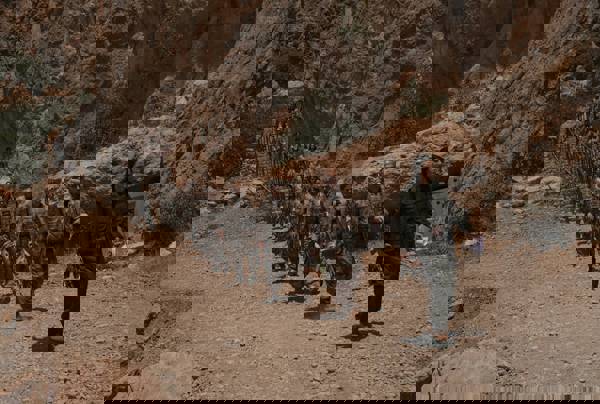
- A long convoy forms. We veer toward Koye and Degala, heading in the direction of Shaqlawa. Without knowing that Dukan is the main destination, we're making our way there. It's a long journey. At times we climb into the mountains, at other times we descend into the valleys. We climb mountains in some places and descend in others.
- After passing through the district of Dukan/Dokan, we turn left toward the steep mountains. Judging by the security measures along the road and how everything is positioned, we realize we've arrived at the ceremony site.
- We arrived at the site in an overall atmosphere of silence and excitement. I read dozens of speculative behind-the-scenes reports made during this time. In fact, even after the program ended and the photos were released, Yenişafak reported that M. Karasu made a statement at the site. Well, whatever...
- Anyway, the road went on and on, and at some point, it came to an end. The end of the road was at the foot of a majestic mountain range. A small sign had been placed in front of it, reading “Jasana Cave.”
- The lecterns had been set up, and everything from restrooms to tea-water needs, to the area where the TV channels (only certain ones) would broadcast , had been meticulously planned. The stage was set up, but the final preparations were not yet complete. We arrived at the location around 10 am. However, the lecterns were still empty. As soon as I step out of the vehicle and head toward the stage, a voice calls out to me. It is someone I know. We hug for like twice as long as we should have. It had been a long time since we had seen each other. It is the same for many people. Friends are embracing, and those who had not seen each other for a long time are catching up. One image that stuck in my mind is Leyla Zana's long and heartfelt hug with a friend who had come from Europe.
- Soon, those who came from Europe arrive at the site. They came via Süleymaniye. With the press, institutions, organizations, politicians, and guests, a group of nearly four hundred spectators forms.
- We learn that the chosen location is a site of memory. This site of memory embodies the resistance of the past and the rejection of a dishonorable surrender.
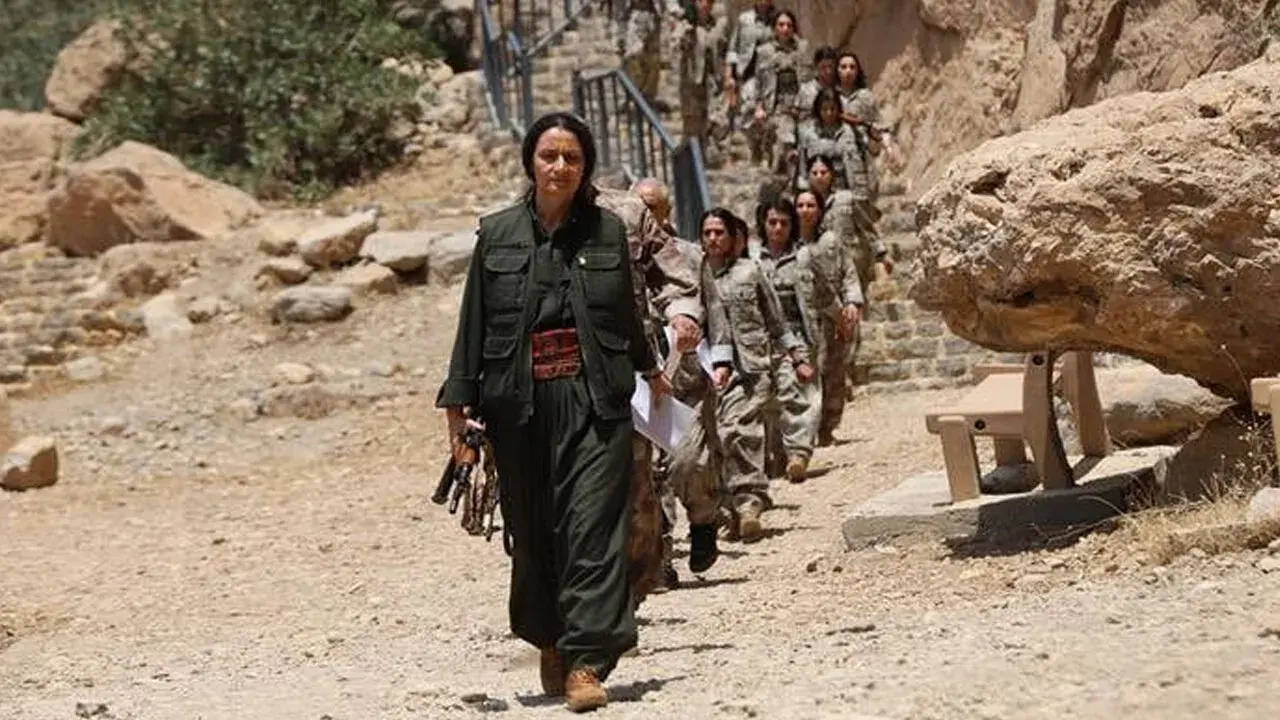
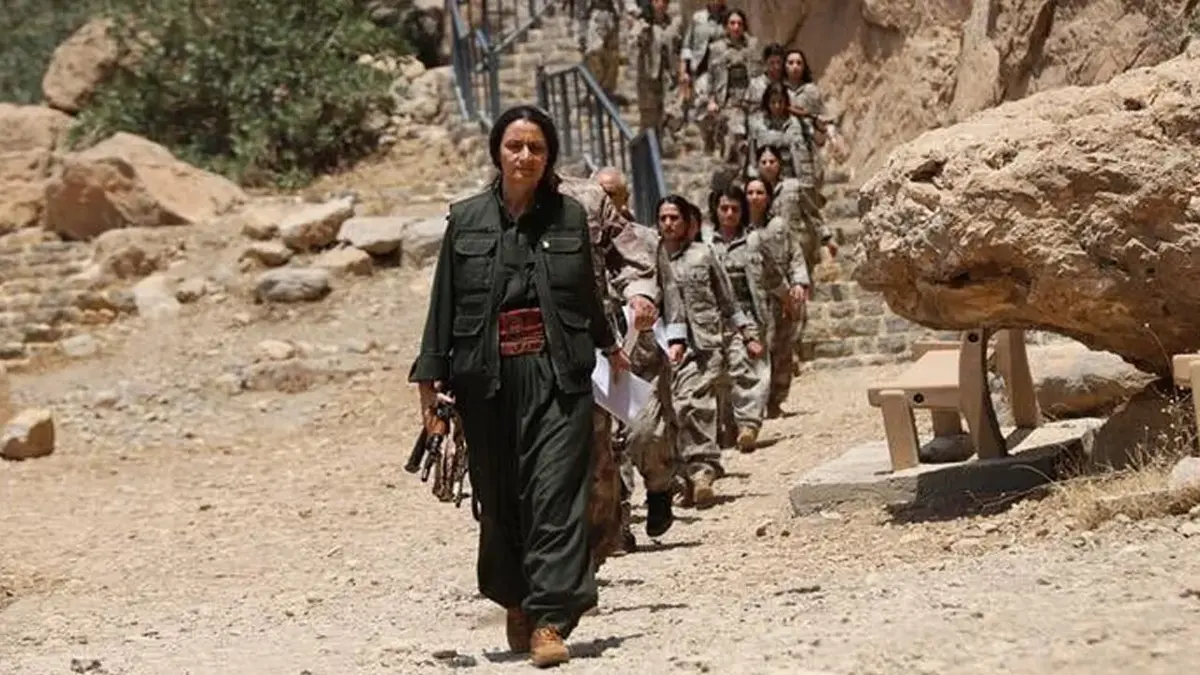
- We took our places. We waited for a long time for everyone to arrive at the site and for the technical details to be sorted out. Meanwhile, our eyes were on the group waiting at the cave entrance. We saw them when they started to move. As they climbed up the stairs leading to the cave and descended, our excitement grew. There are many institutions and individuals from Turkey and Europe at the site. The interest and attention is much more than I expected. And it is very attentive, too. For example, there was Eşber Yağmurdereli, who came there in a wheelchair under very difficult conditions. And of course, you know that the eyes of the Middle East and the world are here. Millions of people are watching from their screens, waiting for images from the site. Those who woke up early had already sent messages, asking what time we would be on screen. We tell them be patient, the footage will be released soon enough.
The historic moment/memory and after
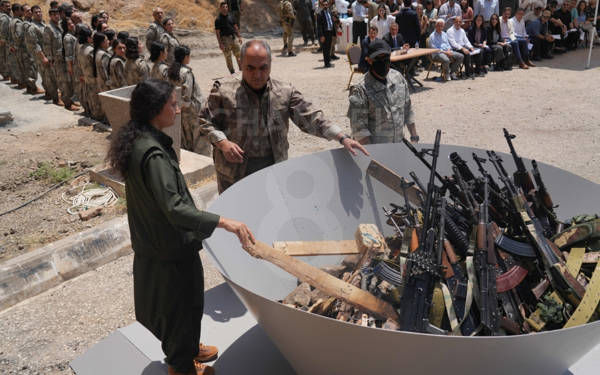
- We wait. Our faces are turned toward the mountain. They will come down through a crack, sit at the table, and make a statement. Everyone is very excited. There are four lecterns on the platform. Below, there is a table for human rights organizations that will register the weapons. Right next to it is the equipment for burning the weapons, including a cauldron.
- We are sitting next to DBP Co-Chair Keskin Bayındır. Looking at the mountain pass where the arrivals will take place, he asks, “Doesn't it resemble Alamut?” With the developments that will take place shortly and their significance, my mind drifts toward the mythical aspect of the atmosphere.
- The first and only warning is given at the site. “Please do not take photos, do not record videos, do not chant slogans, do not applaud.” The announcement is delivered in three languages. Only a limited number of people have cameras or recording devices. We are fine because we don’t have anything. The only recording device we have is our eyes.
- I quickly scribble “to be born of the mountain / to return to the mountain” on the sheets of notes in my hand. Had humanity’s beginning on these lands started with the ark coming to rest on Cudi, right beside us? Wasn’t one of the root meanings of the word “Kurd” in Sumerian “belonging to the mountain”? And what did the goddess Ninhursag say about the mountains? If the mountain is the axis of the world, then what is about to take place in the heart of this mountain today is a contender to become the axis of Turkey’s history. According to Jung, the mountain symbolizes the ascent toward the peak of consciousness, the process of individuation; the arduous climb signifies the confrontation with one’s shadows and the realization of the self. One aspect of what’s happening is precisely this! A reckoning is taking place, an effort to move beyond a shadow state in order to reach a true consciousness.
- I ask Onur Hoca from the Central Executive Committee, who’s next to me, what time it is. He says 11:21. Everyone is witnessing a descent from the mountain, weapons in hand. What did the song say? “Hatin ref bi ref hatin, neviyê Zagrosê hatin.” They head toward the stage that has been set up. In the background, a still from the last İmralı video of Mr. Öcalan. Thirty people descend and take their places on the stage. Fifteen women, fifteen men.
- As they take their places on the site, patience runs out and the warnings made a moment ago are forgotten. The applause and slogans continue for minutes.
- Besê Hozat welcomes everyone in Kurdish and Turkish and opens the event. There seems to be a hint of excitement in her voice. She begins reading the statement. We learn from the first sentence that they have named themselves the “Peace and Democratic Society Group.” The concept of “democratic integration” follows. This is also new.
- The speech responds to Öcalan's calls on Jun 19 and Feb 27, 2025, declaring that they will destroy their weapons “of their own free will” and that the struggle will henceforth be continued on the basis of democratic politics and law. While it is noted that the gains made so far have been achieved at a “heavy cost,” the awareness that democratic gains will also require a difficult struggle is emphasized. The statement also includes a call within a call, stating that “in the context of the war environment in the Middle East and global pressure, this step is historic, correct, and urgent; regional and global powers are invited to respect the legitimate rights of the Kurds and support the process.” Oppression and exploitation will end, freedom and solidarity will prevail. The statement ended with the words, “The Process of Peace and Democratic Society will surely succeed.”
- After the statement, Besê Hozat says, “Legal regulations are needed for all of this to continue and be realized. These are necessary.” This is the message that is not included in this text but is the crux of the matter.
- After the Kurdish version of the statement was read out, the process of laying down arms began. Of course, before that, the list of weapons was handed over in an envelope to the delegation of the Lawyers for Freedom Association (ÖHD), the Human Rights Association (İHD), and TİHV. Besê Hozat was the first to lay down her weapon. Then, one by one, they were left in the burning area, up to their belts. Then the fire was lit. Smoke began to rise, and sparks began to fly.
- This was the most emotional moment of the process. The sound of crying filled the air... It was as if everyone was saying goodbye to something in their own world. Behind this farewell was an intense but “unlived life.”
- We watch the burning weapons for a while. What does it mean for a weapon to burn, to be burned? If I am not mistaken, the FARC's weapons were also melted down and turned into paving stones. Since we are not yet in a place that embodies Kant's vision of eternal peace, Arendt's principle of the transformation of violence into power, and Benjamin's leap from mythical violence to divine violence? I see it as more than a political message; I see it as having other collective meanings.
- In Hindu narratives, there is the story of “Parashurama throwing his axe.” The throwing of the axe, a symbol of violence, transforms into peace and prosperity. Thus, it creates the possibility of inner purification and collective rebirth. We will see together whether the weapons thrown into the burning area and the rising smoke will give us a chance for collective rebirth. But beyond seeing, it should be understood that this is a matter of construction.
- The burning of weapons should be embraced, especially because it sends the message of “no turning back.” There is a situation that has been burned, whose very chemistry has been altered. It no longer has its old form. The second powerful meaning is the determination to change strategy. Another concrete reality is that there is no legal regulation regarding weapons yet. For example, there is no mechanism for receiving and processing them. In that sense, burning and destroying them carries another emphasis in itself.
- All of this takes about 24 minutes. Moments emerge from a historic moment. We engrave every hope for a solution in our hearts and feelings.
- And then? Then they returned inside, into the fold of the mountain they had descended from. And we set out on the road back.
- Perhaps I can express the outcome as follows: Yes, it was an unprecedented moment in the last half-century. Yes, it was an incredible moment that cannot be described in words. But how will this historic step continue? That is the whole issue. In other words, we are on a fine line between approaching with courage and “writing history” and approaching with the wrong attitude and “becoming history.”
- It is constantly being called a beginning, and this is not rhetoric. Today, the most serious step and practice of this was demonstrated. Today's statement is a manifesto of the will to enter the political arena after a long struggle. The subjects of a struggle waged at great cost are now declaring that they are embarking on the “difficult” path of peace and democratic politics with the same determination. This statement is not just a hand extended to one side, but to the entire society, regional and global powers. (ÖA/Mİ/VK)