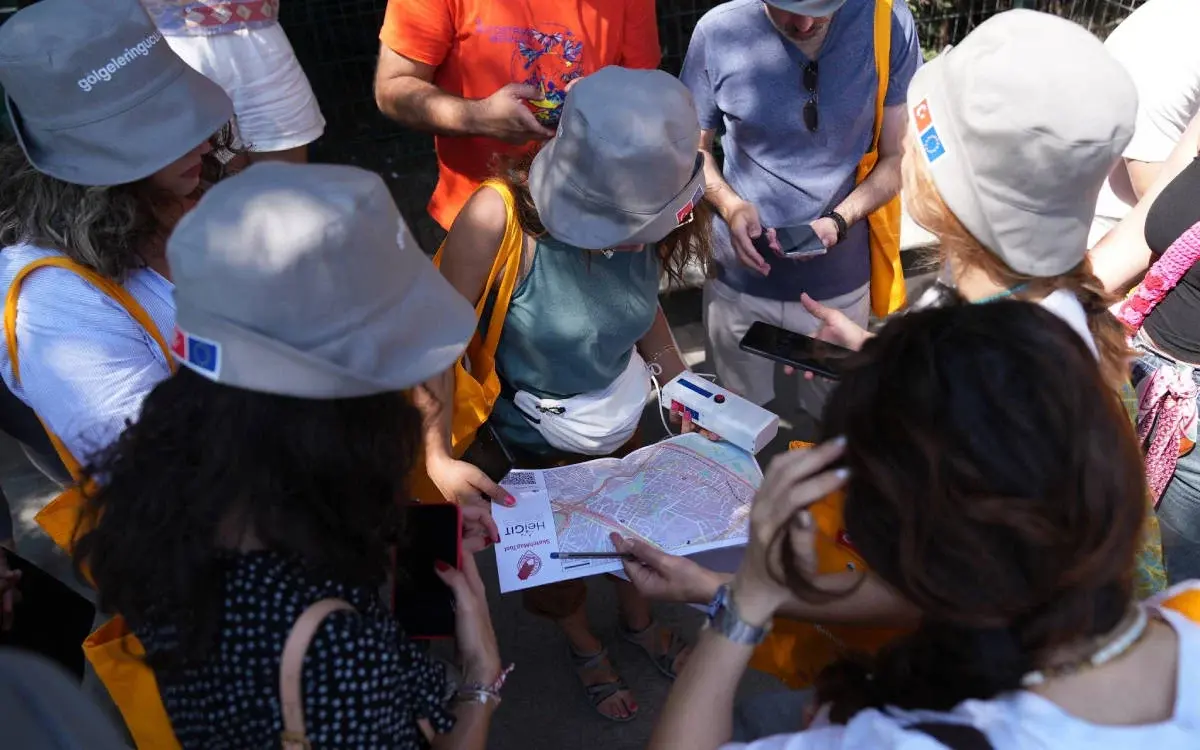









Justice in Space Association (MAD), in collaboration with İstanbul’s Maltepe Municipality, organized a series of "Thermal Walks" across four neighborhoods in the Anatolian-side district.
The walks were part of a research project supported by the European Union under the "Civil Participation Grant Program." The aim is to highlight the effects of rising temperatures in urban settings through both scientific measurements and citizen experiences. The project follows a citizen science approach, directly involving residents in data collection.

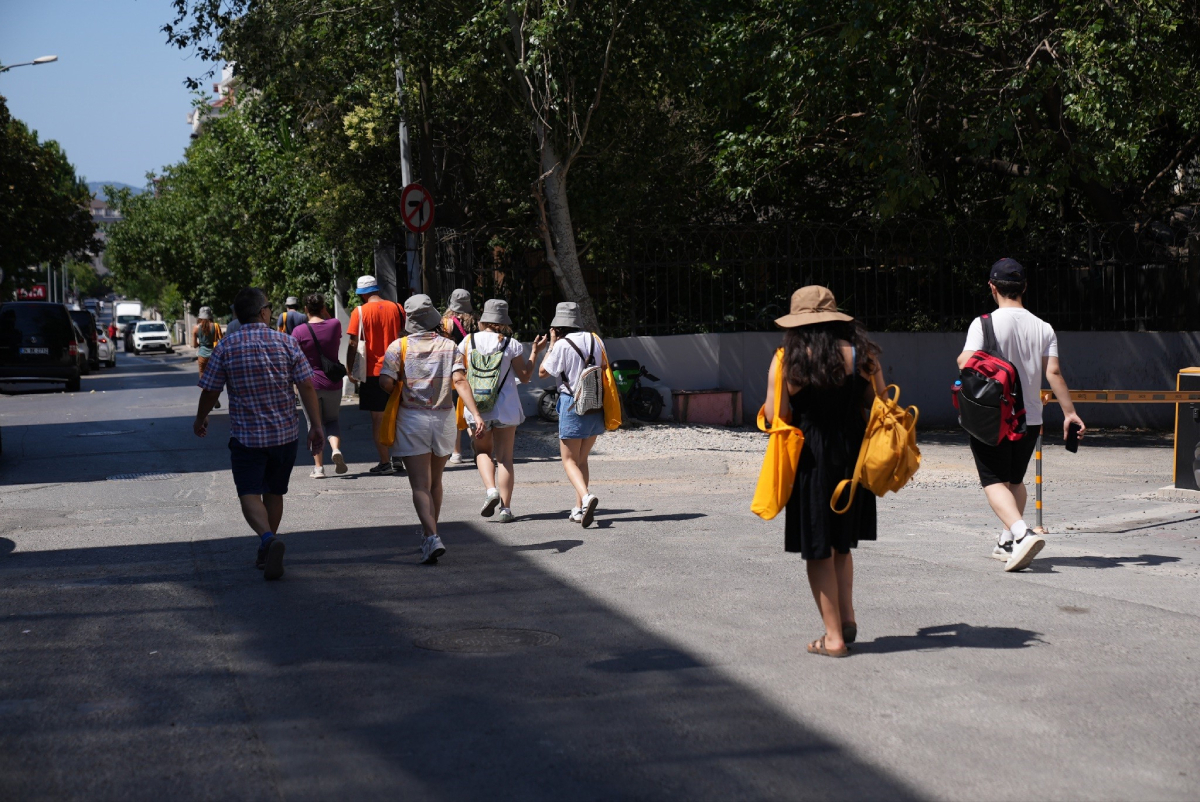
I joined one of these walks along the Küçükyalı route. It started at the Küçükyalı Metro exit and continued through Fatih Tarakçı Park and the İdealtepe 50th Year Grove down to the coastline. Along the way, we stopped at three points to measure temperature and humidity and to complete surveys.
The goal is to assess physical discomfort and thermal stress caused by extreme heat and to map it at the neighborhood level. The walk, held on Jun 28, 2025, coincided with the last day of a heatwave affecting İstanbul. According to Yağız Eren Abanus, Environmental Justice Program Specialist at MAD, this timing offered both challenges and valuable observations.
Climate crisis, heatwaves, and resilience
Abanus explains the core aim of the project:
"Our focus is on the increasing frequency of heatwaves due to the climate crisis. A heatwave is defined as temperatures staying 3–5 °C above seasonal norms for at least 72 hours. Between 2000 and 2019, heatwaves were linked to around 489,000 deaths globally each year. In 2022 alone, over 60,000 people died due to extreme heat in Europe.
With this project, we aim to help vulnerable groups, particularly the elderly, women, children, outdoor workers, and those with chronic illnesses, build resilience against heatwaves. We also aim to strengthen the preparedness, response, and recovery capacities of local governments."
The project began in Jan 2025 and is scheduled to conclude by the end of the year.
Who joined?
The Küçükyalı group included MAD team members, residents of the neighborhood including students from İstanbul University’s Department of Urban and Regional Planning, graduate students from various universities, Maltepe Municipality staff, and visiting researchers from Erasmus University Rotterdam.
In the Fındıklı group, the neighborhood head (muhtar) also took part.
Two main community groups were formed within the project:
The facilitator community comprises mostly university-level students who actively contribute to the project’s design and implementation.
The participant researcher community includes women, parents, and residents aged 50 and over who live, work, or study in Maltepe and contribute with their observations and experiences during the data collection process.
Abanus notes that feedback has been overwhelmingly positive:
"The walking method makes both the city and its infrastructure problems more visible. It became clear that citizens need tools to actively participate in policies related to extreme heat and their local environment. Some participants did say the morning walks were tiring. We had planned the walk on a cooler day, but the weather didn’t go as expected and it coincided with the final day of the heatwave."
In the eyes of participants
Levent Civil, a Küçükyalı resident:
"I’m interested in climate justice and urban transformation. I struggle with the heat during summer. It’s very meaningful that the municipality is collecting data together with the public, it contributes both to social interaction and to science."
Enes Kablan, who joined the Fikirtepe walk, said:
"Experiencing thermal stress in the field was highly instructive. Discussing solutions with the public and imagining an alternative city together was truly valuable."
Initial findings
On the Küçükyalı route, the area around the E-5 (D100 Highway) was found to be hotter than the northern neighborhoods. While the 50th Year Park provided cooling through shade and breeze, the lack of pergolas and shaded areas in children’s playgrounds was notable.
Similar issues were observed in other neighborhoods:
- Zümrütevler: Rising temperatures due to dense construction and lack of green spaces.
- Fındıklı: Narrow sidewalks, insufficient shade, and exposed bus stops.
- Altayçeşme: Inadequate pedestrian paths and loss of mature tree cover after urban renewal.
Lack of shade and green spaces emerged as a common problem across all neighborhoods.
Data collection method
Participants took temperature and humidity measurements every 100 meters, filled out surveys at designated stops, and used thermal cameras to create heat maps of the environment. This approach both generated scientific data and raised awareness among residents about their surroundings.
Why Maltepe?
Abanus explained why Maltepe was chosen:
"Maltepe Municipality’s openness to collaboration with civil society and its participatory approach were very important to us. Also, Maltepe offers great diversity both socioeconomically and geographically. It includes relatively affluent neighborhoods as well as informal settlements at risk of urban transformation. We aim to expand the project to other districts and cities in the future. In the fall, we’ll hold meetings with neighboring municipalities and plan a public event to present the project’s outcomes."
What’s next
MAD will continue organizing walks on new routes throughout the summer. While most will take place in Maltepe, there are plans to expand to other districts as well.
For more information, you can contact [email protected].
Citizen science: 'Nothing about us, without us!'
MAD views citizen science not just as a participatory method for producing data, but as a tool for empowering city residents to have a say in their own living environments. This strengthens both data collection and grassroots demands for policy change.
Looking ahead and data to be published
Abanus emphasizes the stark differences in temperature and humidity recorded during simultaneous walks in different neighborhoods. Neighborhoods located below the E-5 (D100 Highway) were on average 3–4 degrees hotter than those at higher elevations. In elevated neighborhoods, the lack of shade and parks was striking. The loss of mature tree cover due to urban renewal further reduces resilience to heatwaves.
Once analyzed, the collected data will be published on golgeleringucu.org, including maps, reports, and thermal images. For updates, follow Justice in Place Association on social media. (EÖ/HA/VK)