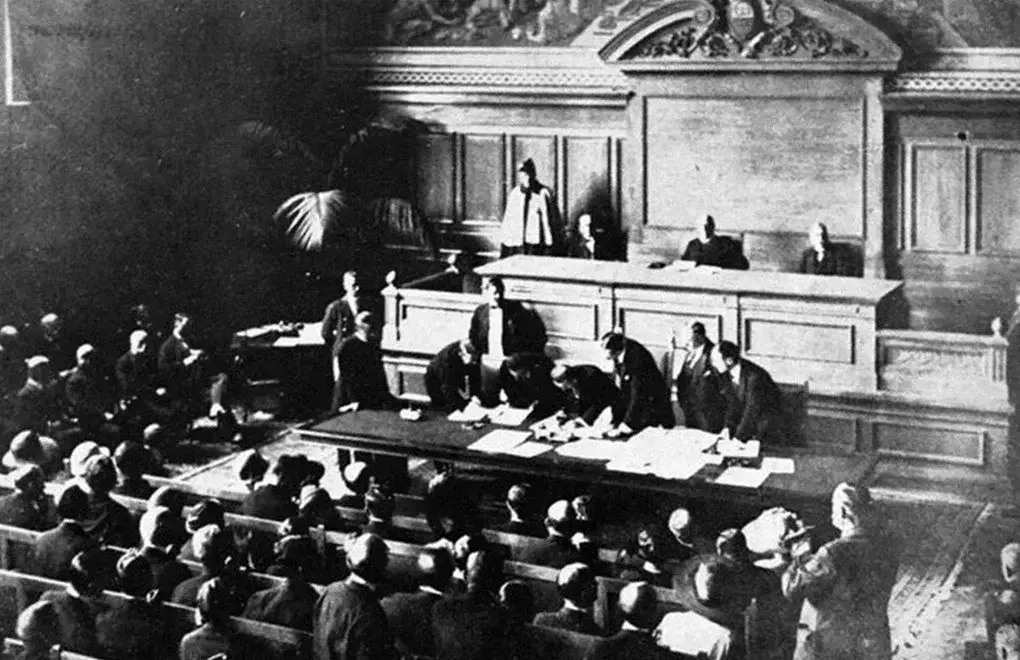


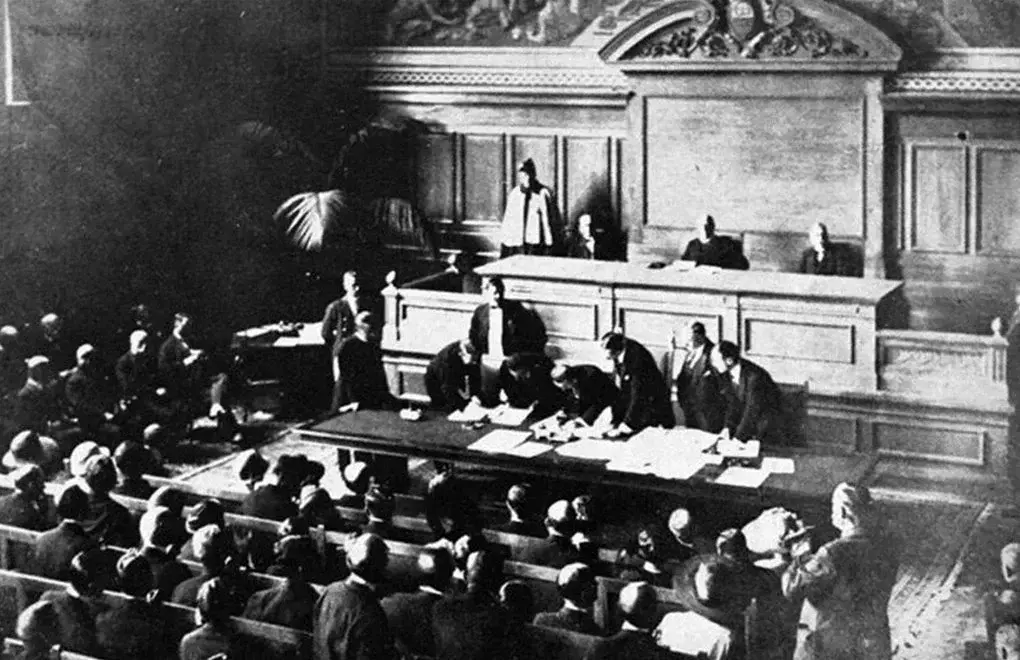



At the Celal Başlangıç Peace Journalism Workshop organized by bianet, we discussed the representation of Lausanne minorities in the media under the theme “Issues of Representation, Diversity, and Pluralism in the Media.” We talked about the representation of Armenians, Greeks, and Jews in the print media, and how hate speech and discriminatory discourse against these identities are manifested. In Turkey, the print media often reproduces and reinforces existing prejudices and stereotypes while fueling discrimination through the widespread use of hate language. The dominant discourses in news production strengthen perceptions of hostility toward different identities and deepen social polarization. The representation of different identities in the media is also shaped around this language of hate. This language, which is far removed from an emphasis on pluralism and coexistence, continues to stand as a barrier to the equal representation of identities and especially reproduces and circulates discrimination against certain identities.
The Hrant Dink Foundation began its work on hate speech in 2009 with the project Monitoring Hate Speech in the Media. The starting point of this project was the process that led to the assassination of Hrant Dink in front of the Agos newspaper office in 2007, before which he was frequently targeted through the media. Among the main objectives of the foundation and this project are combating discrimination, prioritizing freedom of expression, advocating for coexistence, and contributing to the strengthening of a new discourse by raising awareness that discrimination begins with language. In line with these goals, since 2009, hate speech and discriminatory discourse against different identity groups in the Turkish print media have been monitored and reported. These monitoring activities are presented as weekly, monthly, or thematic analyses. According to the cycle of discrimination on which these studies are based, historical narratives, the cultural context we are in, the political climate, and current developments provide the ground for the formation of stereotypes and prejudices. These prejudices transform into behavior and feed discrimination, which over time leads to systematic inequality and sometimes reaches the level of violence, causing the cycle to reproduce itself. Hate speech and discriminatory discourse are also nourished by this cycle and appear in various forms depending on the context.
In this context, since 2009, all national newspapers and approximately 500 local newspapers in Turkey have been monitored, and hate and discriminatory discourse targeting different identity groups are identified and reported. This study includes not only explicit examples of hate speech but also news stories that contain more implicit discriminatory messages. Through media scans conducted using pre-determined keywords (such as “Jew,” “Muslim,” “traitor,” “bigot,” “infidel,” “refugee”), news items containing hate speech are identified. While the reports primarily focus on hate speech based on national, ethnic, and religious identities, hate speech against women and LGBTI+s is also included in the analysis.
Although the language of the print media has changed over the years depending on social and political agendas, hate speech targeting minorities and disadvantaged groups remains constant. As a result of the monitoring work conducted between 2009 and 2019, it has been observed that some groups have become the “unchanging others” in the Turkish media: Armenians, Jews, Greeks, Greeks (from Greece), Syrians, and Christians. This can be interpreted as a result of deeply rooted perceptions of hostility and discourses of “threat.” Following the mass migration from Syria in 2014, Syrians quickly became one of the most frequently targeted communities. This shows that hate speech continuously expands its scope by constructing “new others,” adding new groups depicted as “threats” to those historically targeted. In this context, we also witness how LGBTI+s are constructed as the “new other” and targeted through state policies, official discourse, and a hostile political climate. The current political agenda and international developments also influence the intensity of hate speech. For example, events or periods of crisis such as New Year celebrations, April 24 commemorations, the Cyprus issue, election periods, political statements, or the war in Syria may lead to an increase in hate speech.
Hate speech in the media is produced not only through explicit expressions of hostility but also through more implicit and indirect discursive strategies operating at different levels. These discourses go beyond targeting a specific identity and create meaning that reinforces social hierarchies and redefines differences as elements of threat. One of the most frequently encountered discourse production methods in the media monitoring study is associating crime with identity. In these examples, the consequences of an incident or event are directly linked to an identity. Thus, an individual act is turned into a characteristic of an entire identity. This method manifests itself in news items through stereotyped expressions such as “Armenian terrorism” or “Syrian criminals,” reinforcing hostility toward certain identities.
Another frequently used method is the construction of a binary opposition between “us” and “them.” News stories employing this language position Turkishness as a superior identity and portray groups outside of it as potential “threats.” The identity presented as “us” is attributed with moral superiority, a sense of unity, and legitimacy, while “them” is coded as “chaotic, sneaky, opportunistic, or dangerous.” This dichotomy is reinforced not only at the textual level but also through selected visuals, headline emphasis, and the sequencing of news stories. This method appears in news with expressions like “Turks struggle to survive while Greeks seek opportunity” or “Turkish stance against Greek treachery.” Such comparisons based on identity contribute to deepening social polarization.
The use of adjectives is another method frequently encountered in news containing hate speech. In this method, identity descriptors themselves are defined with words such as “ferocious,” “despicable,” or “traitorous.” Especially during periods of crisis, such labels function as a mechanism that directs and legitimizes societal anger. The use of adjectives fuels existing hostility against identities by feeding the perception of “threat.” In addition to this, repeated narrative patterns for certain identities can be observed across different periods through similar word choices, thereby nurturing prejudice. These repetitions both lay the groundwork for the continuous reproduction of hate speech and create an image of a “natural” or “customary” enemy in the collective memory.
When all these methods are combined, we observe that identities we refer to as the “unchanging others” are continuously targeted by hate speech and discriminatory discourse in the media. While the methods used create a similar framework for hate speech against different identity groups, they also appear in forms specific to each identity. In this context, when we examine the discourse produced about Armenians, Greeks, and Jews, both recurring patterns and differences emerge. In Turkey’s print media, discourses targeting these three groups converge around a general construction of the “other.” Among the most common forms of hate speech observed for all three groups are exaggeration, attribution, and distortion. Headlines such as “Vicious Armenian attack” or “Bigoted Jews go wild!” found in news stories are supported by false information and negative generalizations, thereby reinforcing stereotypes and prejudices. Each group is targeted through distinct negative narratives.
Armenians are depicted as an “internal and external threat to national identity” and subjected to disproportionate hostility and warlike discourse. This discourse persists not only in the context of specific events but also within the continuity of Turkey’s nationalist historical narrative. Especially events such as April 24 commemorations or developments in Turkey-Armenia relations become factors reinforcing this hostile discourse. Through expressions such as “ferocious Armenians” or “Armenian lobby,” Armenians are marked as a “threat,” reinforcing the existing perception of enmity. The discourse targeting Greeks is shaped both by historical narratives and by the current state of Turkey-Greece relations and the Cyprus issue. The Greek identity is particularly portrayed as an “enemy” through the establishment of a “us vs. them” dichotomy. A headline such as “Turkish stance against Greek treachery” contributes to constructing this opposition. The discourse against Jews emerges through both the use of adjectives and attributing the actions of individuals to the group identity. A news headline such as “Jewish attack on historic church” is an example of how hate speech is produced in this way. Hate speech produced through false information and generalizations reproduces prejudice against Jews. While the representation of these identities in Turkey’s print media is shaped within a similar logic of discrimination, we also observe different forms of hate speech produced in distinct historical and political contexts.
Although the Hrant Dink Foundation’s media monitoring covers national and local newspapers in Turkey, examples of news stories and opinion columns from independent media were also examined within the scope of Bianet’s Celal Başlangıç Peace Journalism Workshop. While independent media often adopts a more rights-based and pluralistic approach compared to print media, it is observed that discriminatory discourse can also be found in these outlets. The hate speech encountered in this field is not produced in the form of explicit aggression but rather through implicit expressions.
In one of the first examples we encountered in the content we examined, the limits of freedom of expression were discussed through the ‘grey wolf’ hand gesture. The news item neutralized the gesture by framing it as a type of “national expression” and presented its use based on a single incident. At the same time, we observed that the report did not include the meaning of the gesture in the Turkish context and reduced its potential impact to simple emotional reactions such as “offense.” Constructing the historical and cultural context from a rights-based perspective in news reporting is important in combating hate speech. Addressing discriminatory language or symbols along with their broader societal consequences and emphasizing their connection to a climate of hatred can create an area for resistance. In the context of this news example, it was emphasized during the workshop that the ‘grey wolf’ gesture needs to be discussed not only as a symbol of a political opinion but also as a tool of violence and hatred, particularly toward minorities in Turkey.
The second news example examined was a report on developments related to the Karabakh War. We observed that the article produced discriminatory discourse in an implicit manner. The report employed language that relied on and was nourished by the official historical narrative and existing prejudices, while failing to address the impact of the war on local populations. The news item did not discuss the potential repercussions of the war in Turkey or the possibility of deepening social polarization. Moreover, it used an asymmetrical language when referring to Azerbaijan and Armenia, employing the term “occupation” only in reference to Armenia.
A column analyzed during the workshop was titled “Is our strength only enough against Armenians?” This led to a discussion on how discriminatory discourse appears in different forms in news reports and opinion pieces. It was noted that in recent years, the most aggressive rhetoric has often been found in opinion columns. In this particular example, the headline was discussed as positioning Turkishness as a superior identity and as creating a binary of “us” and “them.” It was also pointed out that the column did not make any reference to the Armenian community’s right to commemorate or to its demands in the field of cultural heritage.
Another column analyzed, titled “Our non-Muslim minorities,” enabled us to highlight different constructions of discriminatory discourse. While discriminatory discourse is a broader term that includes hate speech, it does not always have to appear in overtly negative forms. As discussed in this column example, the use of the phrase “our minorities” in the headline removes minorities from a position of equal subjecthood, instead implying oversight by a superior identity. Expressions like “to see them as one of us” establish a seemingly inclusive but in fact exclusionary and hierarchical relationship. Through a headline that lacks pluralism, the existing binary opposition of “us” versus “them” is reinforced. The phrasing used in the title also functions to homogenize identities and obscure structural discrimination.
All of these tendencies indicate that independent media is not entirely free from hate speech and discriminatory language. Instead of the overtly aggressive and stereotypical hate speech observed in the print media, we encounter more implicit forms of discriminatory discourse. Furthermore, we observe a lack or insufficiency in minority representation. In this context, adopting a human rights perspective as a core approach, embracing a pluralistic and inclusive viewpoint, and emphasizing coexistence are critically important in the fight against hate speech.
[1] Hrant Dink Foundation. Yeni Bir Söylem Eğitim Kitapçığı. https://hrantdink.org/tr/asulis/yayinlar/286-egitim-kitapciklari/3456-egitim-kitapcigi