






Transitional justice refers to processes implemented either during or long after periods of violence and oppression, aiming to transition toward peace, rebuild social trust, restore the justice system, and re-establish a democratic order. In the context of transitional justice, it is understood that the term "justice" does not necessarily equate to criminal justice. Rather, it addresses the sense of justice that emerges in a society following a regime change or conflict, with the ultimate goal of fostering a peaceful and democratic future.
Within the framework of transitional justice, interim constitutions are expected to include provisions addressing how past injustices will be redressed, how a culture of coexistence can be established among conflicting parties, and how to approach the past—including how to deal with perpetrators, potentially through measures such as amnesties.
Today, transitional justice has moved beyond the exclusive domain of academia, receiving increasing attention from policymakers and civil society. It is now widely discussed across various political and legal spheres—most notably in societies undergoing transition—providing an opportunity to address past human rights violations and mass atrocities as these nations move toward a democratic order following periods of conflict.
A 2004 report by the United Nations, titled “The Rule of Law and Transitional Justice in Conflict and Post-Conflict Societies,” defines transitional justice as the process of addressing past gross human rights violations through both judicial and non-judicial mechanisms. According to the International Center for Transitional Justice (ICTJ), transitional justice is the response of societies to mass-scale, gross human rights violations. Furthermore, the ICTJ notes that it places victims at the center, paving the way for accountability regarding the harm they have suffered and introducing various reparation programs to address the suffering experienced. (International Center for Transitional Justice, “What is Transitional Justice?”)
Another report dated Jan 9, 2025, prepared by the Office of the United Nations High Commissioner for Human Rights (OHCHR), examines best practices and highlights the lessons learned about transitional justice processes within the context of sustaining peace and achieving sustainable development. The report also underlines, in particular, examples of good practice that are applicable in difficult cases. Moreover, drawing upon these best practices and lessons learned, the report offers recommendations for expanding the scope and ensuring the sustainability of such practices, within a holistic transitional justice framework that promotes truth, justice, reparation, and guarantees of non-recurrence.
Interim constitutions
In the context of transitional justice—processes aimed at transitioning toward a period of social peace and rebuilding social trust—interim constitutions are also used, alongside the more commonly known truth commissions, to ensure the effective functioning of transitional justice mechanisms.
Interim constitutions establish a framework for institutional structures and negotiations, remaining in effect for a specified duration. In other words, interim constitutions define specific principles and concepts for a final constitution and encompass foundational articles for the reconstruction of the state. Such constitutions are crafted with the objective of ending violence and conflict and transitioning to a period of peace and a new constitutional order.
It is reported that since 1990—a period following the Cold War when the use of interim constitutions became more widespread—approximately 30 interim constitutions have been drafted and have to a great extent achieved their intended aims. (Kimana Zulueta-Fülscher, Interim Constitutions, International IDEA, Stockholm, 2015, p. 5.)
While interim constitutions lay the ground for setting up the general framework of a well-designed constitution, they also cover the comprehensive arrangements needed to provide enough facilitating details to reach a consensus on fundamental principles acceptable to all conflicting parties.
Whereas peace agreements typically address issues concerning immediate and high-priority concerns, interim constitutions focus on the principles and values that will guide a system into the future. In such processes, the involvement of the UN or regional organizations—whether through mediation, advisory roles, or acting as guarantors—can be beneficial, depending on the specific circumstances.
A key point in ensuring success and legitimacy in this process is the necessity to form inclusive negotiation forums structured with the broadest possible representation. (Kimana Zulueta-Fülscher, Interim Constitutions, p. 6.)
In order to address the historical realities that have fueled mass outrage and trauma following prolonged periods of conflict, truth commissions may also be established alongside interim constitutions as part of the transitional justice process.
In this regard, Nepal, South Africa, and Rwanda serve as notable examples, as their interim constitutions explicitly state the objectives behind their drafting and the functions they are intended to fulfill within their respective preambles.
The Interim Constitution of Nepal (2007–2015)
The Interim Constitution of Nepal, established in 2007, was initiated with the aim of ending a decade-long armed conflict. As a result of negotiations, the structure of governance was transformed from a unitary monarchy into a federal republic, and it was decided that a new constitution would be drafted by an elected Constituent Assembly.
The preamble to the 2007 Interim Constitution of Nepal highlights the fundamental principles of agreed reconciliation as follows: "We, the people of Nepal, in the exercise of our sovereign powers and state authority; building upon the determination of the Nepali people—expressed since 1951 through the pursuit of democracy, peace, and development, as well as through historical struggles and popular movements—and having decided to restructure the state in a progressive manner to address issues related to class, caste, religion, and gender; and affirming our full commitment to democratic norms and values—such as a competitive multi-party democratic system, civil liberties, fundamental rights, human rights, the right to vote, periodic elections, freedom of the press, an independent judiciary, and the rule of law— hereby promulgate this Interim Constitution of Nepal (2007), which shall remain in effect until a new Constitution, formulated through a process of political reconciliation and enacted by the Constituent Assembly." (Winluck Wahiu, A Practical Guide to Constitution Building, p. 15)
South Africa’s 1994 Interim Constitution
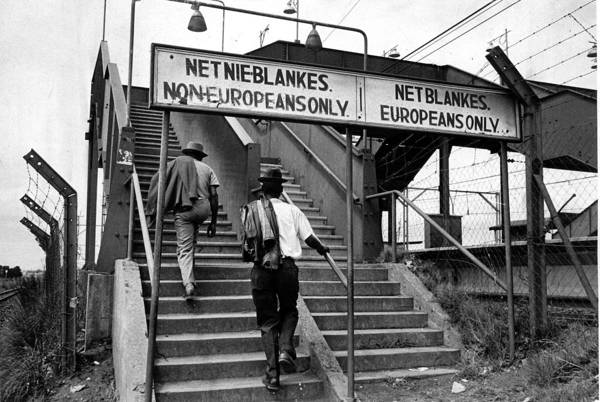
South Africa’s 1994 interim constitution, drafted as part of a reconciliation process, remained in force following the first general elections until it was replaced by the constitution adopted in 1996. It serves as a significant example of a foundational law that established the rules for ending conflicts, abolishing discrimination against Black people, and transitioning toward a peaceful order. Drafted during a period of ongoing conflict, this interim constitution defined the structure and principles of the new era through measures such as the dismantling of "Apartheid"—the system that upheld racial segregation—the restructuring of the state, the inclusion of a bill of rights to ensure oversight of laws and government actions, and the establishment of a Constitutional Court vested with broad supervisory powers.
The preamble to South Africa’s 1994 Interim Constitution reads, in summary: "In humble submission to Almighty God, we, the people of South Africa, declare that... as there is a need to create a new order in which all South Africans—men and women of all races—are entitled to a common South African citizenship within a sovereign and democratic constitutional state, and are able to enjoy and exercise their fundamental rights and freedoms; and in order to achieve this objective, the elected representatives of all the people of South Africa shall be empowered to adopt a new Constitution, in accordance with an agreement set forth as Constitutional Principles."
Rwanda’s Transitional Process and Interim Constitution (1993–2003)
Rwanda—which was first under German control, then became a Belgian colony under a League of Nations (later UN) mandate in 1922, and has a history marked by ethnic conflicts and uprisings—adopted its first constitution during the independence process in 1961. The evolution of its constitutional system, culminating in the 2003 Constitution that brought an end to the conflicts, serves as a notable example of transitional justice in a conflict-ridden multicultural society.
The nine-year transitional period in Rwanda was governed by rules set out in a collection of documents known as "fundamental laws," which included the 1991 Constitution, the Arusha Peace Agreement, the Rwandan Patriotic Front Declaration, and various protocols signed among political parties.
The peace and reconciliation negotiations—known as the Arusha Accords, which began in 1990 and concluded in 1993—are referred to by some authors in the literature as an "interim constitution," as they were the primary documents shaping the fundamental principles and structure of the 2003 Constitution. The Arusha Accords established a framework for broad-based power-sharing, intended to guide the new constitution that would govern the post-transition era. Alongside an interim assembly, a constitutional commission was established with a three-year mandate, tasked with addressing the expectations of the Rwandan people and defining a participatory process. Its primary duties and objectives were defined as: informing the public about the constitution-making process, fostering greater interest in the subject, organizing the referendum process for the constitution following its adoption by parliament, and fulfilling the necessary work to align all existing laws with the new constitution.
The transitional period in Rwanda and the negotiations for the Arusha Accords took place in a political climate dominated by ongoing ethnic conflict, so they were not as effective as anticipated in bringing an end to the hostilities. Between Oct 1990 and Jul 1992, the Rwandan Patriotic Front (RPF) waged a bloody civil war against Rwandan government forces, a conflict that concluded with a ceasefire in Jul 1992. Meanwhile, as the Arusha negotiations reached an agreement on Aug 4, 1993, a severe conflict—known as the "Rwandan Genocide"—erupted following the assassination of the Rwandan president in 1994. As a result of attacks by Hutu forces, approximately 800,000 people—Tutsis and moderate Hutus—were killed.
A significant step in drafting the 2003 Constitution of Rwanda was setting up the National Unity and Reconciliation Commission (NURC) in 1999, which aimed to reconcile the parties involved in the Rwandan Civil War and the genocide. The key reconciliation principles of the agreement can be summarized as follows: “Respect for the principles of democracy, national unity, pluralism, and the rule of law—which upholds the fundamental rights and freedoms of individuals—is affirmed, recognizing that these principles were considered essential to ensure a lasting peace for the benefit of both present and future generations. The parties accepted the principle of power-sharing within the framework of a broad-based transitional government. They further acknowledged that the Constitution of July 10, 1991, and this Arusha Peace Agreement together constitute the fundamental law that will govern the country during the transitional period.” (NT/VK)