










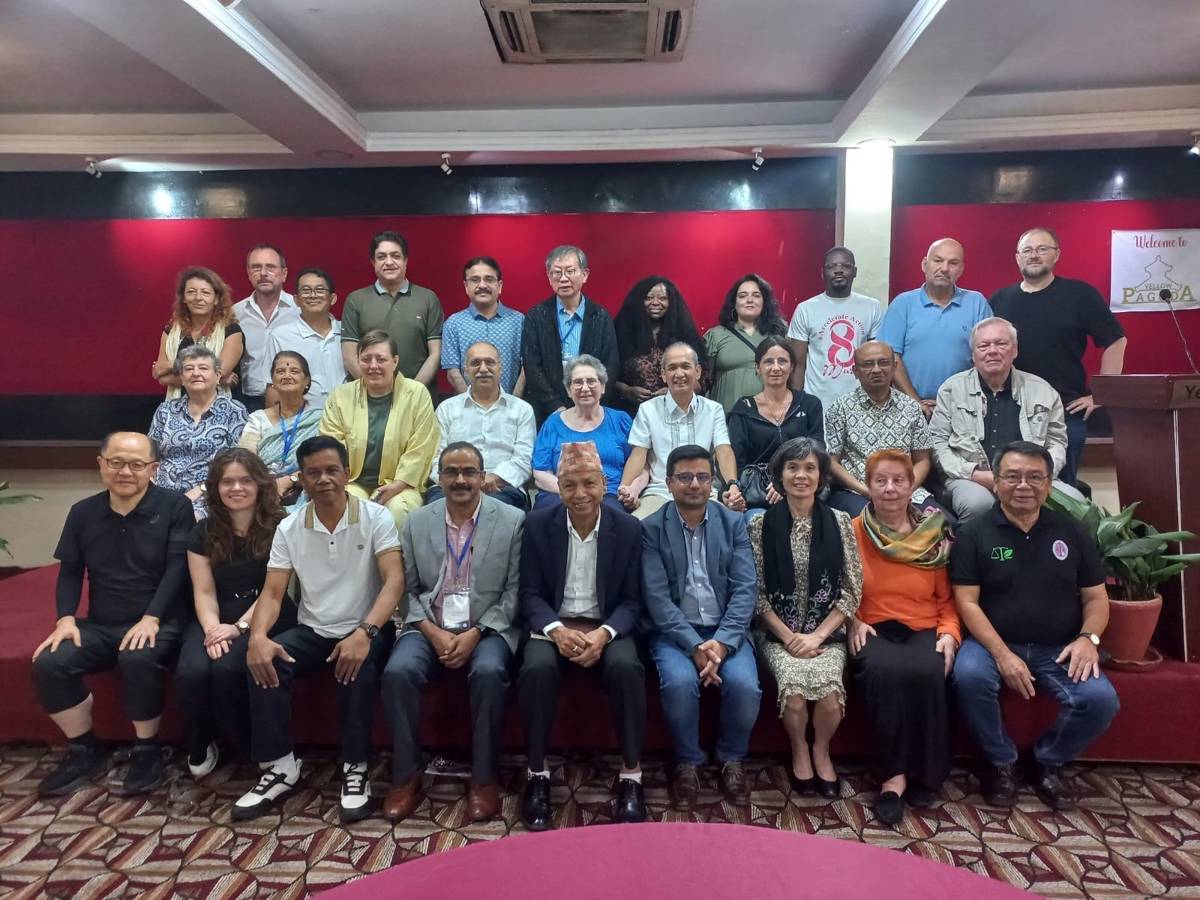



At a time when peoples around the world are facing the systematic usurpation of their rights, when wars, genocides, environmental catastrophes, and gender inequalities are deepening, the International Association of Democratic Lawyers (IADL) held its 19th Congress from July 18 to 20, 2025, in Kathmandu, Nepal. This gathering was more than just a congress—it was a historic convergence of lawyers who reflect on, fight for, and take responsibility for the shared destiny of the peoples.
The congress was hosted by the Progressive and Professional Lawyers Association of Nepal (PPLA). Its theme was: “The Role of Democratic Lawyers in Defending the Rights of Peoples, Peace, and International Law Against Fascism, Genocide, Militarism, and Wars of Aggression.” The title should not create a confusion—over 200 lawyers came together not for a purely theoretical discussion, but for one deeply focused on practical outcomes. As the theme underscored, every debate aimed at offering concrete strategies. One could say the congress provided a comprehensive and coherent roadmap for how lawyers who claim to be part of social opposition and movements should position themselves amid today’s multifaceted crises.
The congress opened with a keynote address by Nepal’s Prime Minister KP Sharma Oli. Despite Nepal’s ongoing struggle with poverty, the country’s resilience in its difficult transition from monarchy to a people-centered democracy and its gracious hospitality offered powerful inspiration to the spirit of the congress.
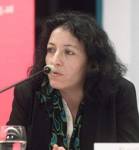
Although I attended the congress alone due to both economic constraints and the ongoing state repression in Turkey, I was never truly alone. My imprisoned colleagues and friends, Selçuk Kozağaçlı and Aytaç Ünsal, were very much present through their messages of hope and unwavering solidarity, which became integral to the congress itself.
Different faces of fascism, a shared language of struggle
Throughout the congress, resistance experiences from regions spanning Palestine to Afghanistan, Indonesia to South Africa were shared. Topics included global capitalism’s exploitation of nature and labor in Indonesia; the growing struggle for accountability in the Philippines following the fall of the Duderte regime; discrimination against women and LGBTIQ+ individuals; and gender apartheid imposed on women in Afghanistan. These issues were addressed extensively in various panels and commissions.
It was emphasized that fascism is not unique to any single country but manifests globally in different forms—militarism, racism, patriarchy, the dominance of violence, and the erosion of the rule of law. Across all discussions, it became clear that while these problems appear in parallel across geographies, resistance itself naturally assumes an internationalist character.
The injustices caused by the climate crisis—especially in the Global South—were also a central topic. Discussions revolved around the democratic control of natural resources for the benefit of the people, the cancellation of ecological debts, and demands for climate justice—where environmental law intersects with political struggle.
Palestine: the heart of the congress
At the heart of the congress was, without question, Palestine. The speech by Raji Sourani of the Palestinian Center for Human Rights was among the most resonant calls heard in the hall. He emphasized the historic responsibility that lies with lawyers in stopping the ongoing genocide in Gaza, ensuring an immediate ceasefire, and holding perpetrators accountable in international courts. South Africa’s application to the International Court of Justice and cases brought before the International Criminal Court demonstrated how international solidarity can be translated into legal action.
IADL: a legal foundation for internationalist struggle
The congress was attended by over 250 delegates representing more than 30 countries and, by extension, tens of thousands of lawyers. Just as many country representatives were unable to attend due to economic hardship. This internationalist body, which includes Turkey’s Progressive Lawyers Association (ÇHD) and the Association of Lawyers for Freedom (ÖHD), once again affirmed its commitment to supporting people’s struggles through legal expertise.
In the newly elected 48-member executive bureau, both I and Selçuk Kozağaçlı (as vice president) assumed roles. Selçuk’s continued imprisonment and his relentless fight for the right to a fair trial and justice were among the most compelling reasons for his appointment. This decision should serve as a source of morale for legal professionals in Turkey and remind us all of the global family we are part of.
Hope and responsibility: instead of a conclusion
There is a particular reason I wish to share the experience of this congress with everyone in Turkey who desires transformation and change (not only for Turkey but for the world). At a time when regional imperialist wars are escalating, when capitalism once again forces people to choose between death and destitution to overcome its crisis, and when social struggles are fragmented to the point of causing confusion, the congress—for me at least—was a jolt out of despair and a return to clarity.
The IADL Congress convened not merely to reflect on the past but to reaffirm our collective resolve for the future—and in my view, it succeeded in this goal. The high level of enthusiasm and determination at this gathering once again demonstrated that the organization remains firmly aligned with the people and engaged in the struggle. The existence of such an internationalist organization is a vital assurance for oppressed and exploited peoples around the world.
In times when everything seems to be going downhill, the coming together of hundreds of lawyers—many from the Marxist legal tradition—from different countries, speaking the same language and carrying the same hope, unified around a single goal—the pursuit of justice for the people—must be recognized as a historic and significant step.
And we are fully aware of our responsibility. Under the roof of the IADL, we will continue to work together for the law of the people. (CU/Mİ/VK)


