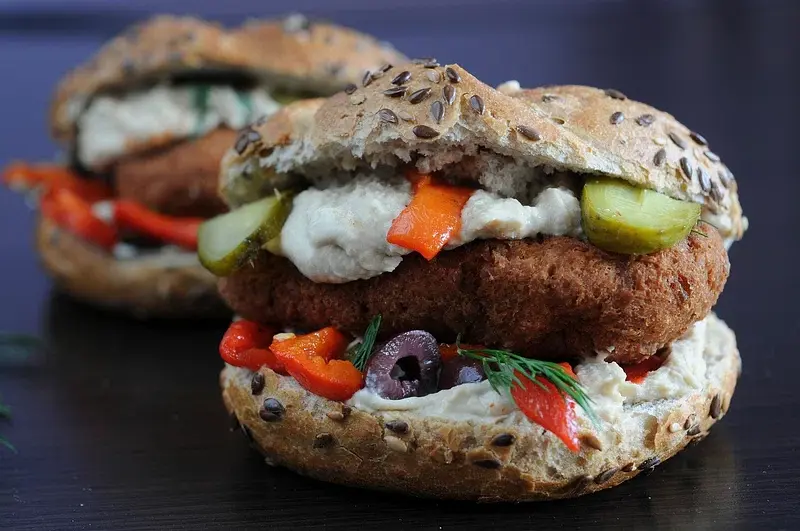




According to Wikipedia, veganism is the practice of abstaining from the use of animal products, avoiding the consumption of animal-sourced foods, and rejecting the commodification of animals. This definition raises important questions when it comes to products like Impossible Meat, which is engineered to look, taste, and cook like real beef. Does a plant-based burger designed to replicate meat still align with vegan principles?
Fast-food chains like Burger King have responded to growing demand for plant-based options. The chain’s introduction of the Impossible Whopper, developed in partnership with Impossible Foods, was described by company representatives as “one of the most successful product launches in Burger King’s history.”
But some critics argue that purchasing these plant-based products from meat-heavy chains still supports an industry deeply reliant on animal agriculture.
Historical roots
To better understand this tension, it’s worth considering the historical roots of veganism.
The concept of abstaining from animal products can be traced back to ancient Indian and Eastern Mediterranean societies. Around 500 BCE, Greek philosopher and mathematician Pythagoras of Samos promoted a philosophy of non-violence and compassion toward all species. In religions like Buddhism, Hinduism, and Jainism, followers adopted vegetarian diets as a moral stance against harming animals.
In the West, vegetarianism and later veganism gained traction during the 19th and 20th centuries, often emerging during health movements or periods of food scarcity.
Today, The Vegan Society defines veganism as “a philosophy and way of living which seeks to exclude all forms of exploitation of and cruelty to animals for food, clothing, or any other purpose.”
Within this framework, there are distinct subcategories. “Strict vegetarians” avoid all animal-derived ingredients, including meat, eggs, and dairy. “Environmental vegans” abstain from animal products due to the environmental toll of animal agriculture. “Ethical vegans” extend their practice beyond food, avoiding animal-tested products and rejecting the use of animals in all aspects of life.
Impossible Foods, founded in 2011, is one of the major players reshaping plant-based eating. The company launched its flagship product, the Impossible Burger, in 2016, aiming to provide an environmentally sustainable and ethical alternative to meat.
Higher costs
When the burger hit Burger King menus in 2019 as the “Impossible Whopper,” it marked a pivotal moment, making plant-based fast food widely available across the United States. Restaurants offering vegan or vegetarian-friendly meals are often harder to find and more expensive.
A 2023 Eating Better study found that plant-based meals can cost up to 65% more than meat-based alternatives. This is partly due to smaller-scale production and branding targeted at affluent, health-conscious consumers. Fast food chains, however, offer these options at scale, making them more accessible but not without ethical trade-offs. For some in the vegan community, buying a vegan burger from a company that still makes most of its revenue from meat feels like a contradiction.
As of 2024, Burger King’s brand was valued at $5.2 billion. Globally, an estimated 85% of its menu items still contain meat. That same year, the company generated approximately $1.3 billion in revenue. Based on current menu composition, an estimated 25% of that, around $325 million, came from plant-based or vegetarian menu items.
However, this figure raises ethical concerns within the vegan community. Revenue from vegan and vegetarian purchases is not separated from the company’s overall profit stream, meaning that even when consumers choose plant-based items, their money still supports a business model fundamentally reliant on animal agriculture. From a financial standpoint, vegan spending is indistinguishable from that of meat-eating consumers.
'Ethical sourcing' question
Despite Burger King’s claims of “ethical sourcing” and its investments in regenerative agriculture projects, critics argue that these efforts fall short of vegan principles. According to those principles, abstaining from animal products includes rejecting any system that profits from their exploitation, directly or indirectly. In this view, buying an Impossible Whopper at a meat-centric chain still contributes to the normalisation and profitability of animal consumption.
It’s also worth examining the ethics of Impossible Foods. While the company is entirely plant-based, its products are intentionally engineered to taste like real meat, using ingredients like soy leghemoglobin to replicate the flavor of beef.
This raises a deeper ethical question: if meat is viewed by many vegans as the flesh of dead animals and a symbol of cruelty, does recreating its taste undermine the moral stance against it? Critics argue that mimicking something widely seen as inhumane, even synthetically, doesn’t fully sever the connection to its ethical implications.
For some, the sensory experience alone can feel like a contradiction of core vegan values. There are also recent controversies surrounding how Impossible Foods tests on animals to gain FDA approval.
Therefore, the concept of Impossible Meat becomes impossible to follow, ethically, in itself. Situations like these reveal the realities of practicing veganism in today’s world, where plant-based alternatives often mimic or rely on the very systems they aim to replace.
As ethical intentions collide with corporate models and consumer demand, navigating this space becomes a constant balancing act between principles and practicality. (LÖ/VK)