



For decades, pricing policies in agriculture have been set incorrectly. Product prices are either set at cost, forcing farmers to take on debt to make ends meet, or set below cost, causing farmers to go bankrupt. Both those who produce and those who govern are aware of this.
In every production cycle, companies raise the prices of inputs such as seeds, fuel, fertilizers, pesticides, and electricity just before they are used. Rising prices increase farmers' costs. Producers take out loans to purchase the inputs they need. The authorities have no say over the companies raising prices. They cower before them! They side with the companies against the producers.
When it comes time to announce product prices before harvest, the front of companies, local collaborators, and those in power springs into action from all sides. As if a crusade is being launched.
Before the harvest, those in charge of customs zero out the tax, effectively telling the farmer, “If you don't settle for the price we'll announce, the companies will buy the low-priced products from abroad, and yours will be left unsold.” Then, depending on weather conditions, if productivity is slightly better that year, they set prices at cost level; if productivity is close to average, they set prices slightly above cost.
While the authorities are working so hard for companies with low-price policies and zero tariffs, the companies are not sitting idle either. They also attack producers with the lie that “this year's high yield will leave you with unsold products.” They fan the flames of anxiety already burning in the farmer's heart by adding the fuel of high yields. Like the saying, “Who has ever died from a lie?” the authorities spread this falsehood with their high yield data, while local collaborators inflate this lie and spread it around.
As a result of these policies, farmers live in hope that next year's harvest will be better, as they say, “They have cut open the farmer's belly, and forty ‘next years’ have come out.”
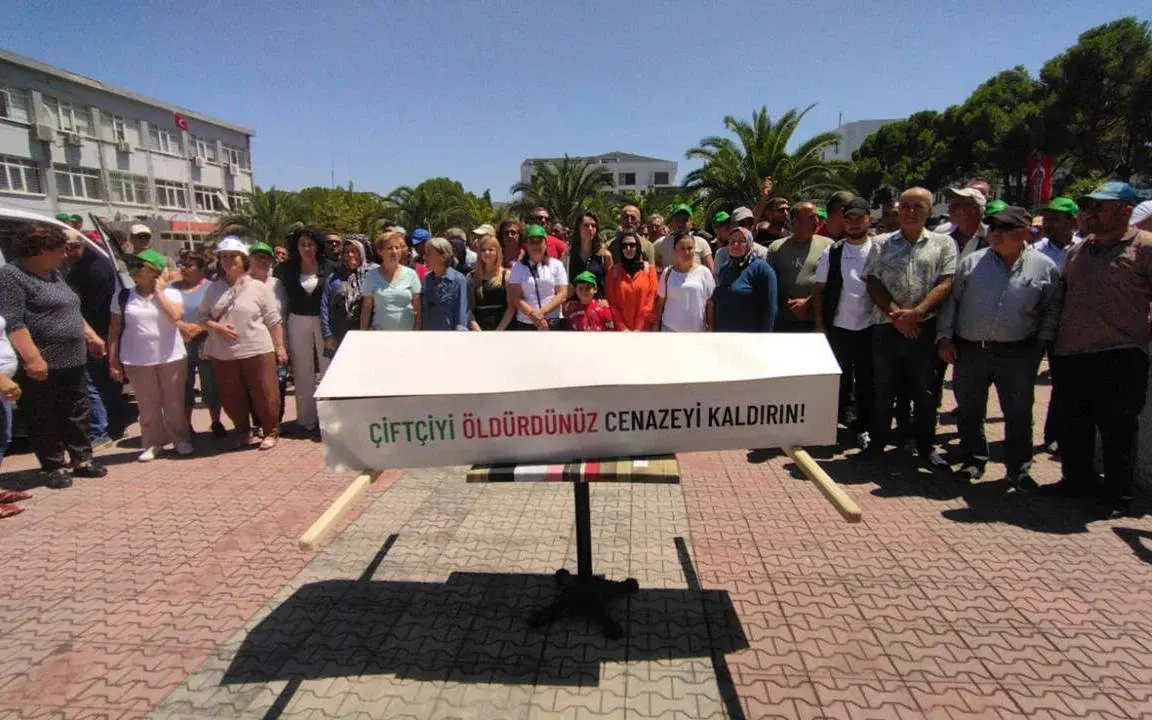
However, the truth is right there in sight. Farmers are aware of what is happening. But farmers are alone, farmers are unorganized. Farmers have been engaging in democratic rights advocacy actions individually or in small groups in many places for years to overcome their “bad luck” and remedy their grievances.
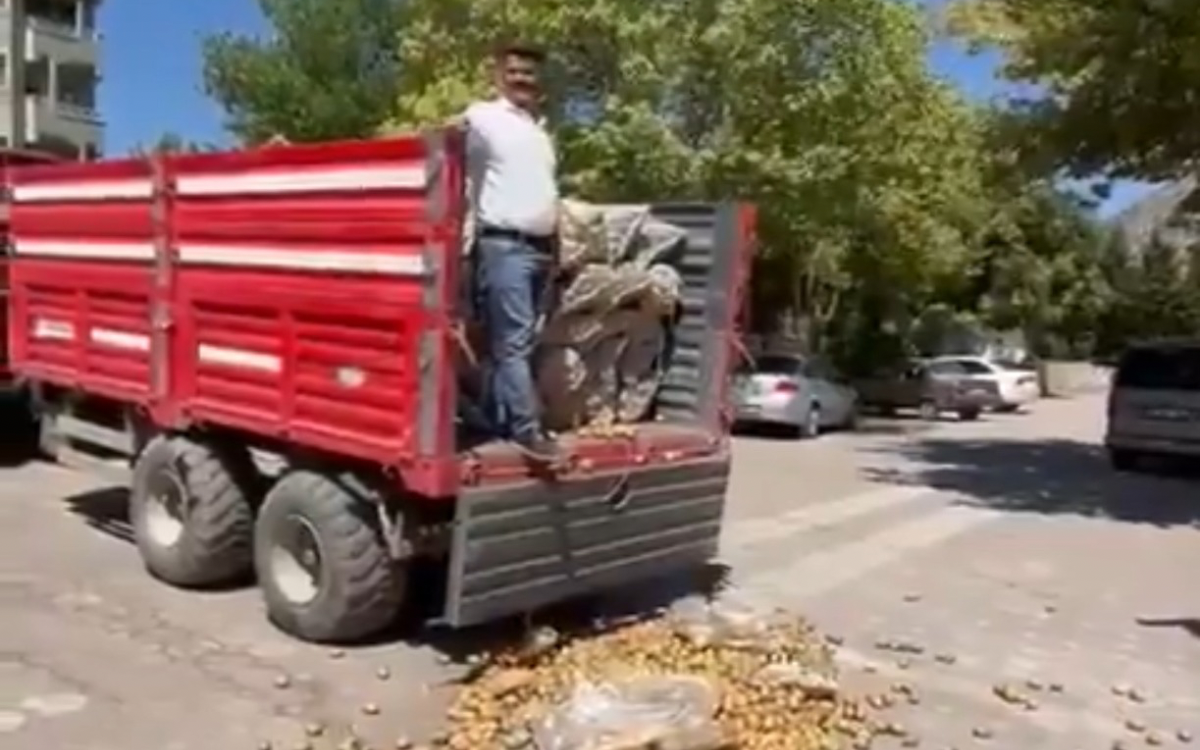
Most recently, in the Aydıncık district of Yozgat, producer Sadık Erdoğan distributed his potatoes to the public free of charge instead of selling them to merchants when the product price fell below cost. Following this action, it was announced that an investigation would be launched against farmer Sadık Erdoğan.
Why?
Deputy Trade Minister Mahmut Gürcan stated that the farmer who distributed his potatoes to citizens would be subject to an administrative fine for “disrupting market balance and free competition, and creating scarcity in the market.”
I don't know if he really said that.
If he did, then:
- Is the Turkish market so fragile that it can be disrupted by a trailer load of potatoes? Or is this a warning that “those who seek justice will be treated this way”?
- How does a farmer creating a shortage in the market by supplying goods to the market, whether paid or unpaid, or by distributing products to the public free of charge? Does the market contract when products are supplied by entities other than companies, and expand and relax when companies supply goods? If so, there’s nothing left to say. This argument leaves no room for further discussion; science runs out.
Where do current free market policies take Turkey’s agriculture?
Let me answer this with a tragicomic incident from the past.
A city-dwelling friend of mine stops by a peach orchard while traveling with his family. He picks a peach from the tree and eats it, then picks another one for his daughter. (By the way, his daughter is in high school.) His daughter starts crying and kicking, saying, “No! Peaches are bought from the grocery store!” This incident shows how alienated people have become from what they eat.
In the recent case of potato farmer Erdoğan of Aydıncık, where producers are blamed and those in power played the victim, we are sailing toward a democratic world turned upside down by new agricultural policies. We, too, will end up anchoring in the port of global food, agriculture, and chemical companies, blowing wind into the sails of corporations, only to hear our children and grandchildren crying and kicking, saying, “Not every product is edible; only imported products are edible.”
As a solution, organizing farmers and having those in power support production could be a good start. (AA/HA/VK)