



The European approach to facing the past is closely linked to the development of democracy and the rule of law; consequently, "History"—as the reflection of the past in the present—is addressed and debated as a distinct sub-topic due to its comprehensive nature. It is evident that Europe has entered a process of remembering, commemorating, and questioning past events, a process in which "History" is being opened to debate not only within educational institutions and academic circles but also across various segments of society.
In short, Europe has recently begun to discuss and question traditional nationalist historiography, which focuses on the formation processes of nation-states and national identities. This questioning entails re-examining history through a more critical, transnational, and multidimensional perspective, stripped of single-center narratives or national myths. Briefly, by adopting a critical historical approach today, traditional historiography is being challenged, and it is proposed that history be revisited, subjected to self-criticism, and rewritten.
The questioning of nationalist historiography in Europe represents one of the most profound intellectual and political transformations that began in the aftermath of World War II and continues to this day. National narratives centered on "heroism, victimhood, and superiority," constructed in the 19th century to legitimize nation-states and create homogeneous identities, have given way to more critical, pluralistic, and transnational approaches. Furthermore, critiques in this context argue that official historiography, which constructs a homogeneous and unbroken past based on the assumption that nations are "primordial and eternal," is far from realistic. In this regard, the intellectual foundations of nationalist ideologies are being questioned by drawing attention to political scientists Benedict Anderson and Eric Hobsbawm, who conceptualize nations as "imagined communities."
It is observed that nationalist official historical narratives in Europe have come under intense scrutiny, particularly following the Second World War and alongside the process of European integration. This academic and political questioning criticizes not only the weak intellectual bases of national discourses but also the instrumentalization of history for political conflicts. Furthermore, it is noted that this approach hinders efforts toward supranational integration, an initiative intended as a project for regional peace in Europe.
The questioning of the nationalist historiographical perspective has shattered the myth of the nation-state as a monolithic entity and led to a reinterpretation and reshaping of the concepts of state and nation within modern European society through a broader lens. European states have long maintained multicultural structures, inherited from the past, in which diverse groups of people live together. Today, modern historiography and political science are critically analyzing these national discourses.
Key reasons for questioning official history
Examining the questioning of official history in Europe calls for a broader approach to consider the issue from the perspective of human rights, democratic culture, and civil society. In short, "Official History" is on the agenda in Europe as part of a broader re-examination of its past and present.
1. The impact of World War II and the Holocaust
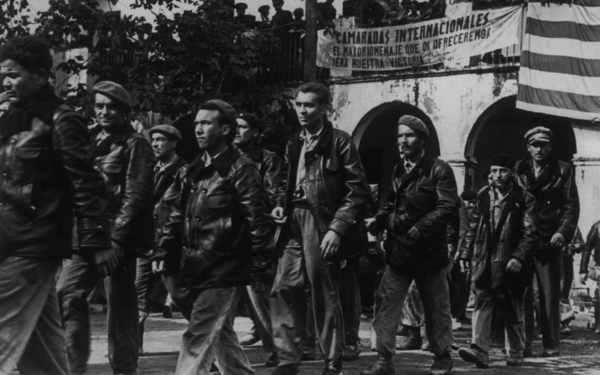
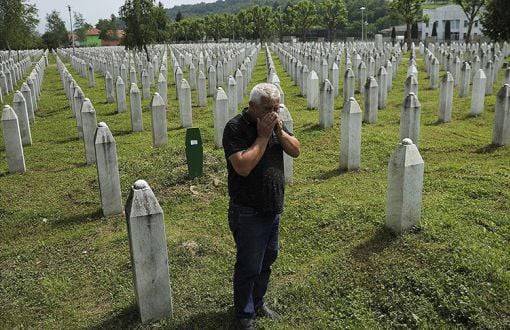
The suffering caused by World War II, grave human rights violations, and the collective trauma and sense of guilt resulting from the Holocaust across Europe are viewed as the primary motivations behind growing calls for re-examination. The fact that World War II and the Holocaust demonstrated the destructive consequences of nationalism has prompted the questioning of nationalist "Official History." Germany, in particular, initiated a process of confronting its past and criticizing the dark periods of its national history—an issue that now occupies the agendas of all societal groups, including the education system. These processes of confronting the past and questioning official history, which began in Germany, served as a model and an inspiration for other European countries.
2. Colonial era grave human rights violations
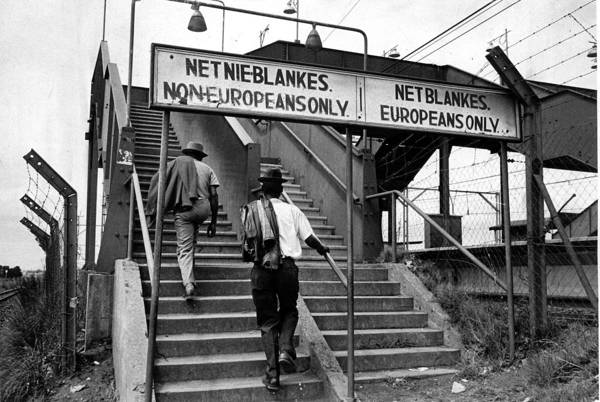
The recent questioning of human rights and official historical narratives noted above has compelled former colonial powers such as France, the UK, Belgium, and the Netherlands to confront the realities of exploitation, slavery, and massacres that contributed to their wealth and global position. In recent years, African nations have begun raising the issue of colonialism not only in bilateral relations but also on international platforms; these initiatives place European leaders who seek to avoid such accountability in a difficult position, compelling them to reckon with their pasts.
3. European Integration
Processes of European integration and the establishment of the Council of Europe and the European Union are forcing a shift away from historical perspectives that cast nation-states as mutual "enemies." The process of forging a common European culture, cultivating shared European values rooted in democracy and multiculturalism, and striving for a transnational European identity necessitates a revision of official historical narratives.
In other words, European integration mandates a move away from narrow, nation-state-centric histories toward an appreciation of a multicultural European structure characterized by coexistence and peace. Within this context, policies implemented by dominant cultural groups regarding minorities—as well as assimilation, exclusion, and ethnic nationalism-driven conflicts escalating to violence—are being critically examined.
4. Official narratives not fitting with a multicultural Europe
The multicultural structure of today's Europe highlights its incompatibility with official historical theses. This means the official historical narrative, developed around unitary and monolithic state structures, is incompatible with the contemporary structure of Europe and is criticized for this reason.
Historically, European nations built their cultures and identities upon the idea of a shared origin and ancient history. However, research by reformist historians demonstrates that these concepts were, in fact, modern, socially constructed political notions that served as intellectual foundations to justify nationalist, unitary states.
Primarily, dominant state narratives of cultural groups holding power within the system insistently emphasize past victories and the superior qualities of their group while ignoring past failures. Critical historians questioning these narratives (for instance, by exposing colonial atrocities, collaboration with wartime regimes, or the oppression of minorities) trigger reactions from nationalist groups who perceive such self-criticism as a threat to their identity.
Today, questioning official history is also necessitated by the fact that Europe is multicultural and the political role of regions is rising. In short, the growing prominence of existing regions and autonomous public structures in Europe demonstrates that traditional narratives of the unitary or monolithic state are incompatible with the changed structure of Europe.
Briefly, it can be concluded that traditional nationalist historiography that excludes minorities, colonial pasts, migration, and periods of violence in the process of constructing national identities is no longer acceptable. The national narratives held by dominant cultural groups regarding "others" or minorities are no longer welcomed as legitimate and democratically acceptable political commentary in a multicultural Europe. (NT/VK)