




Turkey’s climate credibility will depend on emissions cuts, water security, workers’ rights, and public accountability after the delegates leave Antalya.
When Turkey hosts COP31 in Antalya on Nov 9–20, 2026, the most revealing questions will concern what happens afterwards. Will emissions fall? Will farmers and outdoor workers be better protected? Will budgets and investment decisions change? Attendance, exhibition stands, and declarations cannot answer those questions.
After COP29 and before COP30, I warned in media interviews that the summits were increasingly resembling climate trade fairs. Corporate promotion and networking risk displacing their purpose: turning scientific knowledge into decisions that reduce emissions and protect people. Travelling to a summit, usually by fossil-fuelled aircraft, is not in itself climate action. The contribution should justify the carbon cost. Meaningful representation for negotiators, scientists, labour organisations, and affected communities must be protected while unnecessary promotional travel is reduced.
This criticism does not dismiss climate diplomacy. The Paris Agreement is legally binding, but obligations to submit and update national contributions differ from an enforceable duty to achieve every numerical target. There is no automatic global penalty for missing one. The task is to connect international commitments with domestic law, budgets, responsible institutions, and public scrutiny.
Public accountability
Turkey holds the presidency and hosts COP31, while Australia leads the negotiations. Hosting cannot give Turkey authority to impose obligations on every country. It can, however, demonstrate what implementation means at home. Every initiative should identify what will change, by when, with whose money, and under whose responsibility. It should also explain who measures progress and what happens when delivery falls short.
The need is clear. UNEP’s Emissions Gap Report 2025 projected around 2.8 °C of warming this century under policies then in place, and 2.3–2.5 °C even with full implementation of national contributions. These are conditional projections, not certain futures. They nevertheless expose the distance between promises and the Paris goals. Each additional increment of warming prevented still matters.
Climate policy in Turkey must reach beyond the carbon costs facing exporters. Drinking water, food production, public health, and rural livelihoods are already central concerns. Vulnerability is unequal: a seasonal farmworker, a smallholder, and a low-income urban resident do not have the protection available to someone working in an air-conditioned office.
Our research on drought across Turkey shows why rainfall totals alone are insufficient. A drought index incorporating atmospheric evaporative demand revealed drying more clearly over many periods than one based only on precipitation. This does not mean rainfall has declined everywhere. It means warming can worsen the water balance. Even when dry soils constrain actual evaporation, plants can face growing water stress. Our 2025 study also found that semi-arid steppe climates and Mediterranean climates with dry, very hot summers covered larger areas in 1991–2020 than in 1961–1990. The scale of future change depends on the scenario and period considered.
Adaptation should therefore be judged through outcomes: fewer water interruptions, less heat-related illness, reduced crop losses, and fewer people left unprotected. Reservoir storage must be monitored alongside groundwater, soil moisture, snow accumulation, and withdrawals. A few wet months do not establish that a multiyear water deficit has been eliminated.
Shared protection
River basin planning must reconcile drinking water, ecosystems, agriculture, industry, and tourism within a finite water budget. More efficient irrigation is useful, but expanding irrigated land or switching to thirstier crops can cancel the expected savings. Technology needs enforceable withdrawal limits. Ecosystems cannot be left with whatever water remains after other users have taken their share.
Nor is telling farmers to change crops an adequate adaptation policy. Transition costs, indebtedness, market access, and purchasing arrangements matter. Without public support, adaptation transfers risk onto those least able to carry it. Municipalities, irrigation associations, and smallholders need simpler funding applications and technical advice, alongside social support for vulnerable producers. Urban heat plans likewise need health services, accessible cooling, and protection for outdoor workers, rather than benefits confined to affluent neighbourhoods.
I have proposed a Turkey-led Mediterranean initiative on climate-resilient food and water security. Its value would lie in shared drought data, pilot basins, agricultural early warning, healthier soils, accessible support for smallholders, and regular assessment of results. A series of meetings would not be enough. Countries with greater historical responsibility and financial capacity should provide stronger support, but Turkey’s legitimate demand for finance should not postpone domestic action.
Turkey’s own emissions commitments also deserve clear accounting. Its second national contribution aims to limit emissions to 643 million tonnes of carbon dioxide equivalent (CO₂e) in 2035, 466 million tonnes below a business-as-usual scenario. This does not mean cutting today’s emissions by 466 million tonnes. On the document’s consistent accounting basis, including land use, land-use change, and forestry, the target stands about 40 percent above its reported 2018 net emissions of 458.8 million tonnes.
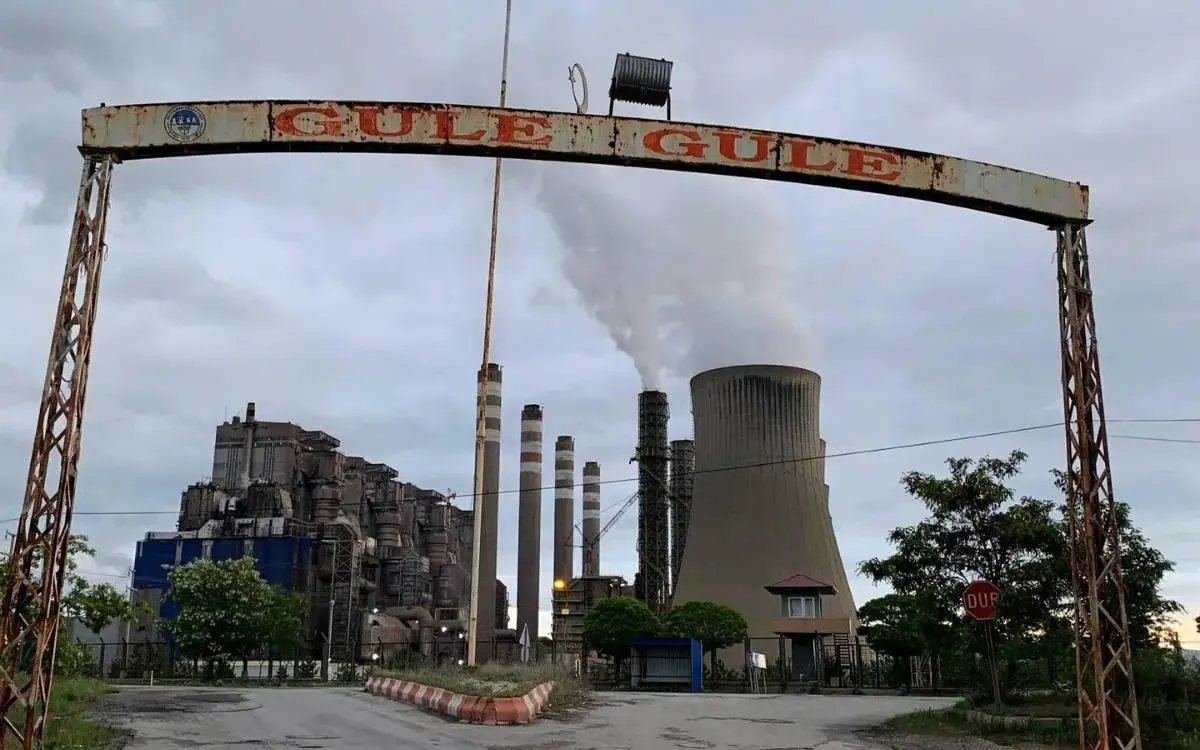
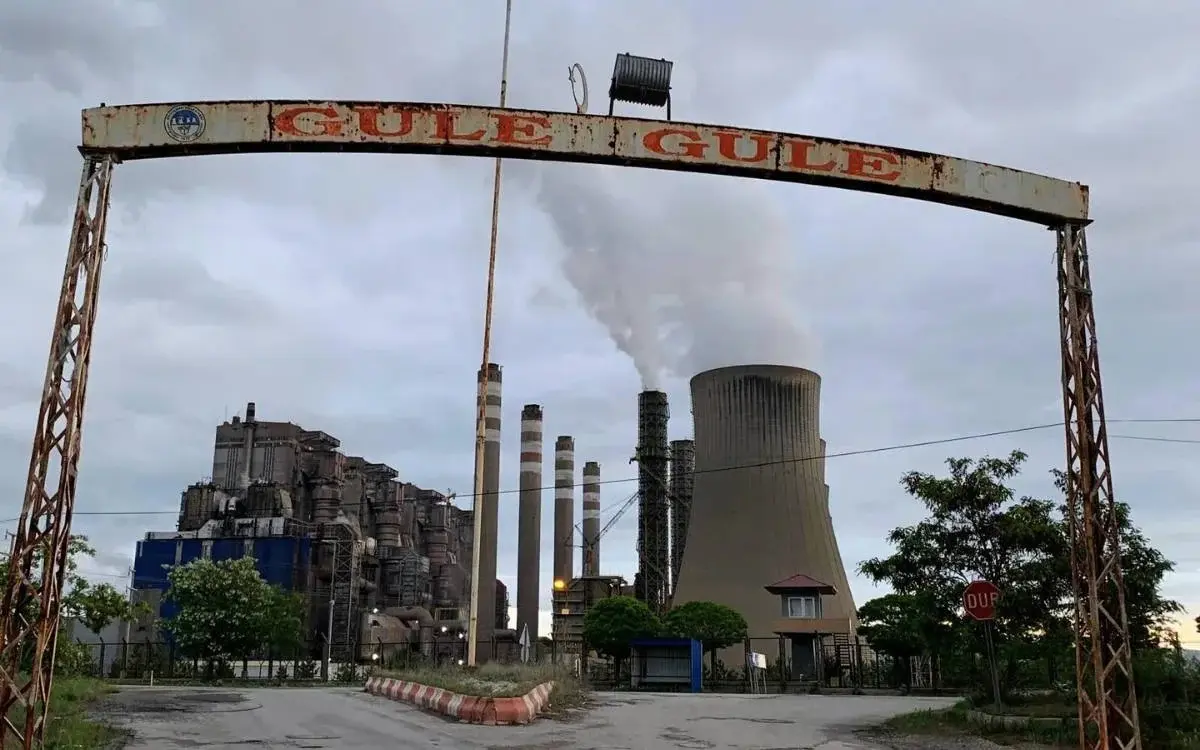
A stronger contribution would specify absolute reductions from a historical year and near-term sectoral milestones. The current contribution provides no explicit, dated coal phase-out timetable. A credible roadmap must prevent new fossil fuel capacity while coordinating closures with grids, storage, efficiency, and lower fossil fuel demand across transport, buildings, and industry.
Lasting responsibility
Workers’ rights belong at the centre of that roadmap. Wages, social security, job quality, training, and local revenues in coal regions must be addressed from the outset. Renewable capacity is important, but its growth does not by itself demonstrate falling fossil fuel consumption. Energy projects also require scrutiny of their effects on farmland, pastures, forests, and local communities.
Net zero cannot excuse postponement. Research on credible net zero stresses early, deep emissions cuts and cautious use of removals. Forests support water, biodiversity, local climates, and livelihoods as well as carbon storage. Their ecological integrity cannot be replaced by sapling counts or used to justify continued fossil fuel emissions. Carbon markets, similarly, should be assessed by verified emissions reductions and fair use of revenues, rather than trading volumes.
I propose an annual public climate implementation review showing each target’s starting point, allocated funding, actual spending, outcomes, and reasons for shortfalls. Universities and research centres should independently test the results, supported by open data, research freedom, and sustained funding. Farmers, workers, women, and local communities must be able to influence decisions as well as attend consultations.
Antalya’s legacy should extend to its water use, heat protection, tourism, food supply, transport, and waste systems. An improvement that shifts pollution or insecure work onto another neighbourhood or group of workers is no overall success. Before and after COP31, the test is scientifically informed public planning, measurable delivery, and decisions that citizens can scrutinise. Turkey’s responsibility will continue long after the delegates leave. (MT/VK)