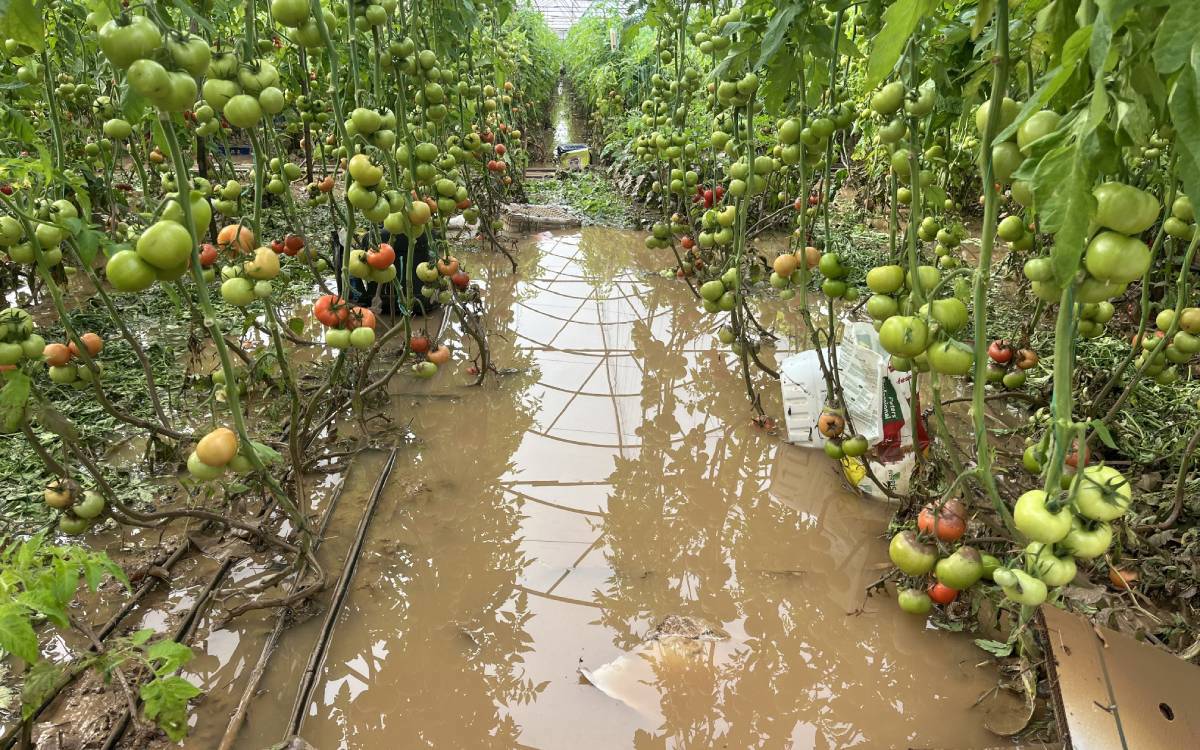






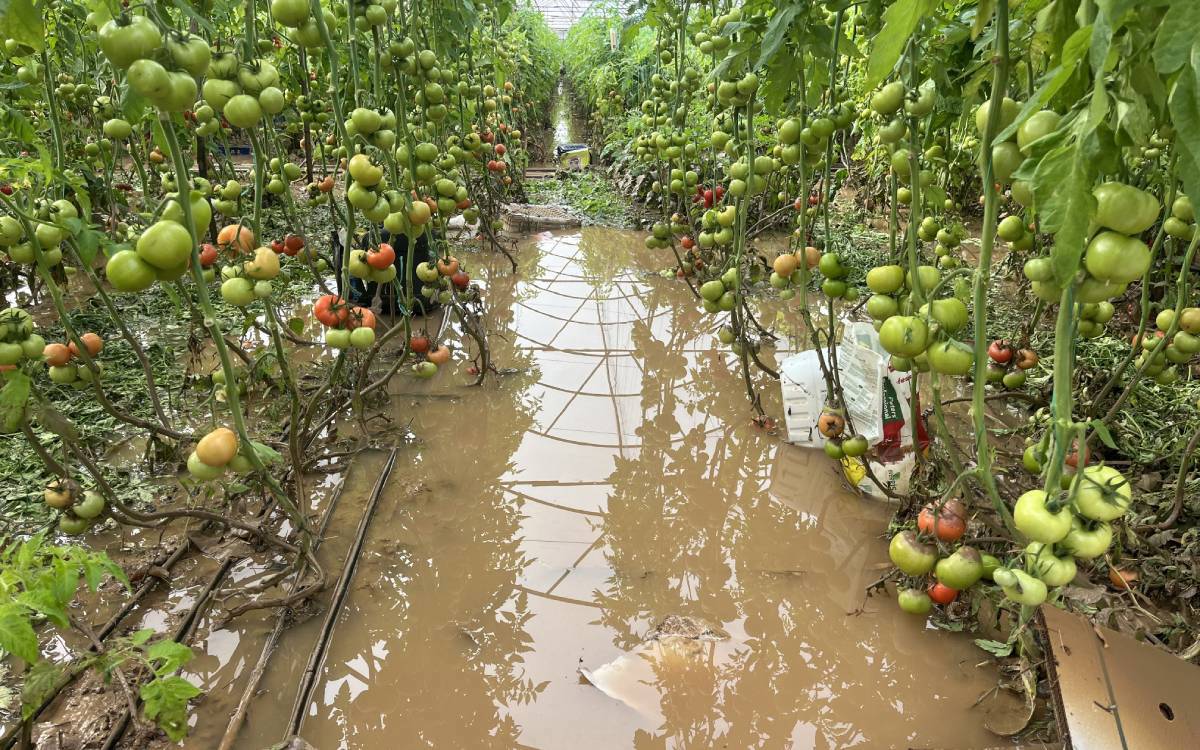



While discussing the climate crisis, we often focus on rising temperatures, drought maps, and extreme weather events. Yet the most tangible and everyday face of the crisis is much closer—at our tables. Despite this, the crisis’s effects that seep into daily life remain insufficiently visible.
At a time when COP 31 is on the agenda and the climate summit to be held in Antalya is being discussed, the issue of agriculture and food is once again gaining critical importance.
When the balance of the seasons is disrupted, the first area to be shaken in human life is agriculture and food. When agriculture is shaken, not only production but also social memory begins to unravel. Humanity has practiced agriculture for thousands of years in harmony with the rhythm of the seasons. Today, this accumulated knowledge is rapidly being invalidated. Because agriculture is no longer a life practice in harmony with nature; it has been turned into a subject of global trade regimes, corporate contracts, and market economies. Bounty has been replaced by productivity charts, solidarity by contracts, and diversity by monoculture-based industrial production.
The commodification of land, water, and seeds has transformed agriculture into a mechanism of domination. Today, neoliberal agriculture operates as a mechanism that disciplines nature and people, governing life itself. Therefore, when discussing the effects of the climate crisis on agriculture, it is also necessary to examine the politico-economic structure that has driven agriculture into this vulnerability.
The foundation of today’s agriculture was laid relatively late in the history of industrial capitalism—in the 1980s—and was reinforced in the 1990s with World Trade Organization and agricultural trade agreements. The market-oriented agriculture established through this process was transformed into a global food regime whose rules are determined by corporations. Agricultural production was removed from the domain of internal planning by states and turned into a subject of global trade. Common expressions like “Turkey used to be a self-sufficient country in agriculture” now belong to an irreversibly past era—unless there is a political transformation.
This transformation has three political pillars: The first is the removal of agricultural import quotas by countries and the lowering of customs duties on agricultural products. This step opens local agricultural markets, once shaped around small farmers, to global corporations.
The second phase involves states reducing the agricultural support provided to farmers. Today, our demand for “supporting small farmers” refers to compensating for this loss. Mechanisms such as purchase guarantees and minimum price supports are being eliminated. Structural adjustment programs implemented by global financial institutions like the World Bank and the IMF portray agricultural subsidies as a burden on public budgets in poor countries—these agricultural supports are required to be lifted for states to receive credit support from global economic organizations.
The third stage of the agreement comprises the export restrictions imposed on countries. However, these restrictions are not applied fairly. Wealthy global north countries continue to support their producers through indirect incentives (Green Box / Blue Box, etc.). According to FAO’s 2023 report, The State of Food and Agriculture, while developing countries have significantly reduced agricultural supports, EU countries and the US have maintained their support for producers, with the total support amount reaching 350 billion dollars. As a result, small farmers, especially in poor countries, are no longer able to compete in agricultural markets opened to imports.
Policies of the World Bank and IMF programs aimed at ensuring foreign currency-generating exports in countries seeking credit radically change agricultural production in poor countries. Small producers, left unprotected, can no longer make money from domestic markets through food production. Agricultural production shifts to industrial-oriented products like cotton, coffee, and palm. Yet these crops are not nutritious, and poor farmers cannot feed themselves with them. This situation has reached such a level that today, a large portion (about 70–80%) of global grain trade is controlled by just five multinational corporations. While the cost of agricultural raw materials for the industry decreases, food prices continue to rise each day. The production small farmers carry out, increasingly dependent on the industry, also becomes part of a contract farming model over time, done on behalf of global companies. Farmers are turning from producers into informal “workers” producing for a handful of major corporations. Their say over their production is taken away.
Another aspect of the issue is that, as a result of the free market logic formed in agriculture, states impose production quotas on agricultural products under the justification of price stabilization. For example, the tobacco quotas, a much-discussed topic in Turkey and a grievance of small farmers, stem from this system. The number of tobacco farmers, which stood at 400,000 in 2000, dropped to 80,000 by 2010.
It is clear that today agriculture is not carried out to produce food but to supply resources to industry. Villagers who are forced to produce “foreign currency-earning” products end up feeding the market instead of feeding themselves. A cash crop-based agricultural regime emerges—peoples’ food sovereignty is replaced by market sovereignty.
This is the background behind the formation of agro-industrial corporate monopolies. These companies now control the global food chain. Food has been completely transformed—today even crackers with “bread” flavor are being produced. A stock exchange for agricultural products is being created, turning agriculture into a financial commodity.
On the other hand, demographics are also being controlled through this system. According to 2024 data from TÜİK, the number of farmers has decreased from 2.8 million to 1.8 million over the last 20 years. It is evident that the smallholder economy in rural areas has collapsed. Farmers have become laborers, and the agricultural proletariat has expanded. Refugees have also been turned into instruments of this system, and the informal economy has been expanded to provide cheap agricultural labor. As a result, migration to cities has increased, and the urban cheap labor class has been expanded through small farmers. This is how we can interpret the background of class engineering through food by neoliberal agriculture. Behind every ecological problem lies the politics of labor and class issues.
Meanwhile, neoliberal agriculture also targets the social fabric and culture. Agriculture is more than a form of production; it is a way of forming relationships: collective harvests, the culture of mutual aid (imece), communal fields… All of these are on the brink of disappearing. Solidarity-based production relations have been dismantled. While in the past different communities would come together through agricultural labor and interact, today even small farmers who are still able to produce have begun to exploit refugee labor.
As for agricultural diversity—it is practically nonexistent. Monocultural agriculture based on single-crop production has become so widespread that while over 7,000 cultivated plant species were reported in the early 1900s, today 75% of agricultural production relies on just 12 species. It is estimated that 90% of seed varieties have disappeared over the last century. Life cannot be bought or sold, yet even seeds have become market commodities, and today 60% of the seed market is controlled by four companies.
Yet diversity is the insurance of life—a mechanism in harmony with nature against the climate crisis. Therefore, if we want to solve the agricultural and food problem that is made fragile and severely threatened by today’s changing climate, we should not view the issue merely as rising temperatures, but must also consider the political degradation behind it. Ultimately, it is not the atmosphere that determines the climate, but the politics that govern it through domination; the agreements that reduce agriculture to a market object, and the mindsets that commodify land.
Fortunately, ecological living and agriculture in harmony with nature still show us a way out. Efforts to preserve diversity with local seeds, collectives based on community labor, and efforts to reclaim the commons are different forms of life compatible with the climate crisis. The path to saving life lies in reclaiming land from the market, re-commoning agriculture, and making it a part of life once again. (KK/HA/VK)