



"Freedom is not simply liberation from private life; it is becoming visible and effective in the public realm. A person becomes free only through action and speech." — Hannah Arendt
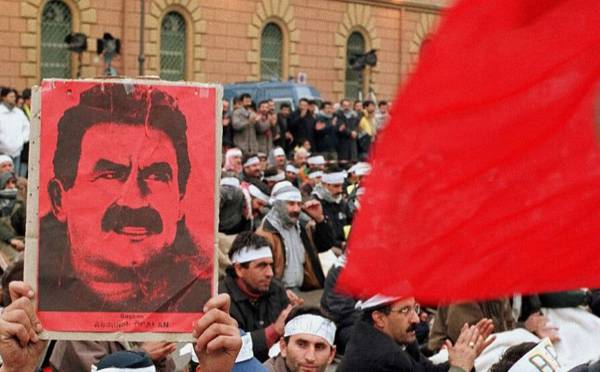
The core concepts developed by Öcalan, such as “democratic nation,” “democratic confederalism,” social ecology, and women’s liberation, draw not only from a Marxist-Leninist legacy but also from the anarchist intellectual tradition. These ideas form the basis for a search for freedom that proposes an alternative model of social organization grounded in local self-governance, direct democracy, and equitable representation among peoples as a response to the crisis of capitalist modernity.
However, Öcalan’s paradigm significantly diverges from classical anarchist thought. Rather than rejecting the state outright, it advocates a strategy of “transcending” or “dissolving” it. His conception of freedom is not centered on the individual but on collective identity and historical community. Although his political stance intersects with Bookchin’s defense of radical localism and Bakunin’s fundamental critique of the state, it does not fully align with either due to its unique historical context: the Middle East reality, the Kurdish experience, and the colonial state forms.
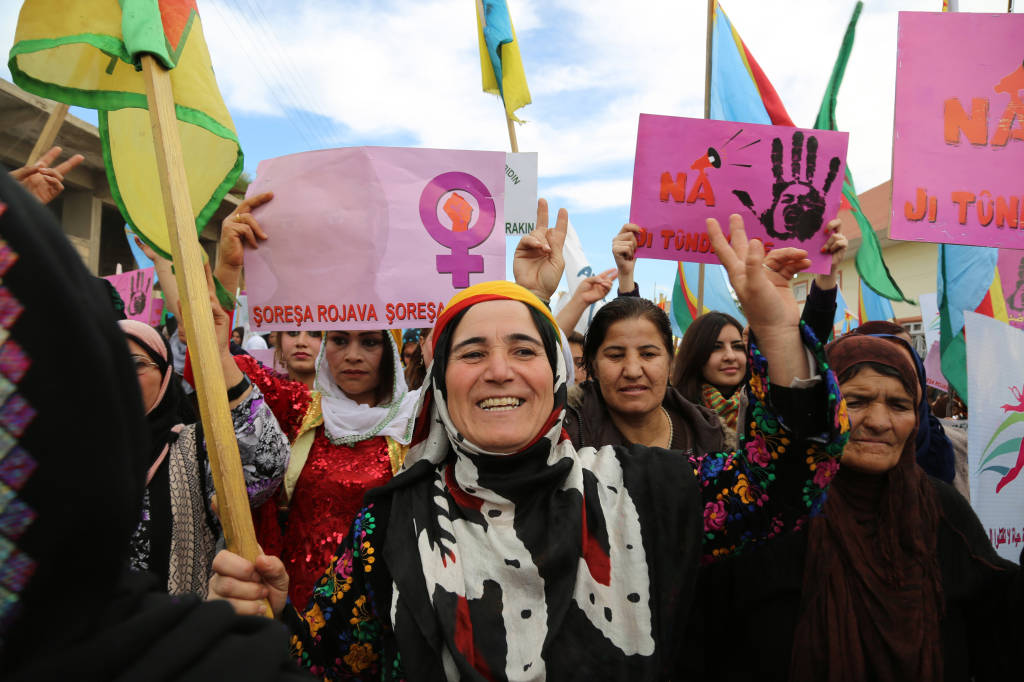
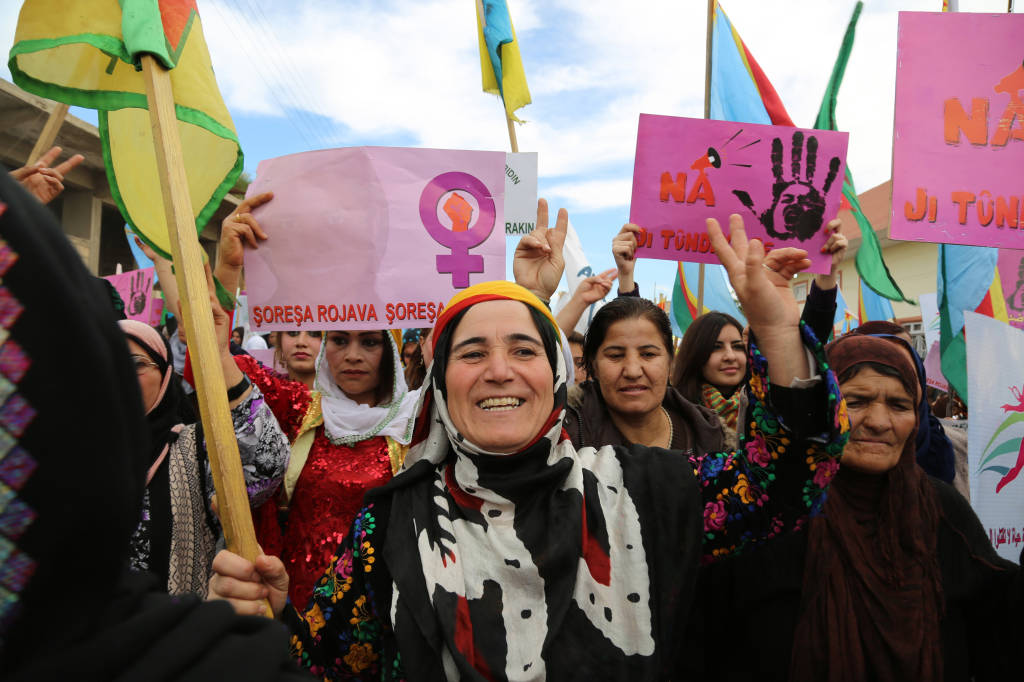
The Autonomous Administration of North and East Syria, which emerged in 2012 amidst the deepening Syrian civil war, is not only a regional self-governance initiative but also the most comprehensive political realization of Öcalan’s democratic modernity paradigm(1). This experience has drawn the attention of anarchist and revolutionary movements worldwide(2). The local councils, communes, women’s assemblies, and multi-ethnic governance structures have been interpreted as manifestations of a stateless life form rooted in direct democracy(3).
Rojava’s self-governance model is based on direct participation of the people in decision-making, rather than on centralized structures; in this respect, it reflects the principles of decentralization envisioned by both Bakunin and Bookchin(4). The social organization in Rojava follows a council system that scales from neighborhood assemblies up to district and canton levels(5). This system bears clear traces of Bookchin’s theories of “libertarian municipalism” and “communal confederalism”(6).
Women’s equal representation, institutions organized around the concept of Jineology, and autonomous women’s defense units represent not only a theoretical feminist position but also a radical practical challenge to patriarchy(7). Economically, efforts have been made to establish collective, cooperative-based modes of production outside market logic(8), which intersects with the anarchist idea of anti-capitalist social organization.
Nevertheless, the sustainability of these gains faces significant challenges, including conditions of war, embargo, and constant threats. The Rojava experience should be understood not as a direct implementation of an anarchist utopia, but rather as a hybrid and contextualized practice in which anarchist principles are reinterpreted in light of specific historical and cultural realities.
For example, the existence of military structures has been criticized by some anarchist circles as resembling state-like power formations. Yet, these can be seen as necessary mechanisms of self-defense developed to preserve the autonomy of the region. Moreover, since this structure is heavily influenced by Öcalan’s ideas and shaped under the leadership of a charismatic figure, it does not always fully align with anarchism’s anti-authoritarian principles.
Despite these tensions, the political experience of Rojava offers a powerful example that peoples can construct participatory, egalitarian, and liberatory ways of life today. It provides fertile ground for the practical possibilities of anarchism.
In the context of “communalist economy and the construction of an ethical-political society,” Rojava remains a critical field of practice. The communalist revolution in Rojava is advancing not only through political structures but also through the restructuring of economic and social relations. The collectivization of property, the planning of production based on social needs, and the development of local cooperatives point toward an alternative economic model beyond the logic of capitalist markets.
Economies led by women in this process are simultaneously breaking the patriarchal social structure and laying the foundations for a new ethical-political society. The Rojava revolution asserts that dismantling the state is not enough—the social relations that replace it must also be liberatory. Directly referencing Murray Bookchin’s communalism, the political and social order being built aims for local populations to have full control over their lives through city councils and democratic self-governance.
Conclusion: A prologue to a new International – In search of stateless libertarian unity
In this context, Öcalan’s thought offers anarchism both a critical rereading and a pathway to become a lived, concrete model for Eastern societies. From an anarchist perspective, Öcalan emerges as a unique political thinker who surpasses state fetishism, analyzes domination in multidimensional ways, and defines revolutionary practice not as seizing power, but as transforming life itself. His concept of democratic modernity should be seen not as an alternative to anarchism, but as its radical reinterpretation within the context of the Middle East.
This interpretation challenges the universal validity of classical anarchist theory and points toward a liberatory politics that expands Öcalan’s legacy beyond narrow ideological boundaries. Throughout this study, we have explored Öcalan’s intellectual transformation in comparative dialogue with the anarchist theoretical tradition—revealing intersections around core issues such as state, power, capitalist modernity, women’s freedom, and direct democracy. The five sections we examined reflect both a radical rupture with the classical Marxist-Leninist tradition and a creative tension with anarchist theories.
Öcalan’s conceptualization of the state as not merely an apparatus of ruling classes, but as a form of domination inherent to patriarchy and civilizational history, places him in the same theoretical terrain as Bakunin, Kropotkin, and Goldman. However, Öcalan’s quest for resolution is not based on total destruction as in classical anarchism; it involves the historical reconstruction of social organizational forms.
The model of democratic confederalism, materialized especially in Rojava, gives life to the vision of a stateless yet organized society. With principles such as local self-governance, communal economy, women-led transformation, and ecological living, it reawakens the practical possibilities of anarchist theory. Democratic modernity is neither a derivative of classical anarchism nor in contradiction with it; rather, it is an anti-authoritarian and liberatory synthesis shaped by the historical conditions of the Middle East.
This study aimed to show that Öcalan’s political thought provides not only a framework for the Kurdish freedom movement but also a significant theoretical contribution to global radical political thought.
As the multiple crises of capitalist modernity—ecological collapse, wars, patriarchy, displacement, and cultural genocide—reveal the structural bankruptcy of the global system, the limitations of 19th- and 20th-century state-centered revolutionary strategies have become increasingly evident. The authoritarian legacy of real socialism and the hollowed-out representative structures of liberal democracies no longer respond to humanity’s quest for freedom.
This historical impasse compels us toward a new internationalist perspective: a radically democratic network of solidarity beyond state and capital, founded on direct participation, women’s liberation, and ecological living.
At this point, Abdullah Öcalan’s paradigm of democratic modernity must be reread and expanded in dialogue with Murray Bookchin’s social ecology, Emma Goldman’s libertarian feminism, Peter Kropotkin’s mutual aid, and Mikhail Bakunin’s anti-statist federalism. The communalist experiment in Rojava demonstrates that this new international can be built not only as a vision, but as a real, lived practice.
This new international should not aim for centralized structures or ideological homogeneity, but for an egalitarian, horizontal, and pluralistic unity of peoples, beliefs, genders, and life forms.
This is the transformation of the revolutionary slogan “Workers of the world, unite!” into a deeper, broader call:
“Peoples, women, LGBTQ+ individuals, the oppressed—reorganize with nature!”
The new international will not rise behind collapsed walls—but on the bridges we build.
An Anarchist Reading of Öcalan
I - Will the revolution be with or without the state?
II - The construction of actually existing socialist practices
III - The codes of democratic modernity through the critique of capitalist modernity
IV - The anarchist face of democratic modernity
V - Building a communalist revolution through the Rojava experience
Notes
1 - Murray Bookchin, The Rise of Urbanization and the Decline of Citizenship, 1987.
2 - Janet Biehl, Ecology or Catastrophe : The Life of Murray Bookchin, 2015.
3 - David Graeber ve Andrej Grubačić, “Küçük Bir Anafor: Rojava’da Alternatif Bir Gelecek”, New Left Review, 2015.
4 - Dilar Dirik, The Kurdish Women’s Movement, Pluto Press, 2022.
5 - Thomas Schmidinger, The Battle for the Mountains of the Kurds, 2019.
6 - Mikhail Bakunin, The Paris Commune and the Idea of the State, 1871.
7 - Biehl, Bookchin Bibliography, 2015.
8 - Bookchin, The Next Revolution, 2015.