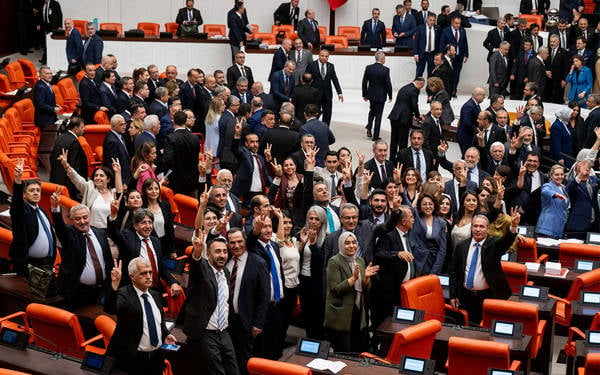








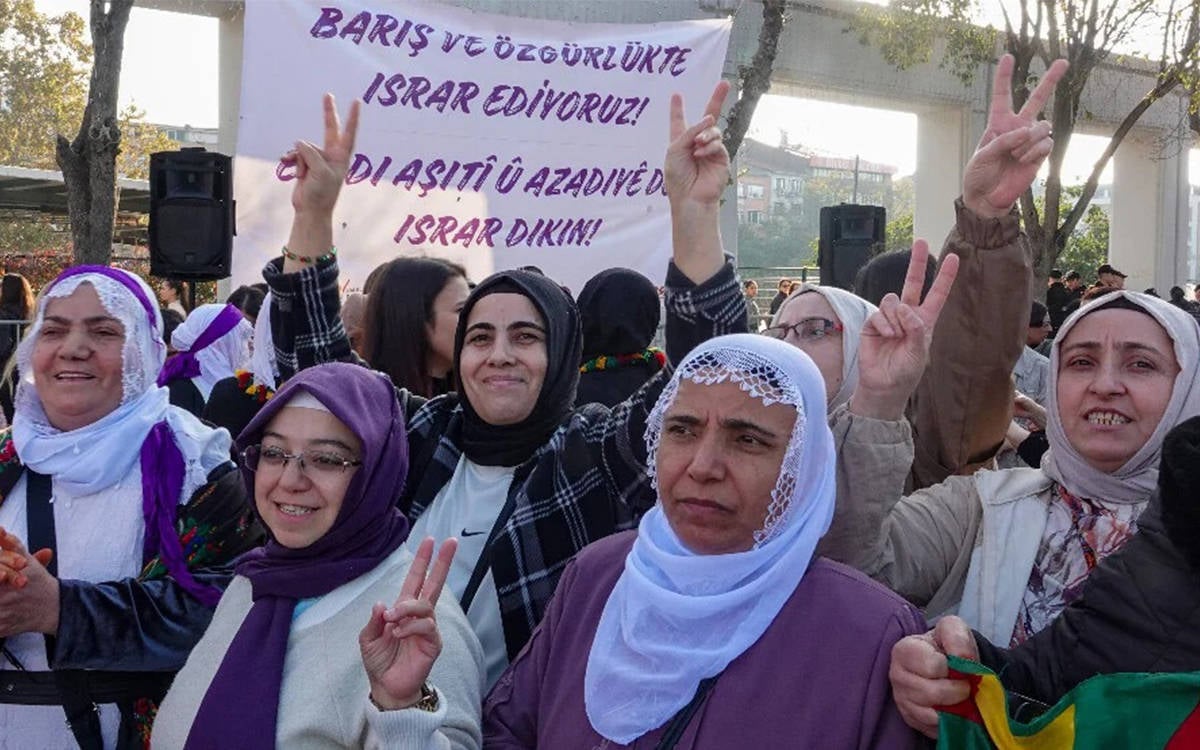



The Framework Law’s approval by Parliament last week went down in history as one of the key milestones on the path to peace. We are now one step closer to peace. The distance between us and peace has shortened by one more step.
Essentially, peace has always been right where it is. The more the steps we take to bridge the gap between where we are now and the peace we seek align with human rights, democracy, the rule of law, gender equality, and so on, the faster and more firmly we will reach peace.
For human rights advocates and peace activists, the primary significance of this law is that it declares the removal of weapons and the end of the period of conflict.
The question now is what will be done next and which destination we will head toward.
The next step is to make peace a greater priority
The time has come for those who seek peace to become more active. The time has come to give substance to our demand for peace. The time has come to elevate peace to the top of the social agenda and make it a permanent element of every legal regulation, policy, and practice.
In response to the question of whether there are guarantees—unlike in previous processes—that will prevent a reversal of the current process, Hatimoğlulları’s refined assessment focuses on two key points.
The first highlights the risks of rejecting the process. It is a fact that rejecting the process increases the risk that it will not continue. They note that the fact that no one and no social segment rejects the process is an important guarantee.
Societal acceptance can lead even those who openly oppose the process to change their minds about it over time.
The second point, which she describes as “making it impossible to reverse the process,” indicates that we must not merely be witnesses but active participants on the path to peace. In this way, as agents who act rather than merely observe, we can actively contribute to the process and shape peace.
There is no doubt that we must maintain our critical perspective throughout this process. This critical perspective is one of the strongest qualities of human rights defenders, peace advocates, and activists. The critical perspective we possess allows us to subject every policy and practice related to peace to a critical scrutiny.
It is through this critical perspective that we can ensure the path to peace is shaped in light of universal principles.
A critical perspective should not hold us back from the process; on the contrary, it should motivate our active participation in it.
The law opens the door to speaking out
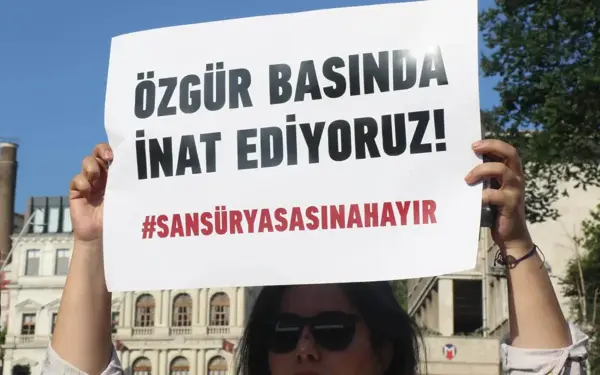
Following the end of the period of armed conflict and the announcement that weapons have been taken out of circulation, the possibility of opening up the space for free speech is increasing.
With the law’s implementation, the possibility arises for members of the PKK, which has dissolved itself, to participate in social life—whether they are in the mountains, in various countries around the world, or in prison. Regarding individuals who were under investigation or prosecution prior to the law’s adoption, a decision to postpone proceedings may be issued in accordance with Article 3. Similarly, detention orders or judicial control measures issued in connection with cases falling under this scope may be lifted under Article 4. Another important provision of the law is found in Article 6. Accordingly, prison sentences falling under this scope will also be suspended.
As demonstrated by the hundreds of reports we, as human rights organizations, have prepared, investigations and trials initiated under the Anti-Terrorism Law or the Penal Code have been affecting dissenting segments of society. They have also affected politicians who expressed their views on the Kurdish issue, journalists who reported on the matter, and human rights defenders who documented the violations.
For this reason, the law may provide a platform for civil society actors—who have no means other than their words—to speak out. Of course, the removal of all problematic legal provisions used against human rights defenders, politicians, journalists, academics, and union leaders would make this platform more robust.
Article 7 of the law, which regulates monitoring, coordination, and implementation, also offers an important opportunity. The provision in this article stating that “When necessary, the Council may establish subcommittees, and representatives of ministries, institutions, and organizations, as well as any other persons deemed necessary, may be invited to Council and committee meetings” could facilitate more active participation by civil society in the process.
Another stop on the road to peace: Social justice and public services
Social justice is one of the fundamental components of fully realizing peace. The close link between social justice and peace is articulated in the Constitution of the International Labor Organization (ILO), which states that “universal and lasting peace can only be based on social justice […].” The Constitution goes on to note that working conditions marked by injustice, poverty, and destitution lead to discontent among people. One of the key factors in ensuring social justice is the inclusivity and quality of public services.
Therefore, public services represent another crucial milestone on the path to peace.
It is critically important to provide the necessary public services to people arriving from the mountains or other countries, as well as to those about to be released from prison. For example, access to necessary health services is vital for former prisoners who have spent long periods in prison and suffer from health problems.
Similarly, ensuring that no segment of society feels excluded during this process contributes to increasing trust in the process. Trust in the process, in turn, plays a key role in building peace on solid foundations and ensuring its sustainability.
Armed conflict, grave human rights violations
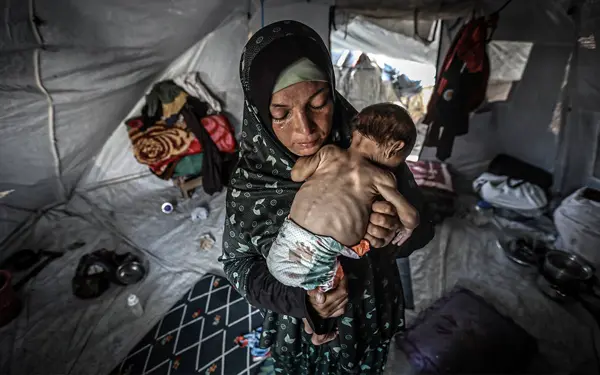
As human rights defenders, we are well aware that the most severe human rights violations occur in conflict zones. We have prepared hundreds of reports, analyses, and assessments on this subject.
The data we compiled as the Human Rights Association (İHD) regarding the 40-year period of conflict and submitted to Parliament clearly lays bare the severity of the violations caused by the conflict.
The period of curfews that followed the end of the 2013–2015 peace process once again demonstrated that conflicts taking place in urban areas have a greater impact on civilians. The reports on curfews prepared by the Turkish Human Rights Foundation (TİHV) highlight this grim picture.
Furthermore, since this conflict-ridden environment has also affected other areas of rights, we are not in a good position in terms of human rights according to many international indices in recent years. For example, the Global Torture Index prepared by the World Organization Against Torture (OMCT) finds that the situation in Turkey falls into the “high-risk” category. Similarly, the Global Rights Index—which addresses labor and trade union rights and is prepared by the International Trade Union Confederation (ITUC)—indicates that Turkey ranks among the 10 worst countries in terms of rights.
In this regard, ending the conflict-ridden environment could lead to a reduction in both direct human rights violations and violations in other areas of rights that are negatively affected by the conflict.
We can give meaning to peace
It is up to us to make this period historic. There is broad consensus that the law alone is not enough.
A step toward peace has been taken with the Framework Law. There are thousands of steps yet to be taken toward peace, our ultimate destination.
Let’s continue the struggle for human rights.
Let’s keep taking steps toward peace. (Oİ/VK)