











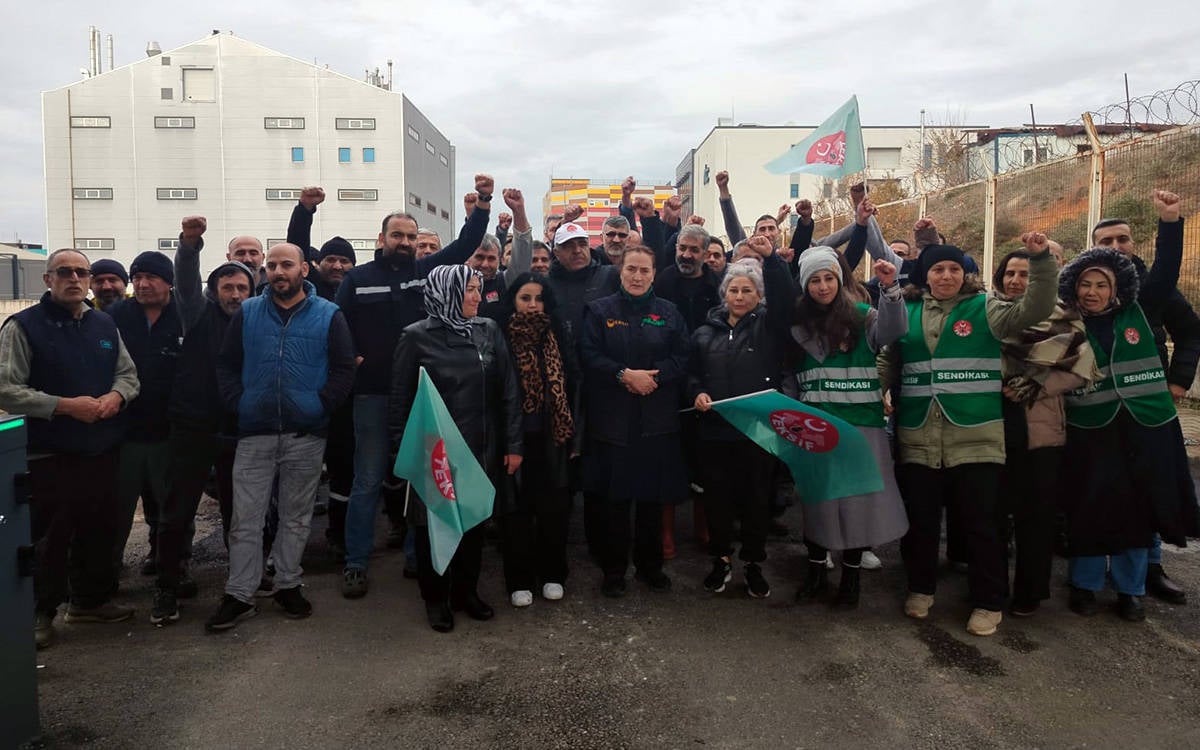



The factory, employing 206 workers – mostly women – saw a surge in unionization after poor working conditions, low wages, and managerial pressure. A total of 106 workers joined the TEKSİF union (affiliated with Türk-İş), prompting the company to dismiss ten prominent union supporters before the union’s majority certification on October 25, 2024.
Nazar Kaya, one of the dismissed workers, described the harsh conditions: mandatory overtime, breaks too short to reach the cafeteria, and wages just above the minimum. Kaya recounted that women with children were told to bring them to the factory during weekend shifts. "We were told, ‘Bring the children,’ even though the work environment was unsafe. Now, we’re not allowed past the gate, and riot police are stationed outside. Where was this security when we worked inside with our children?"
Suppression through threats and surveillance
Kaya described their prolonged resistance: “The factory manager justified everything as ‘legal,’ but we saw that the law doesn't truly work. Our lawsuits keep getting postponed. The mainstream media ignored us. We've spent one winter in a tent outside the Tuzla Free Zone.”
Workers inside the factory supported the protest with slogans and banners, but management retaliated with mobbing, forced overtime, and changes meant to undermine union credibility. They revoked senior workers' titles, introduced restroom card systems tracking every minute, and used fear to suppress solidarity.
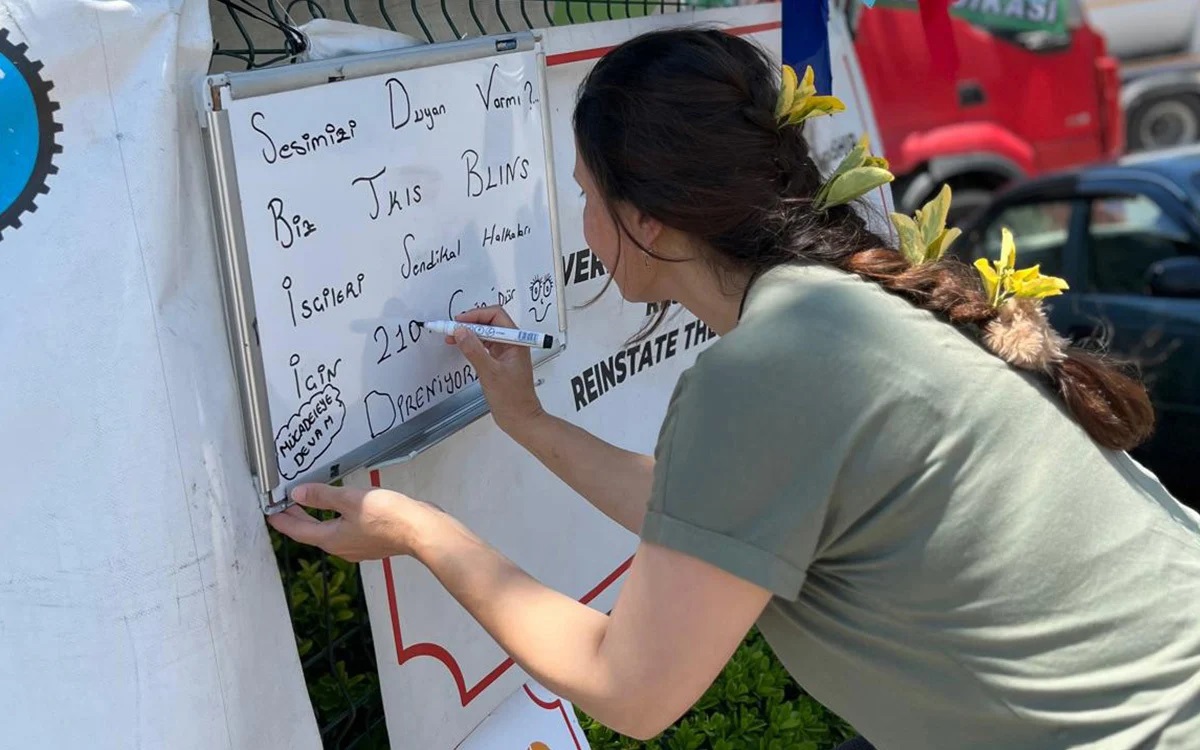
Dismissals and union-busting threats
TEKSİF’s organizing advisor Binalı Tay said seven workers were fired under "Code 46" (for serious misconduct like theft or breach of trust), and three others for alleged poor performance. Inspectors sent by the Ministry of Labor, following union pressure, overturned the Code 46 decisions after two days of on-site investigation. Still, the resistance continues.
Tay also exposed management’s union-busting tactics: “They created a ‘persuasion room’ where they promised better bonuses, raises, and promotions to non-union workers, and threatened to relocate the factory to Egypt if TEKSİF won bargaining rights.”
Workers demand union recognition and reinstatement
Both Kaya and Tay emphasized two key demands: “The state says, ‘Join a union, it’s a constitutional right,’ but also tells employers, ‘You can challenge union recognition in court.’ This legal limbo forces workers to wait years for justice. That’s why we’re united around two demands: TEKSİF must be recognized in the factory, and the ten dismissed workers must be reinstated.”
(EY/VC/DT)


