





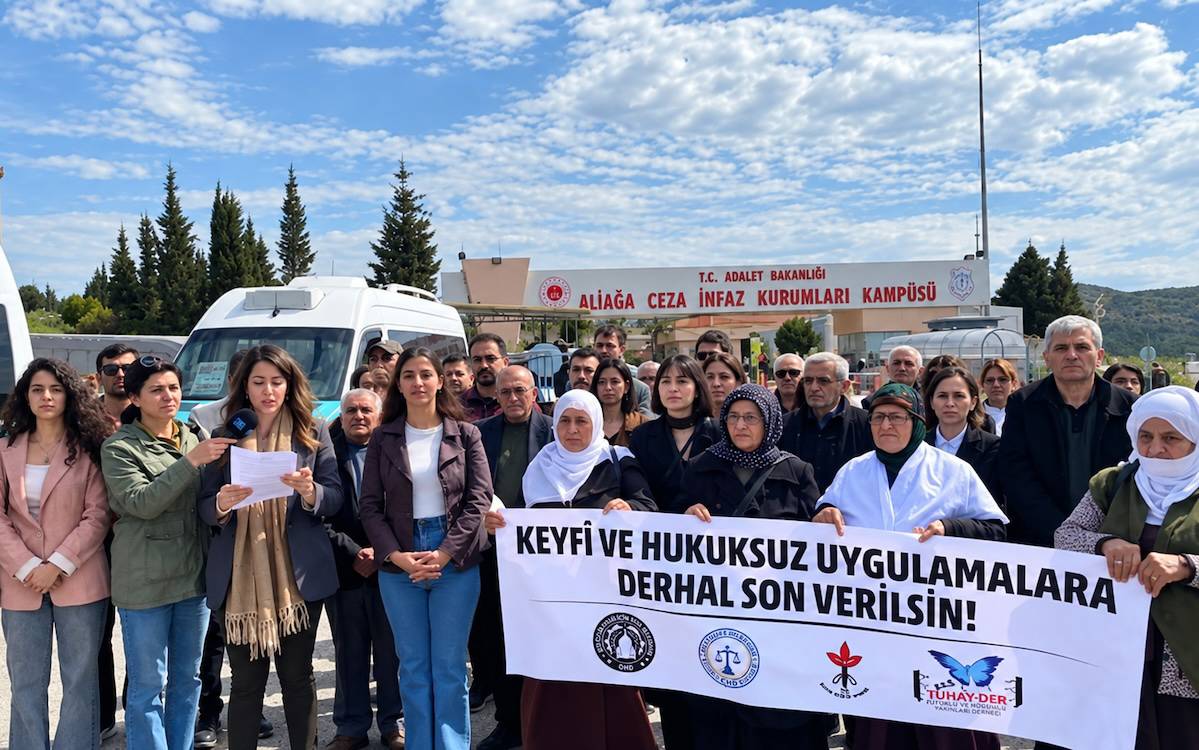


The number of women held in prisons in Turkey has increased nearly 12-fold over the past two decades, while access to health care, communication, social activities and conditional release remains a concern, according to a representative of a prisoners’ rights group.
Özge Akyüz, the Women in Prison thematic area representative at the Civil Society in the Penal System Association (CİSST), described problems ranging from prison conditions to decisions by administrative and observation boards in an Oct 29 interview with Mezopotamya Agency (MA).
According to Oct 1, 2026 data from the General Directorate of Prisons and Detention Houses, Turkey’s prisons held 434,337 people, including 21,179 adult women and 266 girls.
World Prison Brief data from Birkbeck, University of London, show that the number of women in prison in Turkey rose from 1,802 in 2005 to 21,445 in 2026, an increase of about 11.9 times over 21 years.
Akyüz said the increase in Turkey reflected a broader global trend.
The World Female Imprisonment List, published by World Prison Brief in 2025, found that about 733,000 women and girls were imprisoned worldwide, accounting for 6.8 percent of the global prison population. Since 2000, the number of imprisoned women has increased by 57 percent, compared with about 22 percent for men.
“Therefore, we see that women are being imprisoned at a faster rate. There is a similar situation in Turkey,” Akyüz said.
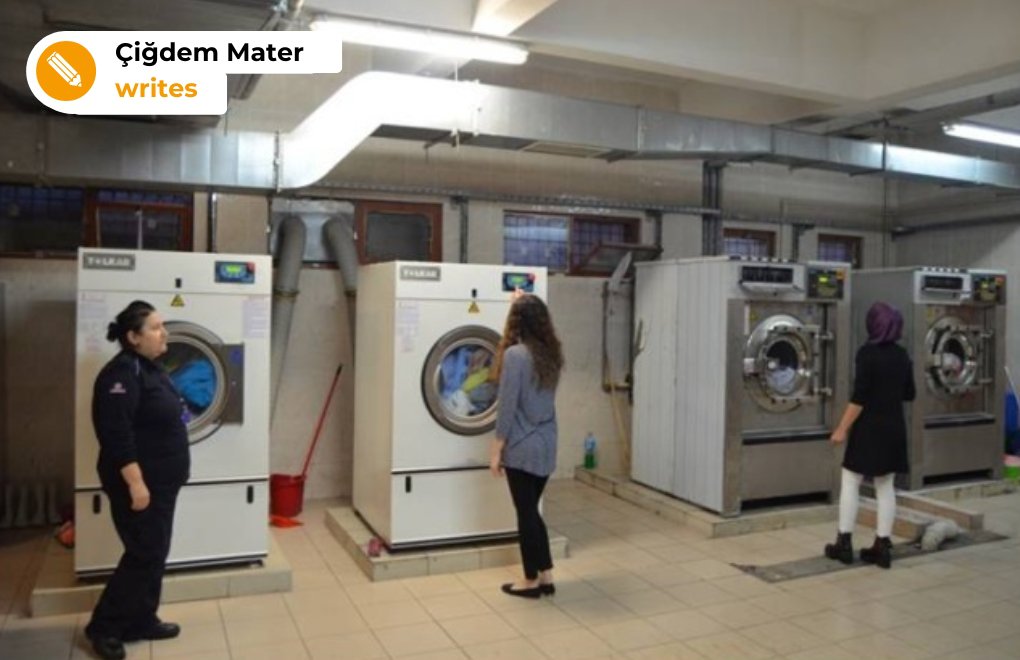
'The patriarchy of things' in women's prisons in Turkey
Prisons designed around men’s needs
Akyüz said many problems faced by women stem from a penal system designed primarily around the needs of male prisoners.
“Turkey’s prison system is structured according to a binary gender system based on women and men,” she said. “However, when we look at its spatial arrangements, legal regulations and the way the texts are drafted, we see that it is organized according to men’s needs.”
Women face difficulties accessing common areas, educational programs, social activities and products sold in prison canteens, according to Akyüz. She said women’s needs can be pushed aside particularly in facilities where men make up most of the prison population.
Newer prison designs that restrict access to outdoor areas, sunlight and social interaction also affect women’s physical and mental health, she said.

Women prisoners lack access to sanitary pads and wax
Complaints over conditional release decisions
Akyüz also raised concerns about decisions by prison administrative and observation boards, which assess prisoners for conditional release.
According to complaints received by CİSST, some women have been denied conditional release because of circumstances outside their control.
“For example, a woman held in a men’s prison may be unable to participate in an activity because of problems arising from the prison’s organization,” Akyüz said. “This has nothing to do with the woman herself, but with how the prison is organized. Yet we receive complaints that the Administrative and Observation Board issued an unfavorable decision because the woman had not participated in activities.”
Akyüz said women imprisoned on political charges in particular face severe restrictions concerning transfers to open prisons, supervised release and conditional release.
The legal grounds and individual circumstances differ from case to case. Complaints submitted to CİSST, however, have raised questions over whether assessments of good conduct are based on objective criteria.
Deaths and alleged suicide attempts
Akyüz said CİSST received a large number of complaints in July concerning Sincan Women’s Closed Prison, which has previously been the subject of rights violation allegations.
She said CİSST visited the prison with lawyers from the Lawyers for Freedom Association (ÖHD) and the Progressive Lawyers Association (ÇHD).
During interviews with women imprisoned on nonpolitical charges, they heard accounts of numerous suicide attempts and deaths over the previous year, Akyüz said.
CİSST also received a complaint involving a woman who had been prevented from speaking with her child by phone and was allowed to do so only after harming herself, according to Akyüz.
“We are therefore talking about a situation in which access to a right depends on a person harming herself,” she said.
Akyüz said reviews of the deaths were continuing and reports would be made public.

'Women prisoners work 12 hours a day for 600 lira'
The allegations concerning deaths at Sincan had previously been raised in parliament.
Peoples’ Equality and Democracy (DEM) Party, pro-Kurdish, Şanlıurfa MP Dilan Kunt Ayan said in a Jul 28 speech to parliament that four women imprisoned on nonpolitical charges had died over the previous four months and that their deaths had been recorded as suicides. She also said lawyers had confirmed that seven women had harmed themselves.
Following the allegations, DEM Party MPs Beritan Güneş Altın and Meral Danış Beştaş submitted written parliamentary questions to the Justice Ministry in September and October.
No ministry responses to those questions appear in publicly accessible parliamentary records.
No findings independently establishing the causes of the Sincan deaths, responsibility or alleged negligence have yet been made public.
Overcrowding, limited psychological support
Problems at Sincan Women’s Closed Prison were also documented in a 2024 inspection report by the Human Rights and Equality Institution of Turkey (TİHEK).
During an unannounced visit on Jul 25-26, 2024, TİHEK found that 624 prisoners were being held in the facility, which had a capacity of 400.
The prison had one psychologist and five social workers.
The report also said prison officials were monitoring 19 prisoners considered at risk of suicide at the time. It recorded complaints about disruptions in transfers to hospitals.
CİSST calls for broader independent monitoring
Akyüz said civil society organizations should be given greater access to prisons to conduct independent monitoring as part of efforts to prevent rights violations.
“First of all, the opportunities for civil society organizations to conduct monitoring in prisons need to be expanded,” she said.
She called for cooperation among lawmakers, MPs, academics, professional organizations and prison administrations.
Akyüz also said women should be protected from violence, supported economically and guaranteed access to health care and social rights while imprisoned. She added that they should receive support in preparing for life after release.
She said the issues surrounding women in prison should be addressed as part of a comprehensive approach. (AEK/VK)

