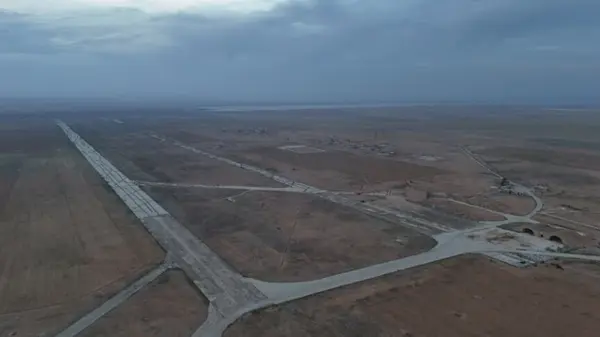








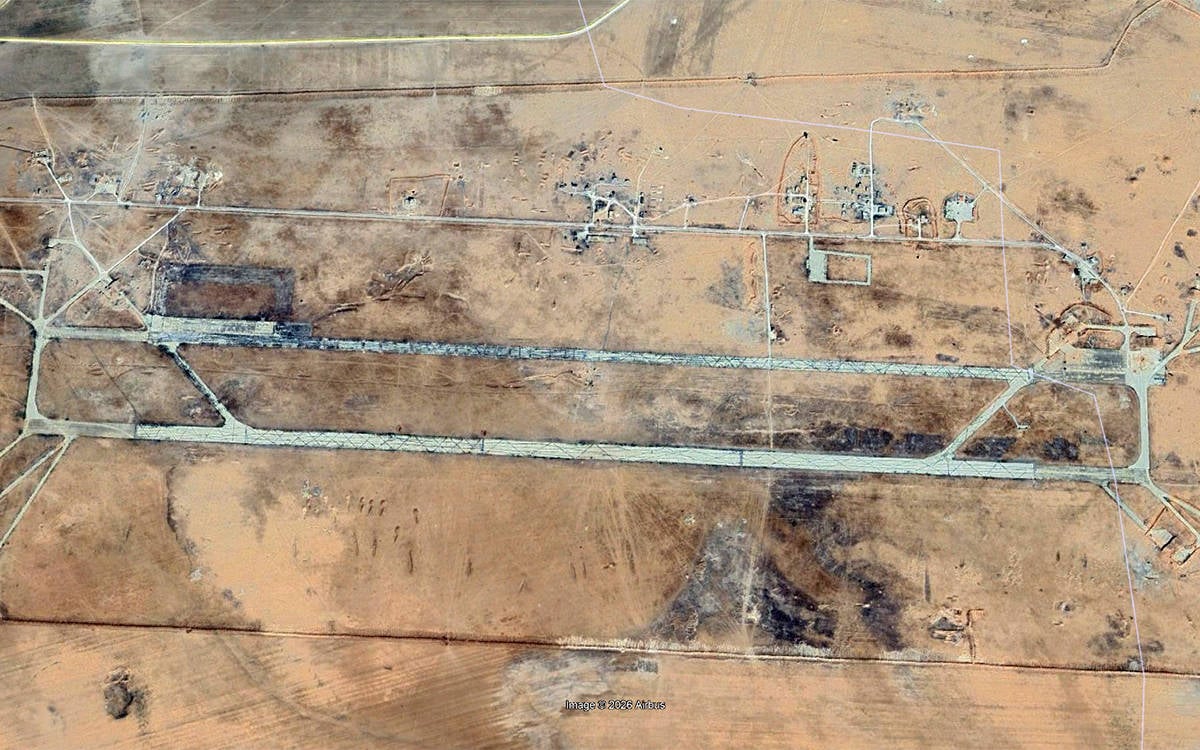



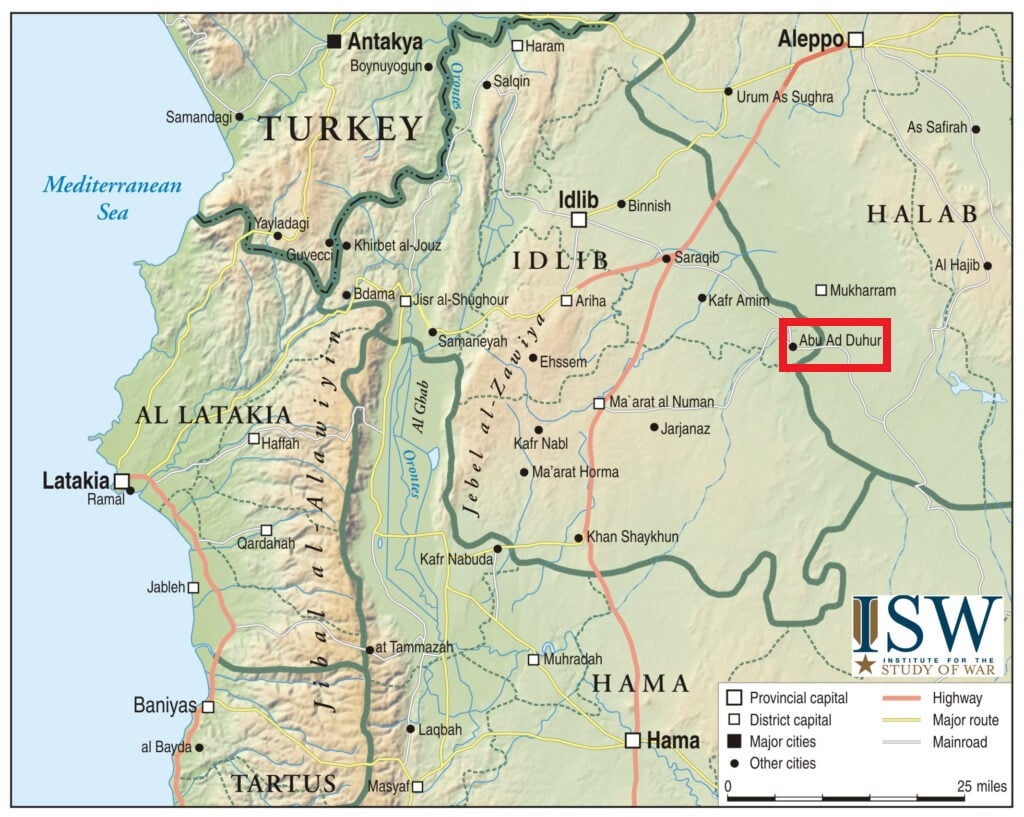
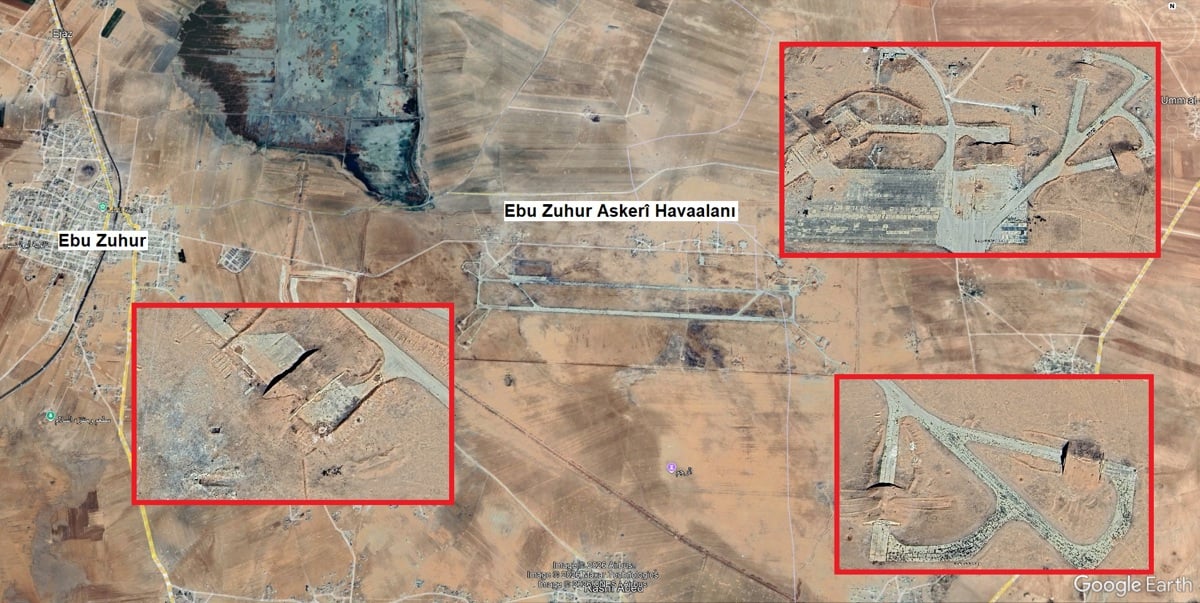
Israeli warplanes yesterday morning targeted the Abu al-Duhur Military Airbase in the countryside of Idlib, northwestern Syria.
Syrian state television, citing a military source, reported that the base’s runway and warehouses were hit in eight airstrikes. Local and military sources reported no casualties, but the facility sustained material damage.
What gave the attack significance beyond Israeli-Syrian tensions, however, was not so much the location of the target as the justification Israel later provided. The Israeli Prime Minister’s Office claimed that an earlier understanding had been reached with the Damascus government on maintaining the “status quo” in the security sphere. It accused the Syrian government, however, of being on the verge of violating that arrangement by allowing Turkey to deploy at an airbase near Aleppo.
Israel’s statement indicates that the Abu al-Duhur strike was intended as a deterrent message not only to Damascus, but also to Ankara.
‘Turkish military delegation was at the base before the strikes’
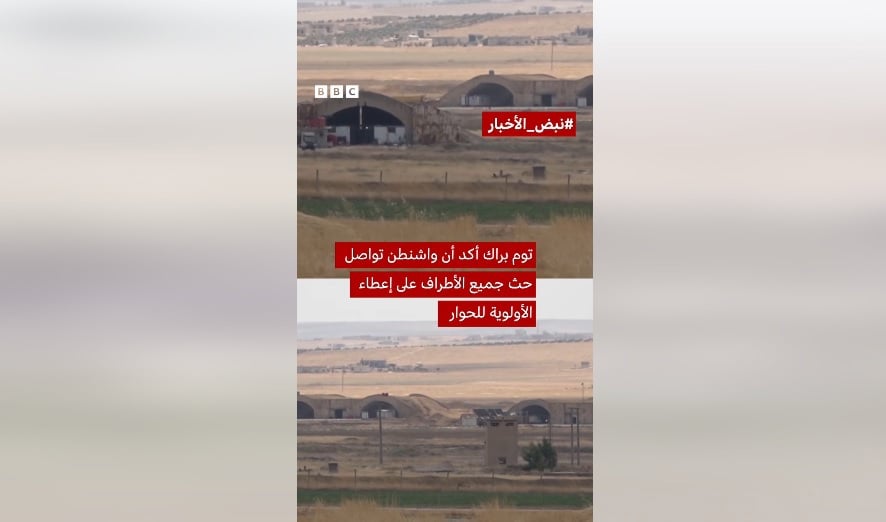
London-based Arabic-language outlet Al-Araby Al-Jadeed reported citing sources on the ground that a Turkish military delegation had visited Abu al-Duhur the day before the attack.
According to the report, the delegation inspected preliminary work aimed at bringing the runway back into service. Sources claimed the work was still at an early stage, that some communications equipment was present inside the base and that a Bayraktar-type reconnaissance drone had been flying in the area. An Israeli reconnaissance aircraft was reportedly seen flying around the base after the delegation left, with the strike taking place several hours later.
The London-based Syrian Observatory for Human Rights made a similar claim.
A Turkish official speaking to US-based Axios denied these claims.
Reactions from Ankara and Damascus
The Foreign Ministry “strongly” condemned Israel’s airstrikes on Abu al-Duhur. The ministry described the attacks as a continuation of violations of Syria’s sovereignty and territorial integrity.
Turkey’s Presidency Directorate of Communications also dismissed the Israeli Prime Minister’s Office’s claims about Turkey as “frivolous,” arguing that they were intended to legitimize airstrikes targeting Syria’s sovereignty and territorial integrity. The statement said Turkey would continue its cooperation with the Damascus government on a legitimate basis “to establish peace, stability and prosperity” in Syria.
Statements from Damascus also contradict Israel’s account of a “status quo.” A diplomatic source from the Syrian Foreign Ministry told Qatar-based Al Jazeera that there was no security agreement with Israel restricting Syria’s ability to develop its civilian or military institutions. The same source also claimed that Israel had been informed that no foreign forces were present at Abu al-Duhur.
Barrack’s ambigious remarks
Comments by Tom Barrack, the US special envoy for Syria and ambassador to Ankara, to Reuters make this uncertainty particularly apparent.
Barrack said the Israeli strike reflected a “perception, right or wrong,” that Turkey “could increase its presence at this base in the near future.” In other words, Barrack did not confirm that Turkey was preparing to deploy at Abu al-Duhur, but said Israel had acted because it perceived such a possibility as a threat.
Another important point in Barrack’s remarks was that Ankara had not been informed of the operation in advance. According to Barrack, Turkey observed Israeli aircraft moving toward its border and it would have been “reasonable” for Ankara to prepare a military response.
Barrack said a more serious escalation had been prevented and added that Washington was working to establish a stronger deconfliction mechanism among Turkey, Israel and Syria.
Why now?
Three dynamics stand out in the timing of Israel’s ‘Abu al-Duhur’ strike.
First, the Damascus government’s efforts to rebuild its military institutions and infrastructure are becoming increasingly concrete.
Second, Israel is no longer viewing Turkey’s support for this process solely as diplomatic influence, but as a factor that could alter the military balance in the future.
Third, US-mediated security talks between Israel and Syria have yet to produce a binding framework agreed upon by both sides.
İbrahim Hamidi, editor-in-chief of the London-based Al Majalla magazine, also drew attention to the timing of the Abu al-Duhur strike. He reposted an Aug 10 post showing a Syrian pilot conducting a training flight in a fighter jet in Idlib, adding the question: “Was Israel’s bombing today of Abu al-Duhur Airport in the Idlib countryside a response to this step?”
Is Abu al-Duhur a continuation of the T4 crisis?
What makes the ‘Abu al-Duhur’ strike more significant is that it was not the first such incident.
A similar crisis unfolded around the Tiyas/T4 Air Base in central Syria in April 2025. Israeli warplanes targeted the base following reports that Turkey was preparing to deploy forces to several Syrian airbases, including T4.
There is a striking similarity between the two incidents. In both cases, a Syrian airbase that had drawn the interest of Turkish military delegations and was being considered for reactivation was targeted by Israel shortly afterward.
The Israeli government clearly appears to believe that the deployment of Turkish air defense systems in Syria could restrict the freedom of operation Israeli warplanes have enjoyed for years.
The Israel-based Jerusalem Post reported on Apr 1, 2025 that an Israeli security source had described the T4 strike in these terms. According to the source, Israel was signaling that it would not allow a Turkish-operated airbase to restrict its freedom of operation.
From this perspective, Abu al-Duhur can be seen as another example of the red line that emerged at T4.
The main risk highlighted by the strike
Israel is not only opposed to Turkey establishing a military presence in areas close to its borders. It also views Ankara’s efforts to build a lasting capacity capable of reshaping Syria’s military infrastructure as a threat to its own security calculations.
At the same time, the issue extends beyond a single airbase. Israel wants to tie Syria’s rearmament and efforts to build a regular air defense network as closely as possible to its own security conditions. As Turkey increases its military support for the Syrian army, the interests of the two countries could come into more direct conflict, particularly over who can use Syrian airspace and under what conditions.
On the diplomatic front, meanwhile, the Abu al-Duhur strike could make the ongoing security talks between Israel and Syria more complicated rather than bring them to an end.
The Damascus government does not want to accept external restrictions on its right to rebuild its army and military infrastructure. Israel, meanwhile, wants any security arrangement to limit from the outset the military capabilities it regards as threats. The result is a situation in which the sides do not even agree on what the “status quo” means.
This is where the main risk highlighted by Abu al-Duhur lies: Syria is shifting from an arena where tensions between Turkey and Israel are confined to diplomacy into one where there is a risk of direct military contact and miscalculation.
(VC/VK)