
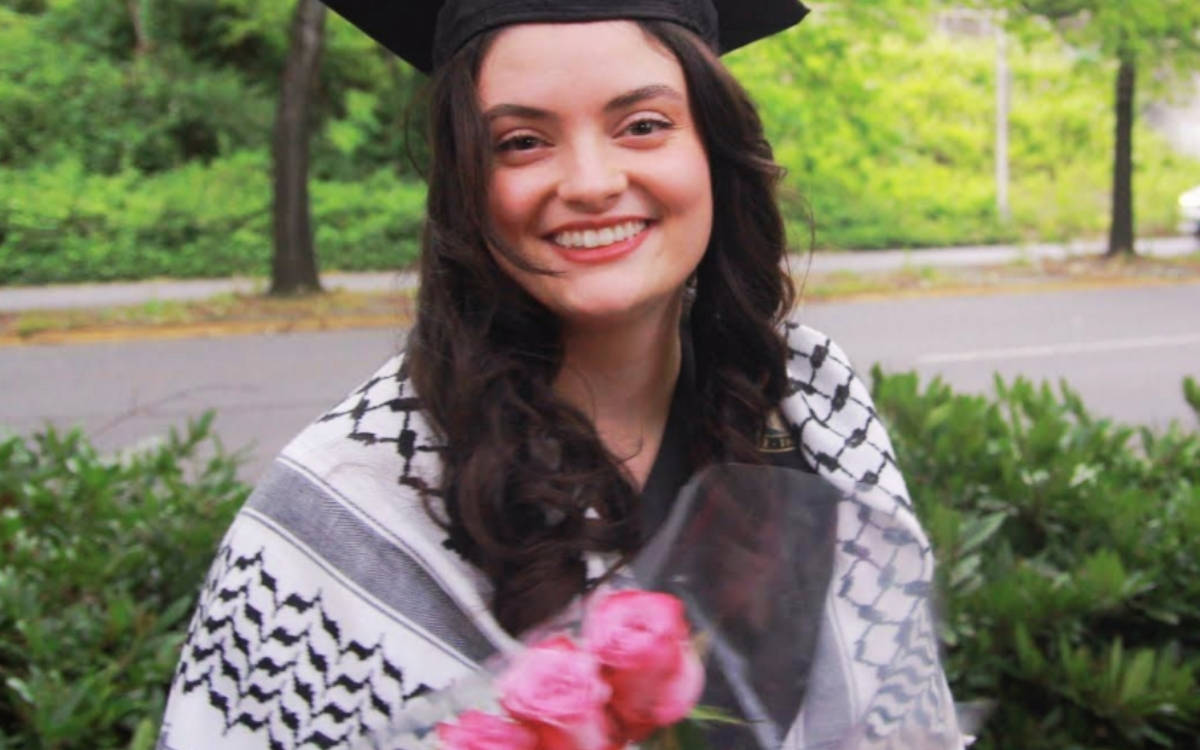



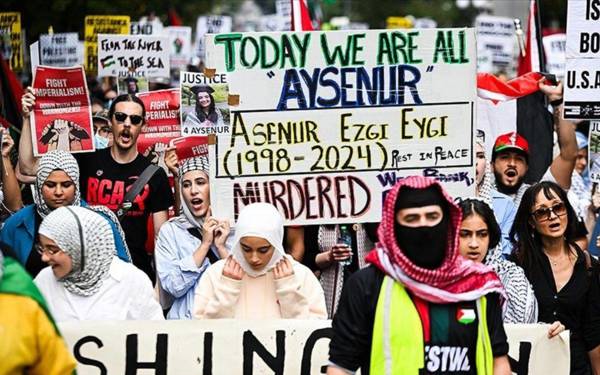
Ayşenur Ezgi Eygi was shot in the head six times by an Israeli sniper while attending a protest against an Israeli settlement expansion in the West Bank on Sep 6, 2024. The 26-year-old Turkish-American dual citizen traveled from Washington State to Palestine to volunteer with the International Solidarity Movement (ISM) and is one of 14 US citizens, including two Turkish-Americans, who have been killed by the Israeli military or settlers since 2003. None of these cases have resulted in criminal prosecutions.
Over two years have passed since Eygi’s death, still with no accountability.
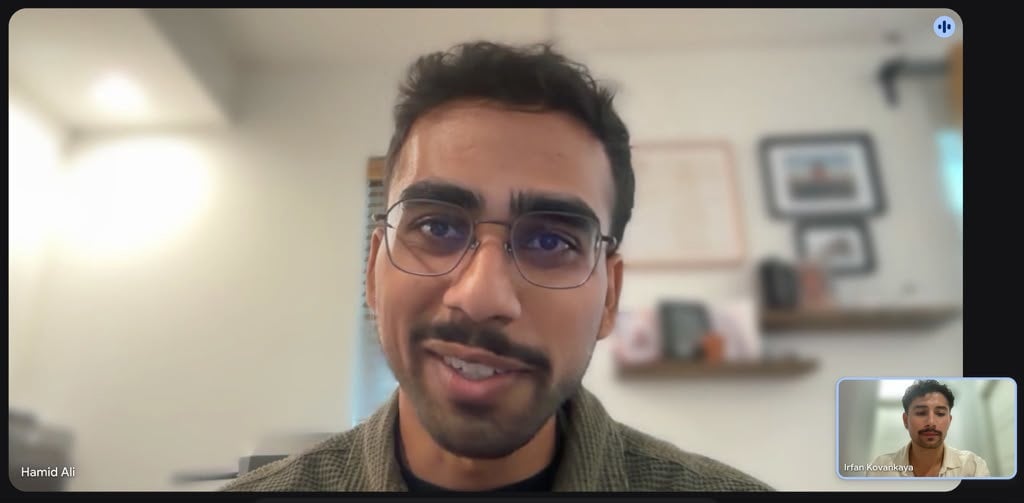
bianet spoke to her husband Hamid Ali about his memories of Ayşenur, how the family is coping, who she was as a person and updates from the “For Ayşenur” campaign advocating for an independent investigation on her killing.
People across the world have found themselves inspired by Ayşenur’s bravery and her story. Could you tell us about what compelled her to come to Palestine and volunteer with the International Solidarity Movement (ISM)? What did she say to you about her motivations?
I think at a very basic level, what compelled her was her sense of justice, and right and wrong. I can talk more politically and more about the complexities and nuances of that. But at a very, very basic level, I think she had a very clear sense of right and wrong, and a very clear sense of doing something about witnessing some wrongdoing or some injustice and trying to actively do something to correct that. It was just the evolution of that in her life. She had been on the ground in other movements before. And this was just the next step in her actions that she had been taking for justice in Palestine. You know, she had been active on campus and in America. So, I think the next thing that she felt that she could do was to go on the ground in the West Bank and act as an international observer, answer the call of Palestinians on the ground there through ISM, and that's what she did.
You mentioned her political evolution. Could you describe that evolution?
She continued to grow after we met obviously, but she was already fully grown and mature politically in her thinking and her education when I met her. So I didn't get to witness the full evolution of how that developed within her. But even from, let's say, October 2023, I could see the wheels turning, and the first thing that she felt after seeing the images coming out of Gaza after October 7 was almost an anxiety of not doing anything. This urgency to to take action, so she was like, “What can I do? What can I do?” And then she quickly organized this fundraiser, and it was a beautiful fundraiser. It brought the community out. There was art. Artists were donating art to be sold. It was exactly what she was all about — coming together as a community locally to do something that could help others worldwide.
Then even after that that urgency kind of settled, as we understood what was about to happen in Gaza and seeing the response of the Israeli state and the escalations — I could see this anxiety and urgency settling into a place that was like, “okay, what's the long term sustainable way to take action here and organize?”
I could see that development even over that year. That turned into activism on campus. You know, there were protests, there were encampments across the U.S. at different college campuses. The school that she went to, University of Washington, was no exception to that. So she was involved in that, and then it evolved into “okay, I have the time, the resources and the privilege to travel to the West Bank and be an active participant in some solidarity work on the ground.” And that was kind of the evolution that I saw.
'A hard conversation'
Do you remember that conversation where she told you she wanted to volunteer in Palestine. There’s a lot of risks surrounding that. How did that go?
Yeah, I mean, there were other people in the community who had done this who had come back and had gone multiple times actually, so it wasn't this totally novel idea. I mean, it was a conversation that was hard. The possibility of death did come up. It wasn't like she was naive about that. She went in with eyes wide open, and we talked about that as well. She understood that risk and accepted it. It was hard for me because I am obviously married to her, and even thinking about that possibility was difficult. But accepting that she was okay with it was even more difficult, but then also understanding that preventing her from doing this would be to reject who she was as a person. I wasn't, you know, willing to do that either, because then she wouldn't be the person who I fell in love with. So it was very complicated, but ultimately, I don't think I would have, even looking back, it's hard to say — but I don't think I would have made a different decision, because ultimately it wasn't her fault. The blame lies entirely with the Israeli military.
You mentioned who she was as a person. Many people in Turkey and around the world feel a deep connection with Ayşenur, but we don't truly know who she is as a person. As Ayşenur’s husband, could you tell us about who she was in everyday life?
I think that's an important question, because, like you said earlier, she's become this symbol and figure that's not a real person. So I always like answering this question, but it's also very difficult because there's so many things I could say. I guess I want to remind people that she was not like this exceptional hero. She had flaws. She procrastinated a lot. She was not a morning person. You know, she would get out of bed really late. Her school assignments would always be last minute submissions. She was really silly and goofy a lot of the time.
But these were all things I admired, because the reason that she was silly and goofy was because she had this really strong connection to her inner child and this authenticity that I think is lost after childhood that she really intentionally maintained, but she was still mature and a well-grounded person.
I think that's why she had that ability to tap into that authentic silly part of herself, and not take things too seriously or take herself too seriously. And the procrastination stuff: The reason she wasn't a morning person is because she was engaged in community through the long hours of the night, either through more practical things like planning and organizing protests, actions and stuff like that, or just building community by spending time with people and really talking, getting to the deep core of people — those kinds of conversations, not just surface level. That's why she was able to really connect with a lot of people very easily. I think that's good.
I mean she loved music. I think something we connected on a lot was that I never met someone with a music taste that was similar to mine, first of all, but also so representative of everything about her. It was very worldly. On any playlist of hers there were songs from like eight different languages, but at the same time, she'd listen to all the top 40 pop songs too. She was just a very nuanced person, is what I would say, politically, especially. She was critical of people, but at the same time, could recognize maybe the benefits or the good things that they did do, you know, political figures. She understood that there's no like black or white answer to anything. That’s something I also admired about her.
Is that what made you fall in love with her?
Honestly, yeah. The point where I really started thinking about her seriously as a long-term partner was this moment where we were discussing, I don't remember exactly, but something to do with religion and politics or something like that. I was bracing for this point where in the past when I've brought this up with people, it's a polarizing thing, but she was very open to it. She was like, "Well, yeah, thinking about this, like that's interesting. I want to read more about it.” And the next time we talked about it, she had read up on it and that was really something that I admired and was drawn towards.
WOMEN'S AGENDA
'A heartbreaking loss for all of us': Friend reflects on killing of Turkish-American activist in Palestine
Memories
If you would feel comfortable, are there any personal memories that reflect those qualities you mentioned earlier that you would like to share?
Even despite being married to her for years at that point with what I was describing after October 7th, seeing how affected she was by the images coming out of Gaza — I know people were affected all over the world, and people were really distraught — but she really couldn't operate. I found journal entries later across so many places, written down on her phone, on her laptop, just reflecting on what she was witnessing and feeling complicit just by the fact of being a citizen of the United States. I think that is something that really stayed with me.
Almost to a degree, it was unrelatable, because at that point I had been so jaded. I was disappointed, and it was affecting me, but [not] to the point of debilitation, like it was for her. She couldn't operate. She couldn't do her schoolwork, she would start crying. But turning that into a successful action that achieved so many things, simultaneously brought the community together at this point when no one knew what to do about it, and at the same time, making something beautiful where art was being created and shared, and everything was being donated. It was awe-inspiring, really, to see one how affected she was by it, but still able to turn that energy into this momentum that she carried forward.
Is there anything that reminds you of her on a day-to-day basis?
Oh man, everything. I mean, there's literally everything. I think music has really been something that helps me tap into the memory, the very poignant memory of her. So there's a song by Barış Manço, Hal Hal. That was the song that really reminds me of her day to day. But I mean everything does, literally everything — coffee, food, the wind hitting the leaves in a certain way, like you know, everything. Everything does. But that song really takes me back to when we first met.
I love Hal Hal. It's actually one of my dad's favorites.
The legal battle
There’s four demands from the “For Ayşenur” campaign, including (1) a full US-led investigation, (2) criminal charges for those responsible for her death, (3) congressional hearings on the pattern of Americans killed by Israel abroad, and (4) formal diplomatic consequences. What has the campaign been doing to push for these. Has there been any significant results on that front? What has the reception been among elected officials?
So I'll go with the shortest answer first. There hasn't been anything concrete. Those demands are still unmet. Under this current administration in the US, there has been no progress on that front.
What we've been doing has been this combination of meetings at the federal level with representatives and Congress — senators and representatives, both from Washington State where Ayşenur was a constituent of, but also other supporters. We went to Washington DC two times now. The first time was in December 2024. We met with the former Secretary of State Antony Blinken and sat down with him to ask him about some of these demands. Essentially, he shrugged his shoulders and in so many words, said we can't really do anything — this is up to Israel, and they have to do their investigations, etc. etc. But, yeah, he was basically underplaying the influence that the US has with the country. And then we met with representatives to try and ask them to use any influence that they had to urge the Department of Justice and the FBI to conduct an investigation into Ayşenur’s killing, as they have in the past with Americans being killed abroad. Thankfully, the people that we did meet with, the representatives and senators, they did, I think, use some of their influence to try and pressure the federal government to follow through with these things. There were multiple letters, even to this day, that were issued like “dear colleague letters,” resolutions and whatnot, that mention Ayşenur. But ultimately, none of those really resulted in any action, and that was in 2024 under the Biden administration. And there’s even less of a response under the Trump administration now.
And then on the other side of that, we've been working at the state level here where I live in Washington State, which is Ayşenur’s state where she grew up. There's more resolutions that we've been trying to pass through the state Congress, and these resolutions essentially just call for the same things — accountability for her death and investigation into her killing. I think there's been more progress on that front. We'll probably be able to pass a resolution like that this year, this session. But again, ultimately, it is up to the federal government. All the state would be able to do is request the federal government to do something about it. But the folks that are supportive are enthusiastically supportive. I always feel like there's more to do. I'm grateful for the representatives that have been able to take a very clear moral stand on this.
To me and to many people, it should be a very simple and easy thing to be like, “Someone was killed, we should investigate.”That's step one that we've been asking for. I have to remind myself that this should be automatic. We shouldn't have to ask for this for two years before and still have nothing happen. People are supporting, it's great, but we shouldn't have to ask. It should be a thing that everyone already agrees with. It shouldn't be controversial.
But yeah, that’s kind of where things are at now.
Over 100 US lawmakers call for independent probe into killing of Turkish-American activist
How can the public support your campaign?
I think there are multiple ways, like uplifting this demand, highlighting the fact that an investigation has not been conducted yet in this very clear, unprovoked killing of an American citizen. Americans, at least, can absolutely bring this up as the midterm elections are coming around — asking their representatives about why nothing is being done, and what are they going to do about this. Because essentially, it could be anyone, anyone killed by Israel — if it happens to you or your loved one, then you might not be protected by your government in this way. So that's something I think Americans specifically can do.
The other thing related to the campaign in a different way, is centering the experience and reminding ourselves why Ayşenur was there in the first place. Ayşenur was a victim here. We are victims, but she went to protect this decades long occupation of the West Bank specifically, and to remind ourselves of that should be our focus.
The situation in the West Bank is worsening, and the only reason Ayşenur is getting all this coverage is because she's American. There are thousands of other stories like Aysenur’s and every day more people are being killed for no reason with impunity by Israel or with the support of Israel through the settlers. We should keep our attention focused on that especially. The reason we are pushing so hard for this investigation for Ayşenur is one for accountability for us and for justice for us as her loved ones, but also because we know that it will help break this impunity that Israel enjoys, especially by the US. And that remains the focus. I think, and I just want to remind people of that. The campaign, ultimately, that is our goal. Anything that can be done to support people in the West Bank and those living under the occupation will ultimately support what Ayşenur believed in, and that will support us too.
Impunity
You mentioned impunity. Since 2003, Israeli soldiers and settlers have killed at least 14 Americans abroad. None of them have faced criminal prosecution. Why do you think this is the case?
I think it's very simple, and it's a very clear pattern at this point that we've seen over the last few decades. That there's a double standard when it comes to Israel in the United States — that whenever something is done by them, even if it's the killing of our own citizens, then they are given a free pass and not even given a slap on the wrist, really. That's a simple answer, it's because of who it was done by, because of who killed those citizens. It was Israel. So they're given this free pass.
How have Ayşenur’s loved ones been coping with her death?
Different ways. I won't speak for the rest of our family, but all of us have really been grateful for the support of everyone that we knew in our communities, but also the people abroad that we've never met, that never met Ayşenur, and this outpouring of support for her and connection to her. That has been a really important way that has personally helped me cope, and I know her family as well.
Doing something about it has helped a lot. Being able to meet with representatives and call people out and expose this glaring double standard, even if it doesn't result in any immediate action, has been helpful. Just to feel like we're able to do something about it.
And then lastly, connecting with other issues that are tackling the same systemic symptoms that produce these kinds of results, where innocent people are killed by state violence, and that can mean police violence here in the United States, campaigns to find justice for those victims, but also across the world. So in the Philippines, for example, there's a big Filipino community here in Seattle that is working towards that. Being able to connect with these other campaigns that are doing some things that are different, but ultimately the same systemic issue has been really a beautiful way that I've connected and ultimately helped me cope with her loss as well.
Is there anything that you or her loved ones have been doing in particular to keep her memory and legacy alive?
I think just what I mentioned at the end. I feel like Ayşenur was deeply committed to international solidarity and the recognition of the same struggles shared by peoples across the world, oppressed peoples across the world. Recently being able to uplift those campaigns and even be active in those campaigns has been something that's helped me feel more connected to her. That felt really right and it reminds me of what she stood for. So I felt like that is something that I've felt called towards as well.
If there would be one thing only, what's one thing you would want the world to remember about Ayşenur?
I think of her answering that question, and I think she would want to remind everyone to keep the focus on the West Bank, keep the focus on the people under occupation, and understand that her killing is a common occurrence in these places — so that the attention on her should also translate into attention on them. (İK/VK)