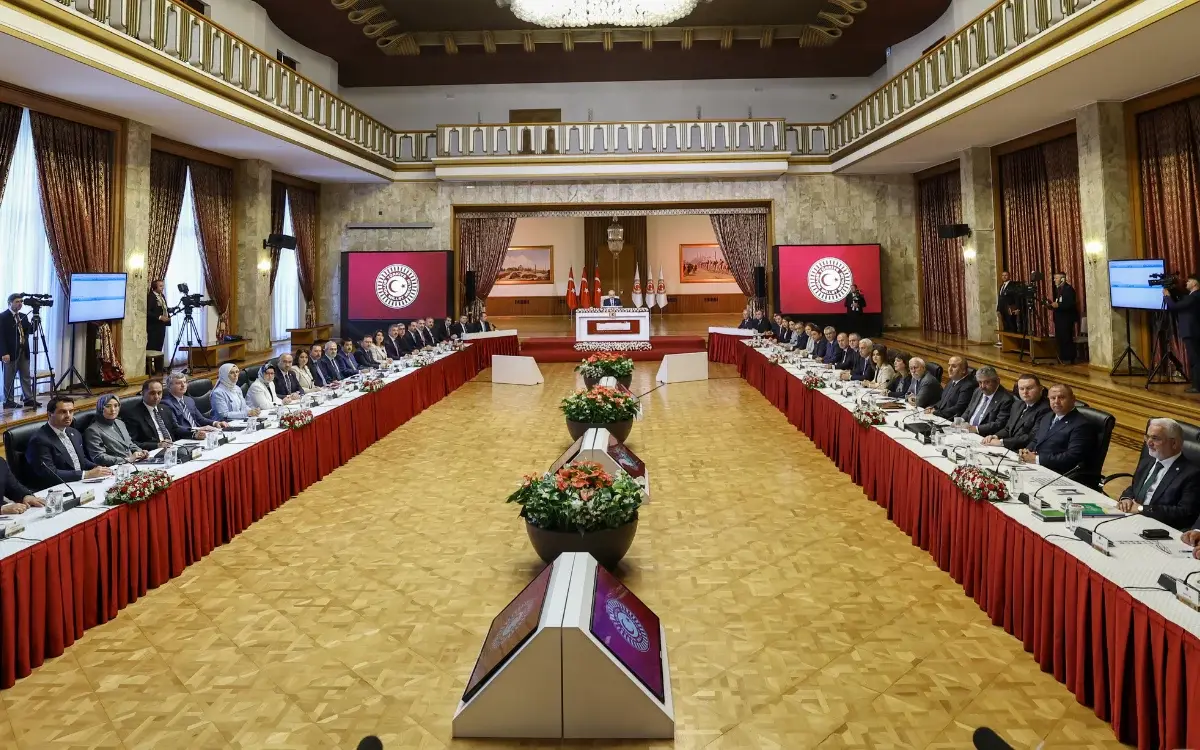




Parliament Speaker Numan Kurtulmuş recently announced that the draft report prepared by the parliamentary committee established to oversee the Kurdish peace initiative has been submitted to the five political parties with parliamentary groups. Following negotiations and a vote, the final version of the report will be submitted to the speaker's office to be discussed in the general assembly.
The committee was established in early August and has since been working to outline a legal framework for the peace process.
The committee has agreed not to release the draft report to the public at this stage. Despite this agreement, pro-government media claimed to have accessed the draft and reported that it does not include the concept of “right to hope.” These reports also said the document proposes a temporary law for disarmament and outlines democratization measures.
Right to hope is a critical concept for the peace process, which began in Oct 2024 when the ruling bloc proposed that the imprisoned Kurdistan Workers' Party (PKK) leader Abdullah Öcalan might benefit from it if he dissolved the militant group. In the following months, the PKK declared its decision to disband in line with a call from Öcalan.
The Kurdish side has since demanded the government to implement the right to hope to ensure Öcalan's release.
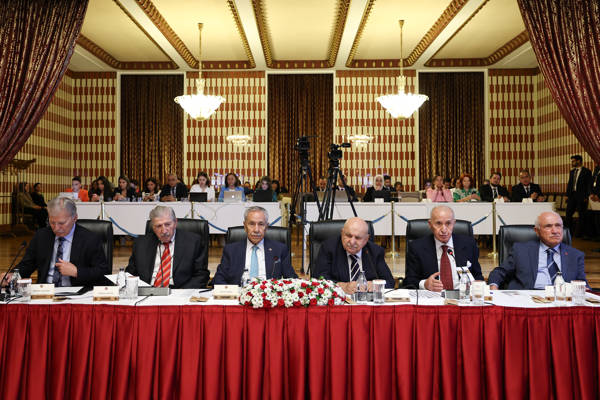
Parliament committee discusses redefinition of Turkish citizenship, ‘right to hope’ for Öcalan
Mehmet Emin Ekmen, a committee member and deputy chair of the Democracy and Progress (DEVA) Party, told bianet that the current draft as the version closest to the final report. He emphasized that all parties still have the right to examine the draft, express their views, and propose amendments.
“No one, especially those in positions of responsibility, should make definitive claims about what the draft includes or excludes,” he said.
Debate over the ‘right to hope’
The right to hope refers to the possibility that inmates sentenced to life imprisonment can be released after a certain period. The legal basis for this lies in Article 3 of the European Convention on Human Rights (ECHR), which prohibits torture. According to rulings by the European Court of Human Rights (ECtHR), keeping prisoners in jail for life without any prospect of release can be considered inhumane treatment.
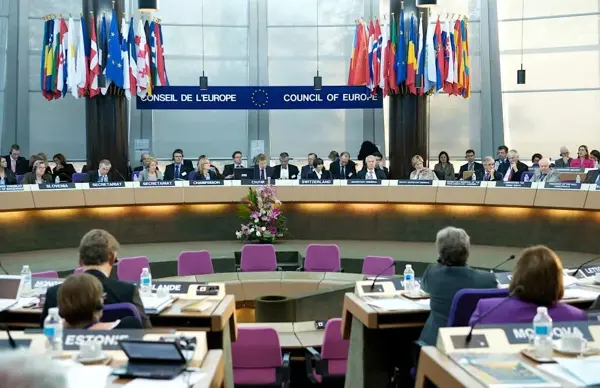
Council of Europe urges Turkey to ensure ‘right to hope’ for life-sentenced prisoners
Ekmen said that although the phrase “right to hope” may not appear explicitly in the draft, there is a high likelihood that the report will refer to relevant ECtHR decisions that support this concept.
“The idea is that even a person sentenced to aggravated life imprisonment should, under certain conditions, be able to believe they may be released one day," he said. "This framework aligns with both rehabilitation goals and human rights principles. So in essence, the right to hope means that even someone serving an aggravated life sentence should not be condemned to die in prison but should retain the hope of eventual release.”
‘Constitution is a red line’
Ekmen also stressed that the report should not be interpreted as paving the way for constitutional amendments. He underlined the need for public understanding on this matter.
“The Republican People's Party (CHP) has already stated that it will not support any constitutional changes within the scope of this initiative and considers that a red line,” he said.
According to Ekmen, a framework law is necessary, especially concerning changes to sentencing regulations and certain reforms in the area of democratization that do not involve constitutional provisions. He listed topics such as the implementation of high court rulings, political party and election laws, and compliance with political ethics legislation.
Parliament committee votes to meet imprisoned PKK leader in major step for peace process
“It would not be surprising to see such matters included in the report, as they have long been subjects of debate,” he said.
He added that issues often tied to constitutional reform, such as mother tongue use and citizenship definitions, may be excluded from this report.
“This should be seen as a flexibility in managing the process,” he said. “Of course, this might draw criticism from the Kurdish community. But it is a necessary outcome of the preliminary consensus to avoid constitutional amendments. If the process moves forward and consensus is reached, there may be room to revisit those issues later.”
INTERVIEW WITH MP CENGİZ ÇANDAR
'Turkey's peace process will gain momentum after Damascus-SDF agreement'
‘Returning to home’
Ekmen also highlighted the need for a legal framework addressing the status of exiled politicians and individuals who have laid down arms.
“These matters are not related to sentencing laws,” he explained. “What will happen when individuals who joined or were associated with the [PKK] return to Turkey? There needs to be a legal structure in place for this.”
He said such a structure would fall under what is being referred to as a “return home law.” While not expected to be detailed in the report, Ekmen noted that “its basic principles will likely be referenced.”
PKK announces withdrawal from Turkey, marking ‘next phase’ in peace process
(AB/VK)