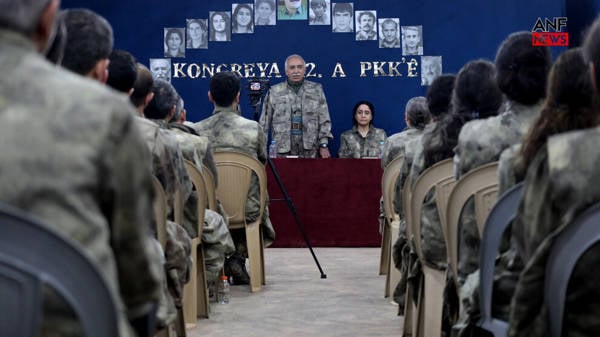










The Kurdistan Workers’ Party (PKK)’s decision last month to end its four-decade armed struggle and formally disband has triggered renewed public debate in Turkey over political solutions to the Kurdish issue and the country’s democratization.
There is broad agreement across political parties that the success of this new phase depends on achieving meaningful public participation. While discussions are underway about launching a new process centered in parliament, questions remain over how to establish a genuinely inclusive and participatory framework.
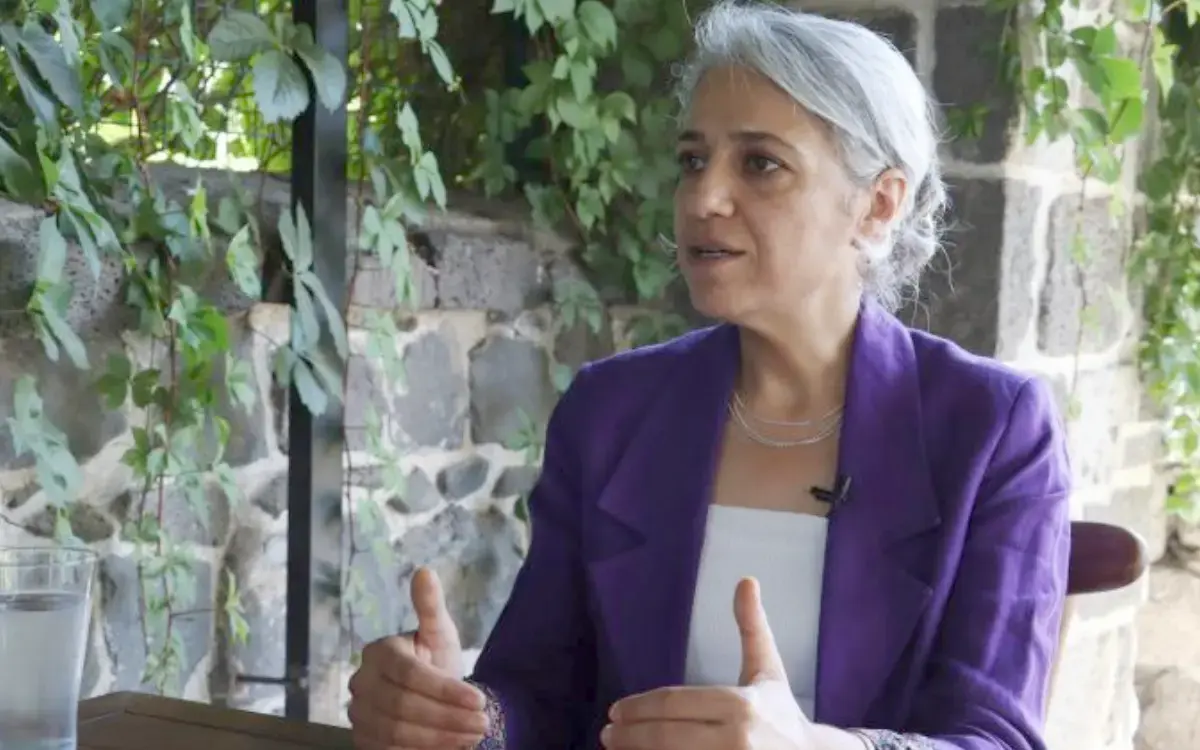
Democratic Regions Party (DBP) Co-Chair and İstanbul MP Çiğdem Kılıçgün-Uçar spoke to bianet about the new post-conflict period and the steps she believes are needed. Kılıçgün Uçar previously co-led the Peoples’ Equality and Democracy (DEM) Party, known as the Green Left Party at the time, through the 2023 general elections. After the party held its post-election congress, she moved to its sister organization, the DBP, which operates primarily in Kurdish-populated provinces.
Kılıçgün-Uçar described the PKK’s disbandment as “a historic opportunity” to address the roots of the country’s longstanding problems. “We have a boat in front of us that needs to be rowed. Every member of society—academics, artists, politicians, writers, farmers, workers, women, men—must take their place in this boat and row. We must not abandon the boat of peace,” she says.
'We can change it as a joint force'
How do you assess the new era of disarmament in terms of the history of the struggle of society?
We undoubtedly see the decision to dissolve as a historic opportunity for a fundamental solution to the problems. Dialogue, discussion, and mutual communication between the parties will now be more decisive.
The path for different segments and actors of society to participate in this process has been further opened. The people must read the new era well and seize this historic opportunity. What is important in the process ahead is to bring more dynamism to democratic politics, to resist the oppressive policies of the government, and to become effective practitioners of equal citizenship. Of course, the process can be approached and criticized from different angles.
Comments and criticisms made based on the approach of the state and the government can only be changed by forming a united force against them. There is a desire to build peace and a democratic future. It is the united stance and struggle of the people that will shape the process. Therefore, this new era both gives hope to the people and places responsibility on them.
'The government must take this process seriously'
In terms of the new process, all parties point to the parliament for democratization. What steps should be taken in this regard, and how should the process be carried out?
The government must take this process seriously and take steps to strengthen the call for a democratic future and the responsibility it has assumed. From Feb 27 to the present, we have witnessed that the state officials have not been able to achieve this approach. The government must approach the process sincerely, willingly, and responsibly.
We are facing a century-old problem. At its core are the deep pains, traumas, and erosion of identity caused by a nation-state based on conquest and violence, not on a social contract. As Mr. Öcalan has also outlined, the construction of a democratic republic in this century is a historical necessity.
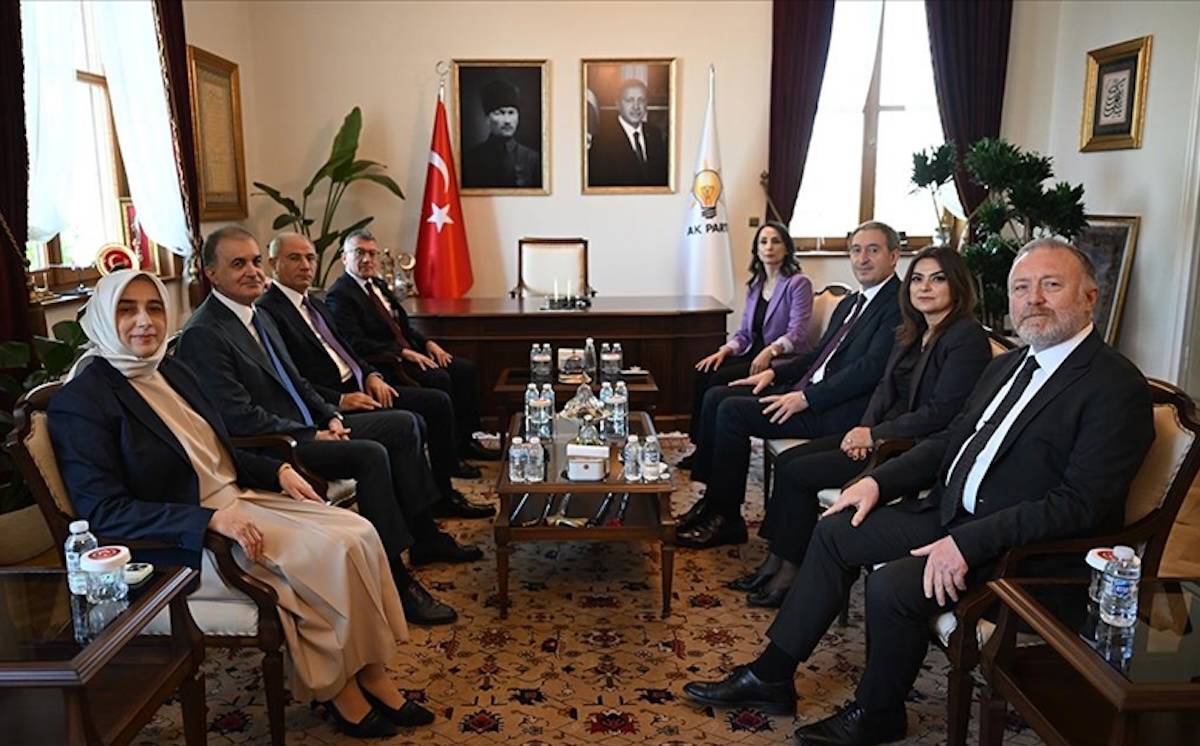
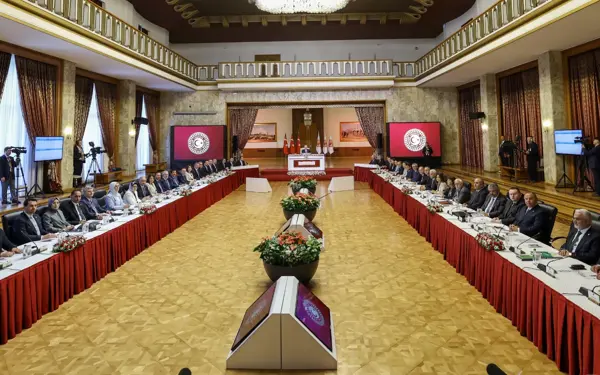
Of course, the primary responsibility here falls on the Turkish Grand National Assembly. While the meeting convened at the call of the speaker of the assembly in recent days is important, faster and more concrete progress is of historical importance.
Although the assembly has a representation rate of around 90 percent, we believe that all political parties and civil society organizations outside the assembly should also be included in this process. What matters is to establish social consensus and to obtain the contribution of all components of society."
'Not rule of law but rule of the powerful'
A “civil constitution” and new legal regulations are on the agenda, but there is also a serious judicial crisis. How do you assess the legal debates surrounding the new process?
In Turkey, the rule of law does not exist; the law of power exists. The laws are like a spider's web. The weak get caught in it, while the powerful tear it down and move on. The norms themselves are flawed. They have a character that corrupts the people and equips the ruler.
At present, there is no republic in Turkey, but a despotism, a regime where a single person acts according to his own whims, without laws or rules. One of the most important pillars of the Peace and Democratic Society process is a social contract or a new constitution. A new legal mechanism is an indispensable condition for stopping authoritarianism, the cult of personality, and the one-man regime, and for building a pluralistic system.
Need for decentralization
For example, as long as Article 127 of the constitution remains in force, it is not possible for local administrations to become stronger. This article was used as a justification for the seizure of many municipalities in Kurdistan and Turkey. There is also the Municipalities Law No. 5393 regarding the appointment of trustees.
Under the old version of this law, Article 45 stipulated that the municipal council would elect a new mayor to replace the dismissed mayor. However, during the 2016 state of emergency, a new clause was added to this article, granting the Interior Ministry the authority to appoint trustees. In other words, the central government's control over local administrations has been strengthened. In short, there is an urgent need for a modern, democratic, and pluralistic constitution.
Not only the constitution, but also norms such as the Anti-Terrorism Law, the Penal Enforcement Law, and the Political Parties Law must be changed. If we envision a transition to a democratic nation, we definitely need a new legal mechanism, justice, human rights, freedom of the press, freedom of expression, transparency, accountability, and decentralization.
'The most important role falls on society'
What responsibilities does the public have for lasting peace and true democratization?
The most important role in such processes falls on society. The peace process is actually another form of struggle, and democracy is at the end. Unless society is protected by a democratic perimeter, it will remain defenseless against all kinds of adversity.
In this respect, we can build this perimeter by forming a ‘democracy front’ or bloc. As the democracy front grows, the sovereign's room for maneuver narrows and it becomes more compliant in the face of demands. In this regard, it is necessary not to remain silent, not to get caught up in the culture of silence, to actively participate in this process and to grow the democracy front. (AB/VK)