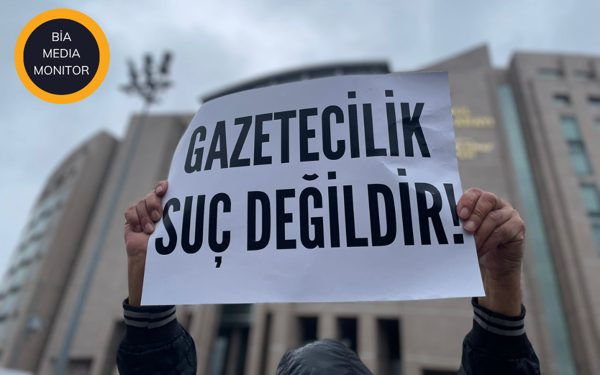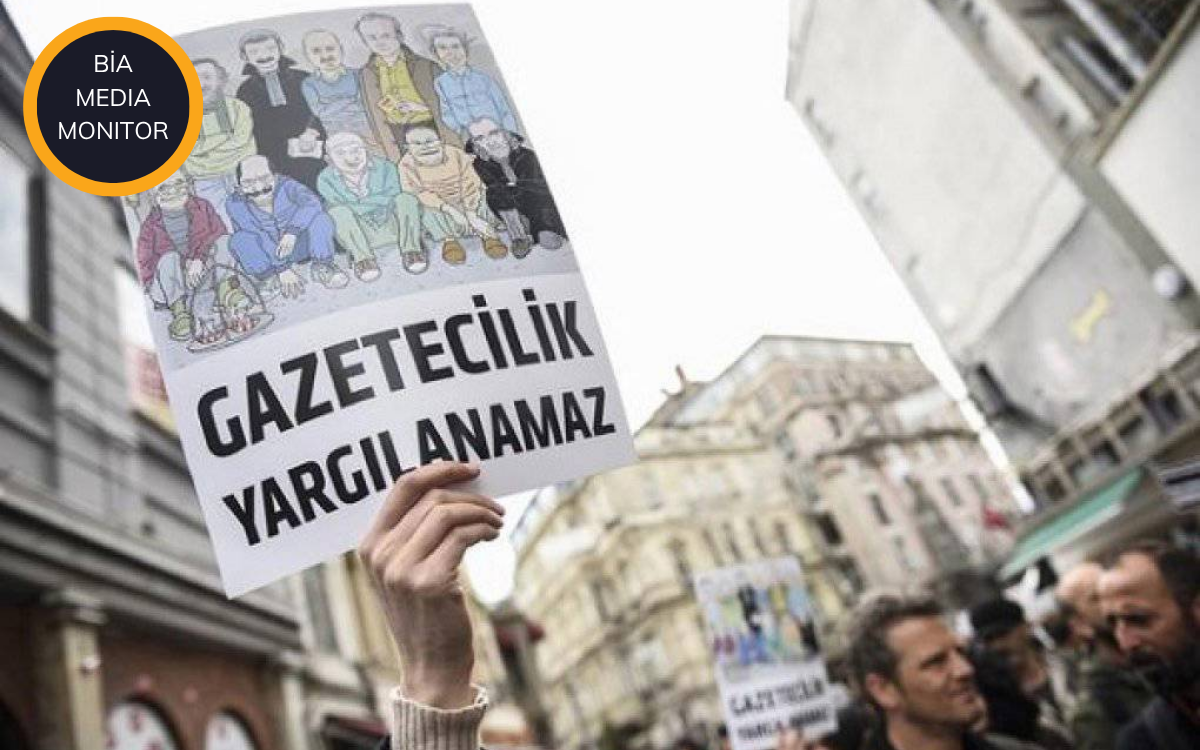



Tomorrow is July 24, the Day for Struggle for Press Freedom.
After years of the instrumentalization of the law for political purposes, a troubling new phase has been reached, where top-level elected and appointed officials in power openly play a role in the arrest of journalists or media actors (such as Fatih Altaylı and the executives and staff of LeMan magazine) through their public statements made "on behalf of the nation."
The BİA Media Monitoring Report covering the period of April - May - June 2025 shows that despite the government's heavy interference in the judiciary, and although some positive decisions that keep hope alive have emerged in local courts, at least 20 journalists, photojournalists, and illustrators were arrested in the last six months, at least three were placed under house arrest, and dozens were arbitrarily restricted through judicial control measures such as travel bans.
As authoritarianism gains ground and the rule of law erodes, Turkey’s pluralistic media structure is in danger. The country has dropped to 159th place in the 2025 World Press Freedom Index by Reporters Without Borders (RSF), which ranks 180 countries. This decline is attributed this time to economic pressures on the media (such as RTÜK, discrimination in public resources, etc.), lack of a financial model, and fragility.
153 defendants, 7 convictions, 7 acquittals
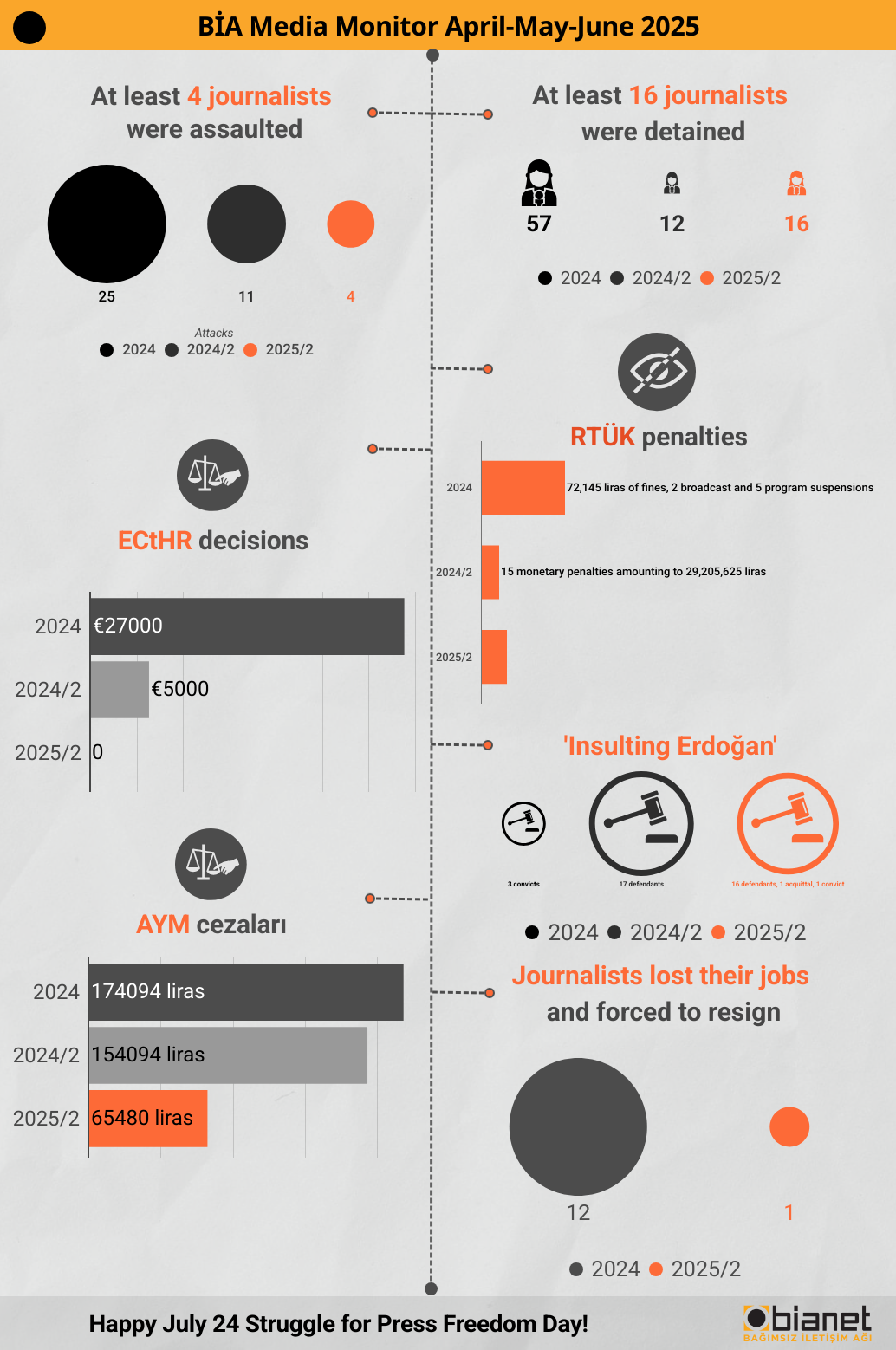
According to the BİA Media Monitoring Report, at least seven of the 153 journalists tried in criminal cases opened in the last three months were sentenced to a total of 10 years, 9 months, and 4 days in prison (2 years, 4 months, and 12 days of which are suspended), under the Turkish Penal Code (TCK) and the Anti-Terror Law (TMK), on charges such as "violating the confidentiality of the investigation," "disclosing personal data," "insulting state institutions," "terrorist propaganda," and "aiding a terrorist organization." In the same period, six journalists and one cartoonist were acquitted in the cases heard.
Among the regulations that paved the way for the arbitrary prosecution of journalists during this period, Article 301 of the Turkish Penal Code stood out. At least 13 journalists (including Tolga Şardan, Tuğçe Yılmaz, Deniz Yücel, and Ece Üner) were prosecuted for "insulting the institutions and organs of the state" due to their criticisms of the ruling administration and public institutions. Among them, Bahadır Özgür, Merdan Yanardağ, and Özlem Gürses were sentenced in first-instance courts to a total of 2 years, 9 months, and 22 days in prison (1 year, 6 months, and 22 days of which are suspended).
Officials stepping in for journalist trials and arrests!
In the past three months, six journalists were arrested. Journalist Fatih Altaylı was detained on the evening of the day when Chief Presidential Advisor Oktay Saral targeted him on social media saying, "Altaylıııı! Your water has started to boil," and was arrested the next day on the charge of "threatening the President." In another development that starkly contradicts the principles of separation of powers and judicial independence, four executives and staff of LeMan magazine were arrested over a cartoon that they emphasized had no connection to the Prophet Muhammad.
Between April and June, at least five journalists were released; house arrest was lifted for two reporters. Elif Akgül and Yıldız Tar, who were arrested on February 21 as part of the HDK investigation, were released under judicial control after being imprisoned for over 100 days. Journalist and writer Ender İmrek, who was under investigation in the same case, had his house arrest lifted on the 100th day. Investigative journalist İsmail Saymaz, who was detained on March 19 as part of the Gezi resistance investigation, was also released from house arrest on the 56th day.
Intensified detentions and operations against journalists
In the last three months, at least 16 journalists and cartoonists, including seven women, were detained. Four representatives of LeMan magazine were taken into custody over a cartoon alleged to depict the Prophet Muhammad, while investigative journalists Timur Soykan and Murat Ağırel were detained following a complaint by Erkan Kork, the imprisoned owner of Flash TV, on charges of money laundering.
Journalist Semra Pelek and media translator Melisa Efe were transported over 3,000 km from İstanbul to Artvin as part of an "organization" investigation centered in Artvin, beyond being held in custody for four days; they were released under judicial control.
bianet editor Tuğçe Yılmaz was also detained in İstanbul’s Kadıköy district following an ID check, as part of an investigation opened due to the phrase "Armenian Genocide" in a report. Nur Kaya and Evrim Gündüz, who were covering the İstanbul Pride March for bianet, as well as Yusuf Çelik who was also covering the event, faced the same treatment.
Four attacks, three threats
During this period, one of them being the satirical magazine LeMan, was attacked by a radical group, and three journalists—one of them a woman—were assaulted while pursuing news stories in İstanbul’s Güngören district and in Muğla’s Marmaris. Journalists Alican Uludağ, İsmail Arı, and Fatih Altaylı were subjected to threats by various groups. Altaylı was arrested after Presidential Chief Advisor Oktay Saral posted the message “Altaylıııı! Your water has started to boil.”
‘Insulting the President’: 16 defendants, one acquittal, Swedish journalist convicted
Trials of journalists on the charge of “insulting the President” came into focus again with Swedish journalist Joakim Medin, a reporter for the Sweden-based newspaper Dagens ETC, being arrested in Turkey on March 27 and sentenced—albeit with suspension—to 11 months and 20 days in prison. In the past three months, out of the cases filed against 16 journalists and cartoonists with a total prison demand of 74 years and 8 months, Cumhuriyet columnist Barış Pehlivan and the newspaper’s former responsible editor Ozan Alper Yurtoğlu were acquitted.
For bans and censorship, the ‘justification’ doesn’t matter!
Online censorship targeting journalists and media platforms in Turkey and in exile became widespread during the April - June period. Although the Constitutional Court annulled online censorship based on “personal rights” as of October 10, 2024, such censorship continued, now justified on grounds of “national security and public order," even when the content related to irregularities and corruption.
In the past three months, Criminal Judgeships of Peace issued access bans against news sites like bianet and KaosGL, as well as the X (formerly Twitter) accounts of journalists such as Altan Sancar, Ali Macit, Erk Acarer, and Furkan Karabay.
32-year impunity in the Uğur Mumcu assassination
The trial in Ankara of Oğuz Demir, who was identified as the person who placed the bomb under journalist Uğur Mumcu’s car on January 24, 1993, resulting in Mumcu’s death and who is allegedly wanted through Interpol, will continue on September 22. Even after 32 years, the then-General Director of Security and later Minister of Justice Mehmet Ağar is expected to testify as a witness.
27 million-lira fine from RTÜK, licenses in danger
In the past three months, the Radio and Television Supreme Council (RTÜK) imposed 22 administrative fines totaling 26,972,802 liras and issued 26 broadcast suspension penalties to TV outlets for their news and programs.
Licenses of critical TV channels like Halk TV and Sözcü TV, which reflect the agenda of the opposition Republican People’s Party (CHP) that the government tries to portray as illegal, are being jeopardized by RTÜK, which is accused of bias by journalism organizations. Recently, an arrest warrant was also issued for Cafer Mahiroğlu, the owner of Halk TV.
Application to the Constitutional Court for Medin after Bağdat’s victory
The Constitutional Court ruled that journalist Hayko Bağdat’s right to freedom of expression was violated when he was sentenced to a judicial fine for his reaction to a bank manager’s response to a street interview question, “What’s Ayşe auntie doing with foreign currency?” The Court ordered a total of 65,480 liras to be paid to Bağdat, including 34,000 liras for non-pecuniary damages. The MLSA also applied to the Constitutional Court on behalf of Swedish journalist Joakim Medin, arguing a violation of his “right to liberty and security of person” while he was in custody. During this period, the European Court of Human Rights (ECtHR) remained silent on journalist rights. (EÖ/HA/VK)