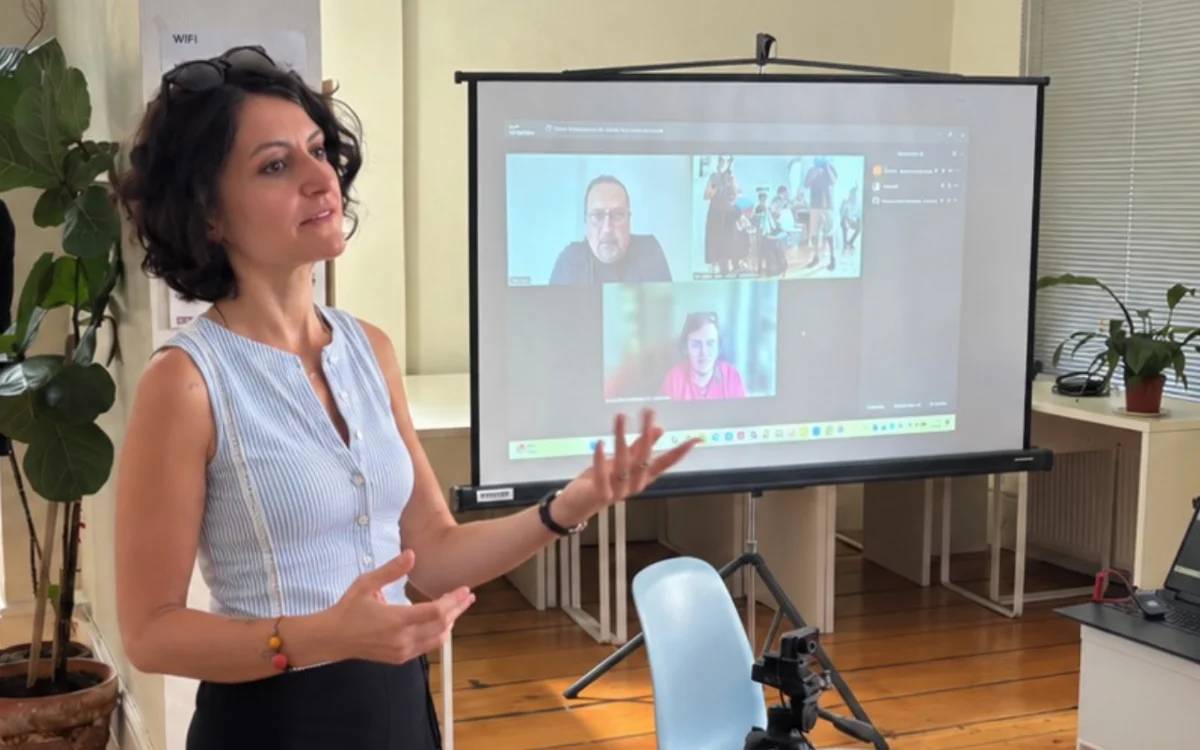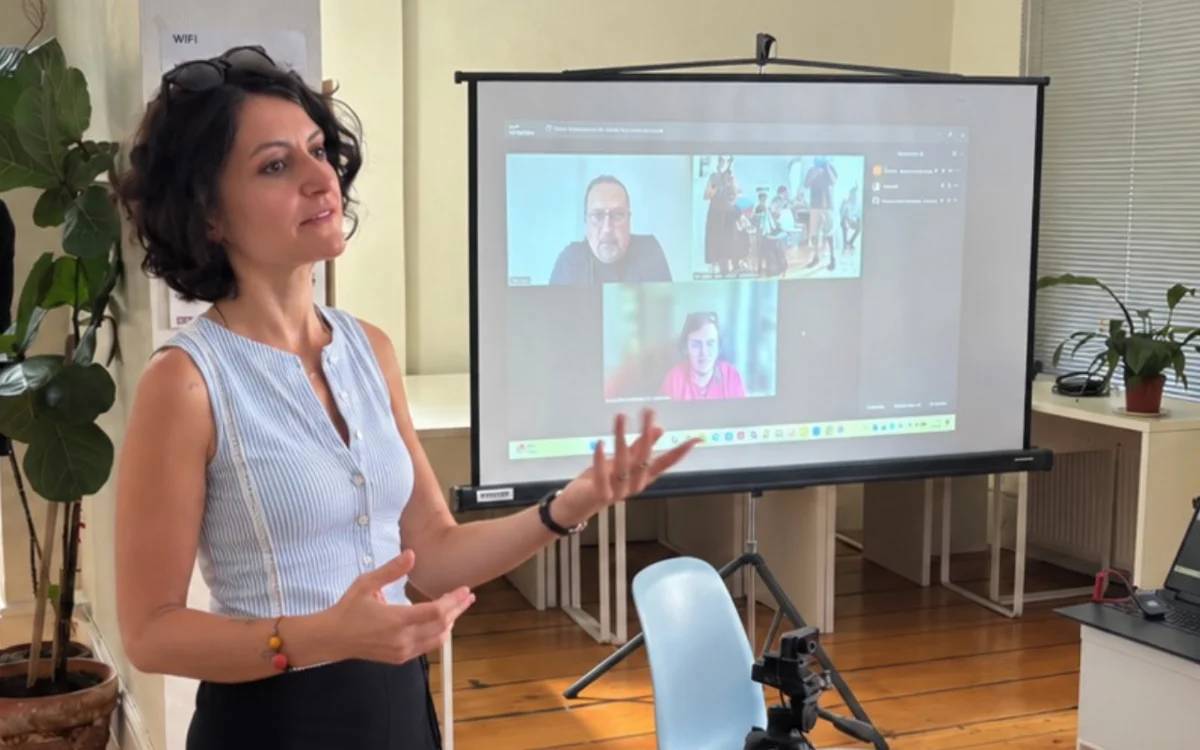



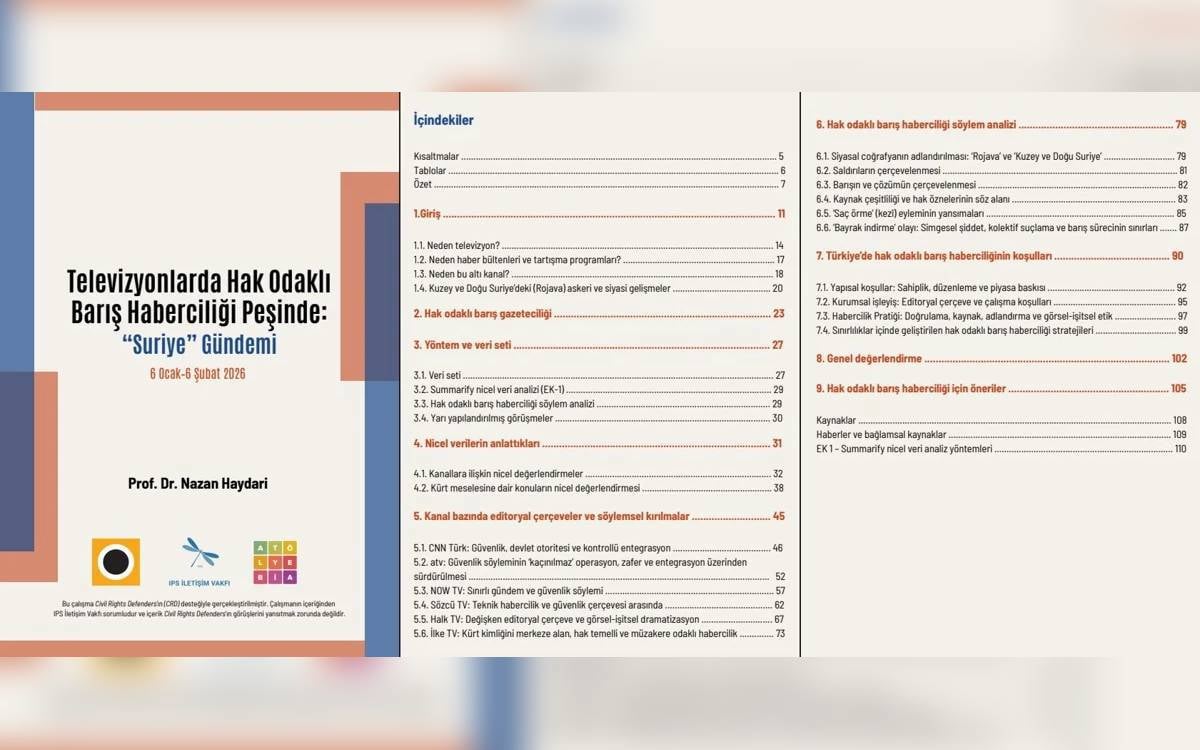
On Friday the IPS Communication Foundation/Bianet held the launch of professor Nazan Haydari's research titled "In Pursuit of Rights-Based Peace Journalism on Television: The 'Syria' Agenda January 6–February 6, 2026," published with the support of Civil Rights Defenders (CRD).
Following opening speeches by Atölye BİA Research Coordinator Sinem Aydınlı and CRD Program Officer Sinan Gökçen, the Summarify team, which conducted the large data analysis of the research, introduced the study's methodology and data interface.
During her section, Haydari discussed her research findings regarding how the six evaluated television channels framed the Syria agenda from a rights-based peace journalism perspective. Following the presentations, journalists, academics and media workers discussed the research findings.
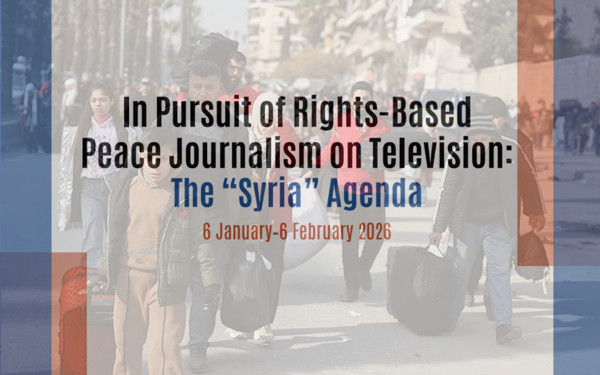
NEW RESEARCH FROM BIANET
In Pursuit of Rights-Based Peace Journalism on Television: The 'Syria' Agenda
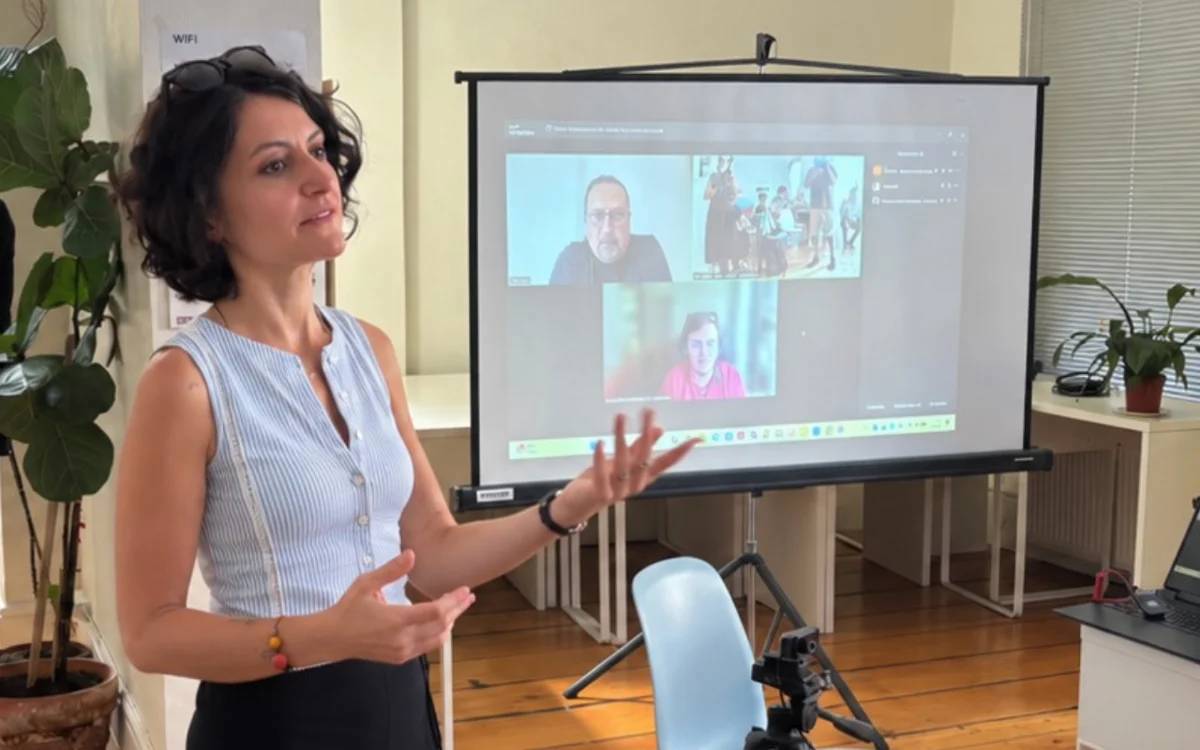
Uzay Çetin and Yunus Emre Gündoğmuş from the Summarify team participated in the meeting remotely and explained the methodology they used in the study.
The team also developed a search and query interface within the scope of the research. The interface allows users to search for words and sentences in broadcasts and directly access the relevant clip. Interface users could also compare the data on the basis of topic, day and channel.
The Summarify team said that the infrastructure they developed could also be used in future research on different periods, channels and topics.
Haydari: "Television is still a very important medium"
Report author professor Nazan Haydari said that the time period analyzed between Jan. 6 and Feb. 6, 2026, extended from the attacks in Aleppo to the days following the Jan. 30 agreement announced between the Damascus administration and the Syrian Democratic Forces (SDF).
Given that the research was based on language in television broadcasts, Haydari explained that merely looking at text alone was not sufficient.
"Television does not just present us with text. There are also subtitles, sounds, and images. Are military images presented, or are civilian images shared? Is data from field reporters used? All of this offers an important space for rethinking the news process." –Nazan Haydari
Haydari said that peace journalism is mostly discussed in the context of written texts, thus she emphasized that when television is concerned, visual and audio elements must also be evaluated. Haydari said that for this reason, they also made it a point to address images, audio, subtitles and other editorial choices alongside text.
"Television is still a very important medium in Turkey. It is heavily used, heavily watched. Not just for TV series, but as news too. Moreover, broadcasts do not end after they are watched. They are shared again and again on social media and across different platforms." –Nazan Haydari
Haydari said that they also conducted anonymous, semi-structured interviews with reporters and news editors working at channels not included in the scope of the research. In these interviews the subjects addressed the possibilities and limitations of peace journalism.
"Security comes to the fore in the Aleppo attacks"
Sharing the research findings, Haydari explained that the language used by television outlets during the examined one-month period changed according to developments in the news cycle.
"In the Aleppo attacks, security comes to the fore. In other words, during the attacks we see a process where discussion of operations and organizations, as well as words related to organizational language, increase. The concept of 'Attack or clash?' is also placed at the center of the channels' editorial focus here. In order to establish a more rights-based language, we characterized it as an 'attack' here." –Nazan Haydari
Haydari said that following the Jan. 18 ceasefire and integration agreement between the Damascus administration and the SDF, the language of negotiation and peace were widespread in the coverage. However, following the "flag lowering" incident on January 20, the picture rapidly changed.
Which topics appear, which ones are ignored?
During the event, Haydari drew attention to the issue of visibility in news reports through the hair-braiding (kezî) protests.
She said that when practicing rights-based peace journalism, the language used to describe events is not the only important factor, but also the decision on which events are turned into news stories in the first place.
"Here, the issue of non-visibility comes to the agenda. There are two things. First, how sustainable the language of negotiation and peace is in events termed 'provocations' where symbols like flags are at the center. Second, which topics appear and which ones are ignored." –Nazan Haydari
According to the research, atv, NOW TV and Sözcü TV did not give any coverage to the hair-braiding (kezî) protests. CNN Türk, on the other hand, did mention the protests, but did not treat them as an independent news subject; instead, it covered them only within the framework of other events and examples of “provocation.” Halk TV and İlke TV included coverage of the protests in their news and programs. The research also found that the Rojava protest in Istanbul on Jan. 24 also received limited coverage across the majority of news channels.
"Six channels do not line up on a single axis"
Haydari stated that the six channels covered by the research cannot be simply ordered along a single axis and that the channels also varied within themselves.
Haydari stated that CNN Türk stood out along a framework centered on security and state authority. Although Sözcü TV used more technical language, it maintained the security framework. She also drew attention to the fact that Sözcü TV used military imagery extensively in its broadcasts.
Haydari said that Halk TV and İlke TV showed similarities in text analysis, but when visual preferences were taken into account, the two channels diverged. She explained that the visual dramatization of news on Halk TV moved the channel onto "more slippery ground."
İlke TV, by contrast, practiced journalism that centered Kurdish identity, rights, civil security and negotiation. Haydari drew special attention to the naming conventions used by the channel. According to Haydari, the use of expressions such as "Rojava," "North and East Syria," "Kobanî" and "kezî" carry importance in terms of recognizing the geography and the actors there as autonomous subjects.
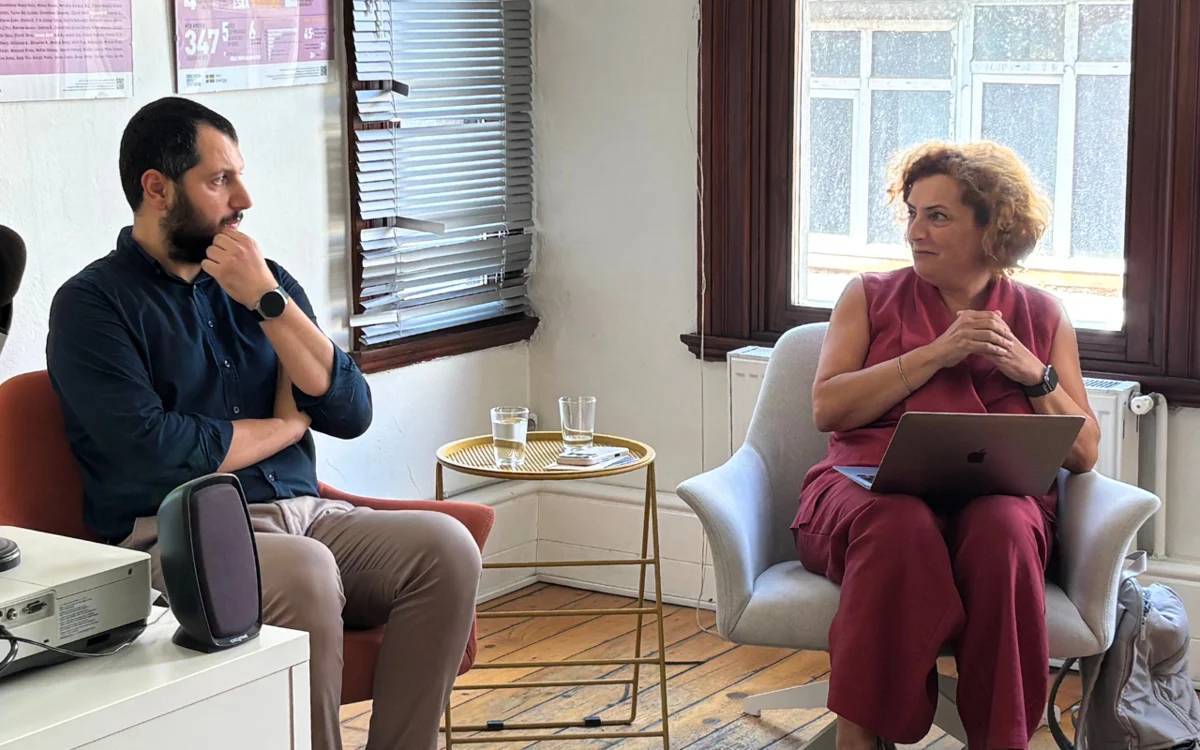
Vecih Cuzdan: "The real test is the language used in moments of crisis"
Following the presentation, a panel discussion and a question-and-answer session were held.
Vecih Cuzdan, text editor of the report and Bianet Managing Editor, said the research showed not only how television outlets described Syria, but also how the media’s language reacted to changing political conditions.
Cuzdan stated that while Turkish television broadcasts occasionally used a language of peace, it did not turn into a permanent and institutionalized editorial choice in most channels. He said that when the political atmosphere softened, the language of peace and negotiation could gain strength, whereas in moments of crisis, security-oriented and polarizing frameworks rapidly returned.
"For this reason, from the perspective of peace journalism, the real test is not the language used during ceasefire days, but the language used in moments of crisis." –Vecih Cuzdan
Cuzdan stated that the research's focus on the Jan. 6–Feb. 6, 2026 period also carried importance in this regard. The period was not merely a time frame in which the Syria agenda intensified, but one that enabled researchers to observe how resilient the peace discourse in Turkey is in the face of the cross-border dimension of the Kurdish issue.
Historical parallel with the Kobanî process
Cuzdan stated that a historical parallel could be drawn between the 2026 research period and the 2014–2015 Kobanî period, which was one of the major stress tests of the peace process amidst regional crisis.
Stating that the Jan. 6–Feb. 6, 2026 period also constituted a similar testing ground both for the new process and for the language of peace in the Turkish media, Cuzdan noted the following:
"In both cases, the Kurdish issue in Syria cannot be completely detached from Turkey's own Kurdish issue. Developments beyond the border turn into discussions of internal security, identity, belonging and peace in Turkey within a short time." –Vecih Cuzdan
Cuzdan said that rights-based peace journalism objects to security becoming the sole legitimate framework in the news. It rejects certain communities being presented as a collective threat and the erasure of civilian, rights-based or negotiation perspectives.
Pursuing Rights-Based Peace Journalism on Television: The “Syria” Agenda (January 6 – February 6, 2026)
Writer: Professor Nazan Haydari Big Data Team: Uzay Çetin & Yunus Emre Gündoğmuş (Summarify)
Editor: Sinem Aydınlı
Text Editor: Vecih Cuzdan
Graphic Designer: Evrim Gündüz
Publisher: IPS İletişim Vakfı (İstanbul, Eylül 2026)