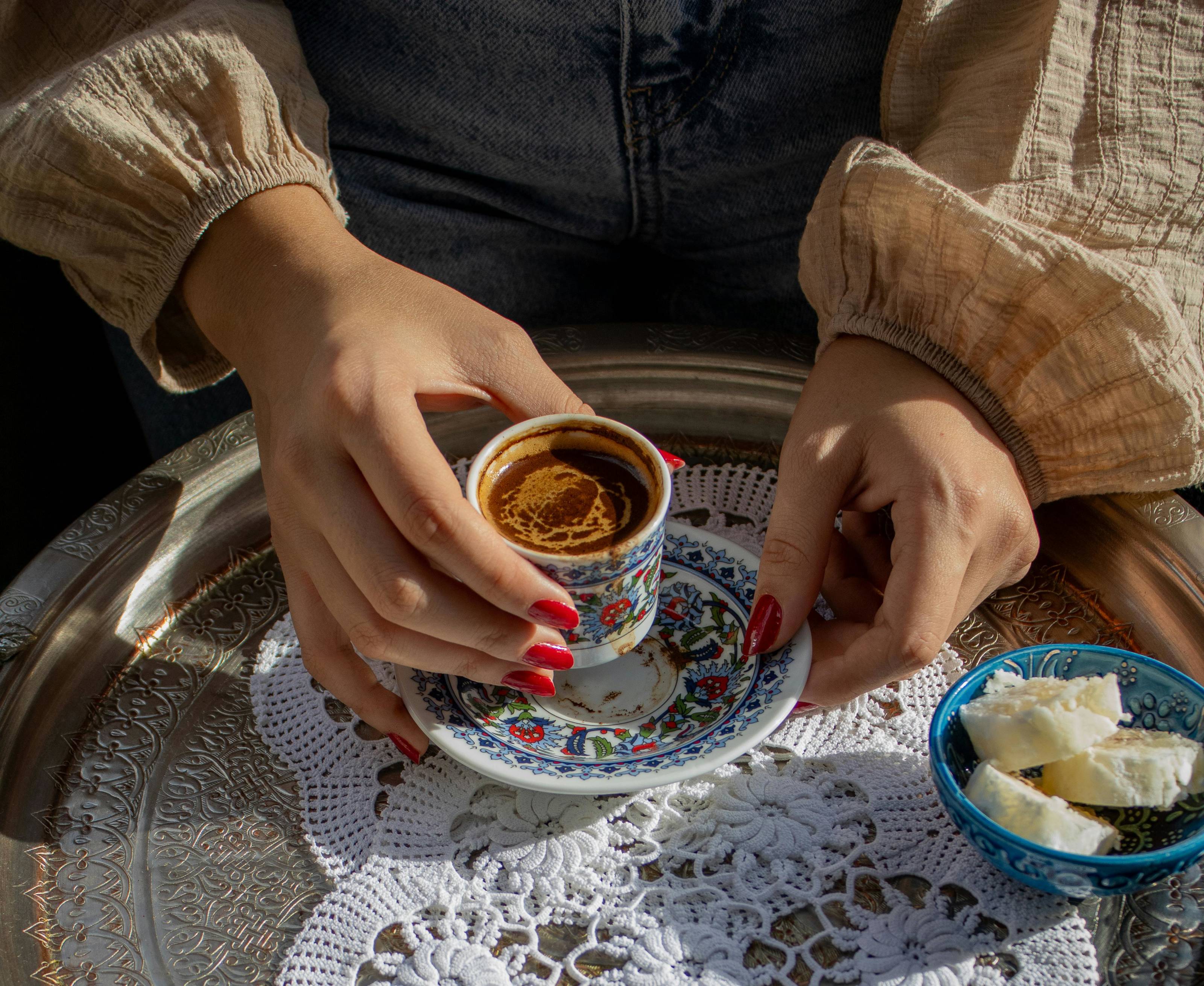











Turkey is often labeled a “tea nation,” with its culture defined by tulip-shaped glasses and post-meal brews. But beyond the tea tray, coffee still holds a strong foothold. In fact, despite the rapid spread of Starbucks and other third-wave cafés across the country, traditional Turkish coffee remains the most consumed type of coffee in Turkey.
Osman Serim, deputy chair of the Turkish Coffee Culture and Research Association, notes that average annual coffee consumption in Turkey has reached one kilogram per person, about 75% of which is Turkish coffee. And a 2022 Ipsos survey found that nearly 60% of respondents under 30 still drink Turkish coffee regularly, most often at home.
Coffee chains gaining popularity
This preference for tradition holds even as global chains expand aggressively. As of Nov 2024, Turkey had the second-highest number of licensed Starbucks in Europe, trailing only the UK. Alongside Starbucks, 61 different coffee chain brands now operate across the country, suggesting a widespread shift towards standardized, global coffee culture.
Yet Turkish coffee remains deeply tied to national identity. In 2013, it was added to UNESCO’s Representative List of Intangible Cultural Heritage of Humanity and recognized as “a symbol of hospitality, friendship, refinement, and entertainment that permeates all walks of life.” Among older generations, 80% say they prefer Turkish coffee, reflecting a desire to maintain cultural continuity in the face of rapid urbanization and Western influence.
At the same time, overall coffee consumption is on the rise, especially among younger people. A 2023 survey by the Turkish Coffee Association found that 71% of respondents aged 18 to 29 now drink coffee daily, up from just 42% a decade ago.
Serap Akçay, founder and CEO of De la Pau Coffee, predicts that thanks to Generation Z, Turkey’s per capita coffee consumption could double by 2030. This younger demographic is often drawn to Starbucks and third-wave cafés, where artisanal brewing and social atmosphere take precedence over tradition, but that doesn’t mean Turkish coffee is being left behind.
Turkish coffee is cheaper
Its dominance persists for several reasons, not least of which is accessibility. A cup of Turkish coffee at home costs roughly 5–6 times less than a cappuccino at a branded café, making it a routine part of daily life in a country where inflation has sharply driven up the cost of eating out.
Patterns of consumption also vary: espresso-based drinks tend to be reserved for social or professional settings, while Turkish coffee remains rooted in family rituals, hospitality, and everyday moments, which explains why more than 70% of Turkish coffee is prepared and consumed in households, instead of commercial venues.
In short, Turkey is a place where the past seems to coexist with the present, and coffee is no exception. (LÖ/VK)