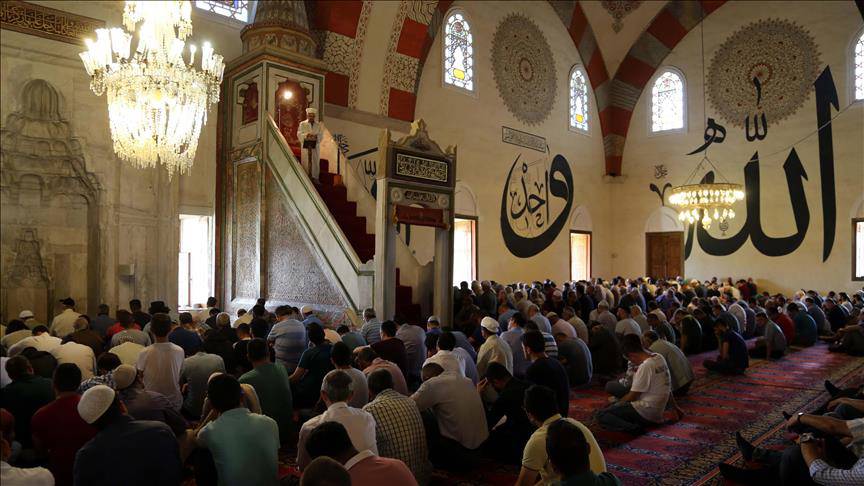









Today’s Friday sermon, delivered in mosques nationwide as part of Muslims’ weekly congregational prayers, opposed equal inheritance rights for daughters.
"Depriving daughters of inheritance or daughters not accepting the share determined by God constitutes a violation of others’ rights," said the sermon prepared centrally by the Directorate of Religious Affairs (Diyanet), the country’s top religious body. The general theme of the sermon was violation of others' rights.
“It is against divine justice to change the inheritance measurement set by our God without mutual consent,” the sermon also said.
Under Islamic law, a daughter receives half the share of a son if both are heirs. If there is only one daughter and no son, she receives half the estate. Multiple daughters without a brother receive two-thirds collectively.
'Cutting women's share in half'
Women’s Platform for Equality (EŞİK) condemned Diyanet in a statement, saying, “Diyanet is trying to cut women’s inheritance rights in half, extending what the government has already done through hidden changes in the mediation system to cover all inheritance matters,” referring to the government's recent action potentially threatening women's equal inheritance rights.
In June, the government introduced a regulation that allowed heirs to divide inherited property among themselves without oversight from public institutions. The change, based on a 2024 amendment to the Mediation Law, enables real estate division through mutual written agreements, potentially bypassing the Civil Code’s guarantee of equal inheritance.
Women’s rights advocates raise concerns that such a regulation could lead to the usurpation of women’s right to equal sharing, with families pressuring them into accepting arrangements that violate the Civil Code.
The group argued that the Diyanet, as a constitutional institution directly linked to the Presidency, must comply with the Constitution: “Through its sermons and fatwas, it cannot attempt to abolish, undermine, or amend the Constitution and the Civil Code. It must immediately stop issuing statements that contradict the Constitution and laws, and return to its legal limits.”
"We call on officials to take responsibility and put an end to the Diyanet’s provocative stance, which threatens women’s basic rights and could expose them to violence, including threats to their lives, for demanding those rights. We will not give up any of our constitutional or legal rights, including inheritance.”
The Diyanet faced similar criticism over its Aug 1 sermon, which labeled certain styles of women’s clothing, such as shorts, see-through garments, and tattoos, as "clothed nudeness." (EMK/VK)