



The Organisation for Economic Co-operation and Development (OECD) has released its annual “Education at a Glance 2025” report, offering a comprehensive overview of member countries’ education systems based on various indicators. While some of the findings about Turkey indicate progress, others highlight negative trends.
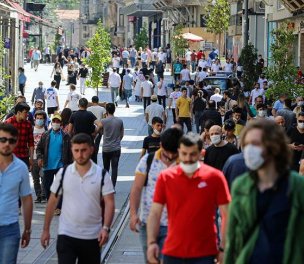
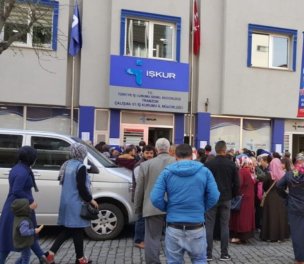
According to the report, Turkey has the lowest employment rate among OECD countries for both high school and university graduates. Only 63% of high school graduates and 75.4% of university graduates in the country are employed. These figures fall below the OECD averages of 77.6% and 87.1%, respectively.
Among adults aged 25–64 with university degrees, 24.6% are not part of the workforce.
Gender gap in NEET rates
Also, 31.3% of young people aged 18–24 in Turkey are neither in education nor employment, a category referred to as NEET (Not in Education, Employment, or Training), the report revealed. The OECD average for this category is 14.1%.
Gender disparities are also significant. In Turkey, 41.6% of women in this age group are NEET, nearly double the rate for men (22.1%). By contrast, the OECD average shows only a 1.5-point gap between genders.
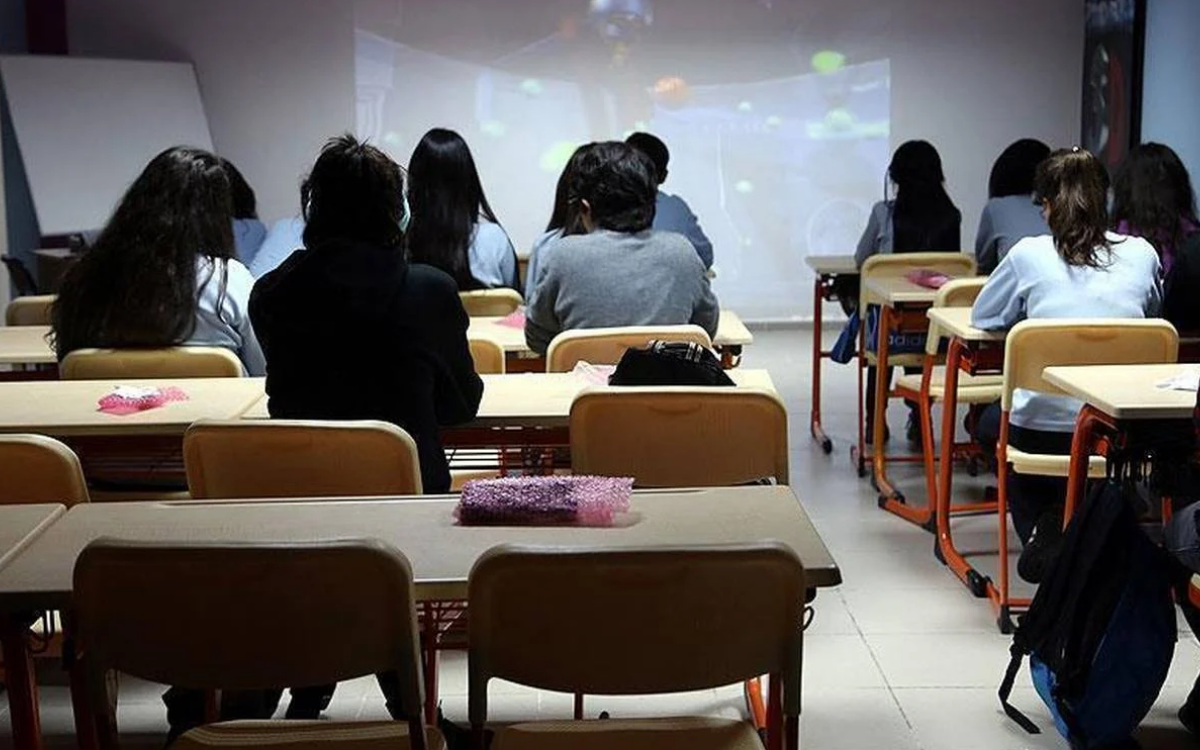
The participation rate in education for those aged 15–19 in Turkey stands at 79%, compared to the OECD average of 84%.
'Misleading data' on education progress
The OECD report notes a downward trend in the percentage of 25–34-year-olds in Turkey who have not completed high school. While 41% of this group lacked a high school diploma in 2019, the rate is projected to fall to 28% by 2025.
However, education expert Feray Aytekin Aydoğan expressed skepticism about the reliability of these statistics. “The data on formal education does not reflect reality. Students enrolled in vocational training programs like MESEM are recorded as attending school because they receive instruction one day a week, but this is misleading," she told bianet.
Also pointing to problems with attendance data, Aytekin noted that a child’s enrollment does not guarantee actual attendance. “The number of students outside the education system between ages 6 and 17 increased by 38.4% compared to the previous year.
"Currently, 612,814 children of compulsory school age are out of the education system, but the actual figure is likely much higher."
Time allocation
In Turkey, 30% of instructional time in primary schools is dedicated to reading, writing, and literature, while 17% is allocated to mathematics. These proportions fall to 16% and 14% respectively in middle school.
By comparison, OECD averages show 25% of time spent on reading and literature and 16% on mathematics in primary schools. In middle schools, these figures drop to 14% and 13%, respectively.
Early childhood education lags
Turkey trails OECD peers in early childhood education participation for 3-year-olds, with only 15% enrolled, compared to the OECD average of 79%.
While 98% of 5-year-olds in Turkey are enrolled—above the OECD average of 86%—the country is the only one where participation for 4-year-olds remains below 50%.
Spending on education
Turkey ranks near the bottom among OECD countries in terms of annual per-student spending across all levels of education.
Pre-tertiary education spending per student stands at 4,032 US dollars, well below the OECD average of 13,527 dollars. In higher education, Turkey spends 10,825 dollars per student annually, compared to the OECD average of 21,444 dollars.
While most OECD countries increased education spending between 2015 and 2022, Turkey saw a decline.
In its assessment of the OECD report, the Turkish Education Association’s think tank TEDMEM stated, “The highlighted data indicate both progress and unresolved issues in Turkey’s education system.
"While access to early childhood and higher education has improved, the low employment rates among high school and university graduates, the high share of NEET youth, and the below-average per-student spending remain areas of concern.” (NÖ/VK)