











"We know that manipulations are taking place through certain funds. We are aware of the need for regulation in this area as well. We will step up the fight against manipulation even beyond our efforts against the informal economy," Treasury and Finance Minister Mehmet Şimşek said on Nov 4, 2025.
The regulation arrived 10 months later. Pusula Portföy sparked the collapse, followed by other portfolio management companies. The stock market crashed, leaving more than 500,000 investors with losses amounting to billions of liras.
What comes next remains uncertain. The Capital Markets Board (SPK) liquidated the funds, but it is unclear when investors will receive their money, or how much of it they will get back.
As the process continues, let us look back at Turkey’s new crisis—fund manipulation—in 10 questions.
Funds defaulted, stock market triggered circuit breakers
What exactly is the "fund crisis" shaking Turkey’s stock market and financial agenda?
The root cause of the crisis was certain funds buying up shares in companies with low market values to artificially inflate their prices.
It began when these funds failed to generate enough cash to meet investors’ redemption and sell requests on time.
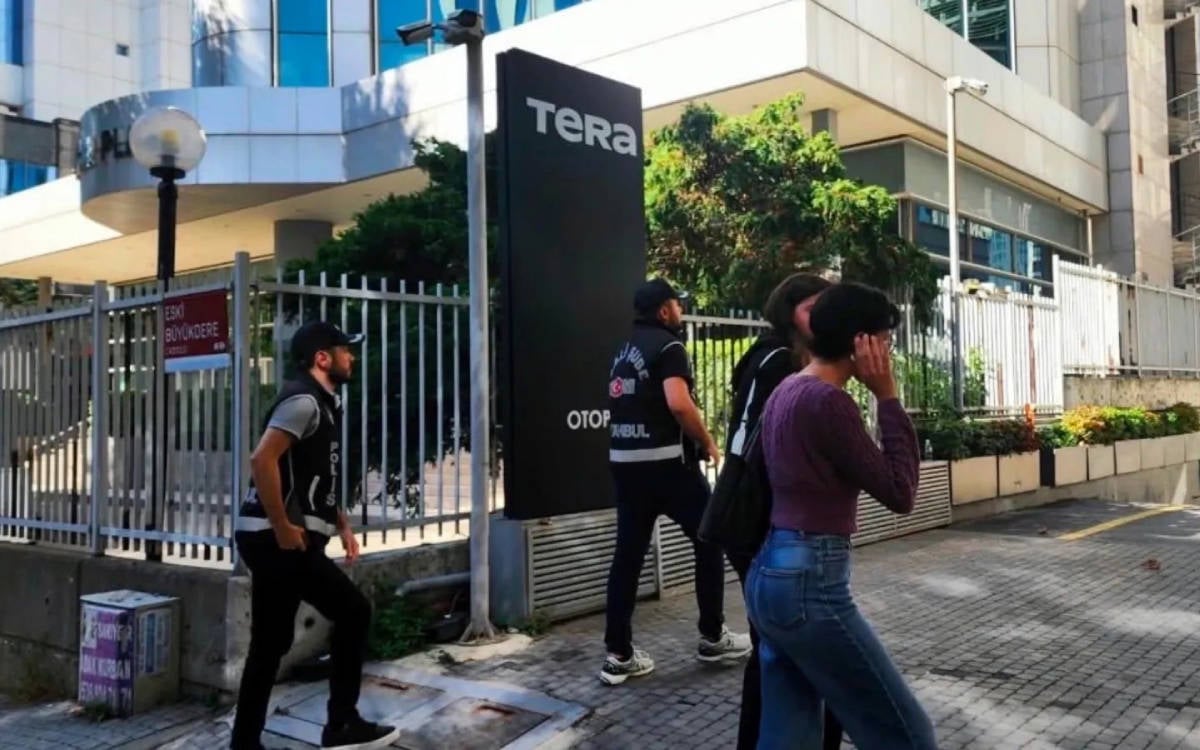
The first break occurred at Pusula Portföy, which failed to fulfill withdrawal requests for some of its funds. Soon after, Tera Portföy defaulted on its own funds.
Fears quickly spread across the market that funds would be forced to sell off shares to raise cash. On Sep 16, BIST 100 triggered circuit breakers, sending many stocks to their lower price limits.
The SPK intervened on Sep 17, suspending trading on TEFAS for all funds managed by seven portfolio management companies: Tera, Pusula, Hedef, Atlas, A1 Capital, Pardus, and Bulls Portföy. It ordered the liquidation of 131 of these funds.
İş Bankası was appointed to liquidate Tera funds, while Ziraat Bankası was assigned to handle the remaining six companies. The maximum liquidation period, initially set at three months, was extended to six months by an SPK decision on Sep 20. The SPK noted that this does not necessarily mean the liquidation process will take the full six months.
The secret behind the 4,000% return
How much return did these funds generate? How did the system work?
In 2025, average returns for equity umbrella funds across Borsa İstanbul ranged between 19.70% and 27%, falling behind both inflation and deposit yields.
However, certain hedge funds managed by the portfolio companies now under investigation and liquidation reported returns entirely detached from market reality.
The most striking example was the Tera Portföy First Hedge Fund, known as TLY, which delivered a return of 4,233% in 2025. In the same year, the BIST 100 returned just 14.6%. The fund's total value surged from 889 million liras to 35.3 billion liras, while its investor count jumped from 11 to 43,228.
Simplified, the mechanism worked like this: The fund heavily buys low-float shares – the share price rises – the fund's reported value and return increase – high returns attract new investors – new money flows into the fund – the fund buys more shares…
Pusula Portföy's transactions in Gündoğdu Gıda (GUNDG) serve as a clear example of this dynamic.
On Feb 19, 2026, Pusula funds began purchasing GUNDG shares at around 340 liras. The funds' total stake in the company was roughly 25%. Purchases continued in the following months. By Aug 18, Pusula funds were still buying shares in the same company at prices between 1,593 and 1,816 liras, bringing their total stake in GUNDG capital to 38.67%.
As a result, some of these companies reached market valuations higher than Turkey’s largest industrial giants.
SPK introduced new regulations, spark legal exit
Why did the crisis break out now?
On Aug 28, the SPK published its comprehensive Fund Guide, which it had been working on for some time. The new rules tightened restrictions on related-party transactions, fund concentration, valuation methods, and hedge fund operations.
Under the new rules, a hedge fund can hold a maximum of 8% of the circulating shares of a company whose free float rate is below 25%.
This ceiling drops to 6%, 4%, and 2% as the free float rate increases. In addition, investments that individually make up more than 5% of a fund portfolio cannot collectively exceed 20% of the total portfolio.
This new regulation reversed an already fragile structure. Portfolios heavily invested in illiquid shares—or shares whose prices were closely tied to the funds' own buying—struggled or failed to meet investor cash demands.
Payment bottlenecks triggered a exit from the funds, which quickly spilled over into the broader stock market.
Artificial price movements are a crime
What are the manipulation allegations based on?
At the core of the manipulation allegations is artificial pricing. In other words, funds took very large positions in stocks with low free floats, and these purchases pushed up stock prices and fund returns in a way that fed into each other.
Under Article 107 of the Capital Markets Law, this is explicitly defined as a crime.
In addition, the SPK stated on Sep 18 that starting from the final quarter of 2025, funds belonging to certain portfolio management companies, particularly hedge funds and money market funds, led to price movements in low-float stocks that could not be explained by the companies' economic reality or basic financial figures. It explicitly defined one of the objectives of the regulation enacted on Aug 28 as "limiting the opportunity for manipulation through funds."
Debated for the last two years
Why did the SPK not intervene earlier?
On Nov 4, 2025, Mehmet Şimşek said at the Turkey Capital Markets Congress, "We know that manipulations are taking place through certain funds," noting a lack of regulation in this area.
The SPK, in its statement on Sep 18, 2026, claimed that it had observed unusual price movements in low-float stocks in the final quarter of 2025.
On Dec 2, the Financial Stability Committee discussed the issue, and on Dec 3, a working group was established within the SPK. On Dec 18, the financial asset threshold required for qualified investors was raised from 1 million liras to 10 million liras.
However, the comprehensive regulation came months later. The draft was sent to the Treasury and Finance Ministry on Jan 28, 2026; industry opinions were gathered in February; and feedback was requested from the Central Securities Depository (MKK). Takasbank and the Turkish Capital Markets Association (TSPB) requested that changes first be made to TEFAS's netting and settlement mechanism. The new TEFAS principles took effect on Jul 20. The SPK also noted a change in the institution's presidency in May 2026.
Yet the announced timeline falls short of answering the question of why the SPK delayed its intervention. Market experts had begun bringing up and discussing the issue in late 2024. Some financial journalists also reported that industry experts were discussing the manipulation among themselves, but hesitated to speak publicly due to legal threats from Tera Board Chairman Emre Tezmen. Tezmen is not only the head of Tera. He has served on the board of the MKK, a critical infrastructure institution for capital markets, since August 2023. His name was quietly removed from the organization's website on Sep 18.
Tera's political connections
Is Emre Tezmen the only person with political connections?
The boards of the holding companies behind the portfolio management companies involved in artificial price movements are striking. There is a wide list of names from various fields.
For instance, Prof. Dr. Emre Alkin is among the board members of Tera Yatırım Menkul Değerler. According to Public Disclosure Platform (KAP) records, Alkin's election date to the Tera Portföy board of directors was Jun 26, 2026. Alkin previously served on the Presidential Academic Advisory Council. He is also the rector of İstanbul Topkapı University and writes a column for the Ekonomim newspaper.
His brother, Prof. Dr. Kerem Alkin, is another name on the board of directors. He served as Turkey's Permanent Representative and Ambassador to the OECD from 2021 to 2024. He previously served on the boards of the Turkey Wealth Fund and Halkbank. He wrote economic columns for various newspapers and worked as an economic commentator for channels such as TV8, Skytürk, A Haber, CNN Türk, TRT Haber, and TV100. He currently writes a column for the Sabah newspaper.
Presidential Senior Advisor Fecir Alptekin also served as an independent board member at Tera for about 2 months.
Funds transferred to banks
What did the SPK do now, and how will the liquidation of the funds take place?
Liquidation will not involve selling off all fund shares on the stock market at once. İş Bankası took over the management of Tera funds for liquidation purposes, while Ziraat Bankası took over the funds of the other six companies. MKK and the banks will reconcile investors' participation shares, along with any pledges, liens, or unexecuted orders.
Fund assets will then be liquidated into cash over time, taking market depth, liquidity, and investor interest into account. The resulting cash can be distributed to investors' accounts in proportion to their shares, meaning it may not be necessary to wait for the complete end of the liquidation process.
On Sep 20, the maximum period was extended from three months to six months. The SPK cited portfolio structures and market conditions as the rationale, stating that the goal is to sell off assets under the most favorable conditions possible.
This extension also indirectly demonstrates an important reality: Converting entire fund portfolios into cash quickly is difficult enough to put severe pressure on prices.
Investors will take a loss on their money
What will happen to the money of investors who cannot withdraw their funds? Will they get all of it back?
The separation of fund assets from the portfolio management company's own capital is a crucial protection for investors. A fund's shares, cash, and other assets do not go to the company's creditors simply due to the portfolio management company's financial troubles. The portfolio custodian also has an obligation to hold these assets in separate accounts.
However, this does not mean that the total amount at the latest fund price seen by the investor is guaranteed by the state or any other institution.
Banks will sell off the assets in the portfolio, and the realized cash will be distributed to investors in proportion to their participation shares.
If shares are sold at lower prices than before the crisis, or if the fund has liabilities, investors may receive less money than the last announced fund value.
The Investor Compensation Center also does not cover losses arising from normal market price movements, as losses stemming from market price movements fall outside the scope of protection.
Therefore, how much each person will receive depends on the prices at which the assets in the portfolio can be converted into cash.
Liquidated funds worth over 18 billion dollars
Is the crisis limited to these funds, or is there a risk for the entire mutual fund system in Turkey?
Treasury and Finance Minister Şimşek said that the funds entering liquidation have a volume of around 18.3 billion dollars, but emphasized that 90% of the fund market continues to operate normally, arguing there is no widespread systemic risk.
At the end of August, the total size of mutual funds in Turkey was around 11.1 trillion liras. Thus, while the group being liquidated is very large, it does not represent the entire sector.
Names taken into custody
What is the status of the judicial investigation?
The process surrounding the fund crisis has also turned into a judicial investigation. On Sep 17, the SPK filed a criminal complaint against numerous individuals under Article 107/1 of the Capital Markets Law, which regulates market fraud, due to transactions involving Katılımevim (KTLEV), Gündoğdu Gıda (GUNDG), and Destek Finans Faktoring (DSTKF) shares.
The investigation is being conducted by the İstanbul Chief Public Prosecutor's Office Bureau for Investigation of Financing of Terrorism and Laundering Crimes. Four suspects have been arrested in the investigation. Pusula Portföy Board Chairman Muhammed Yarız and Destek Holding owner Altunç Kumova are among those arrested. Overseas travel bans and asset freezes were also imposed on 51 individuals.
On Sep 19, the scope of the investigation was expanded. Pusula Holding Board Chairman Serdar Turhan, Tera Yatırım Holding Board Chairman Emre Tezmen, Tera Portföy General Manager Alper Öztürk, along with Emre Alkin and Kerem Alkin, were taken into custody. Detention orders were subsequently issued for Doğa Sigorta Board Chairman Nihat Kırmızı, as well as Tera Yatırım executives Bülent Uygun and Abdulkadir Özkan.
The Chief Public Prosecutor's Office also expanded the scope of the financial review. It requested the Financial Crimes Investigation Board (MASAK) to examine money and crypto asset transfers and other account activities conducted since 2024 by executives of Pusula Finans Holding, Tera Yatırım Menkul Değerler, Hedef Holding, and Bulls Yatırım Menkul Değerler, as well as their subsidiaries. Financial movements of the executives' first-degree relatives were also included in the examination.
On Sep 21, a new operation was launched regarding transactions in Katılımevim shares. Judicial proceedings were initiated against 25 people, and 15 individuals were taken into custody.
Additionally, financial and asset movements of executives and officials linked to nine companies, including those in the Pusula, Tera, Hedef, and Bulls groups, were frozen. The investigation remains ongoing. (HA/VK)

