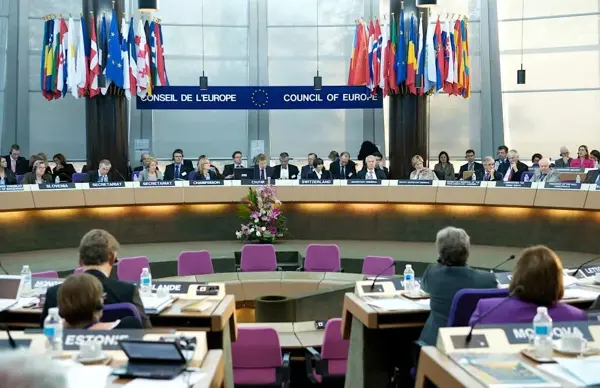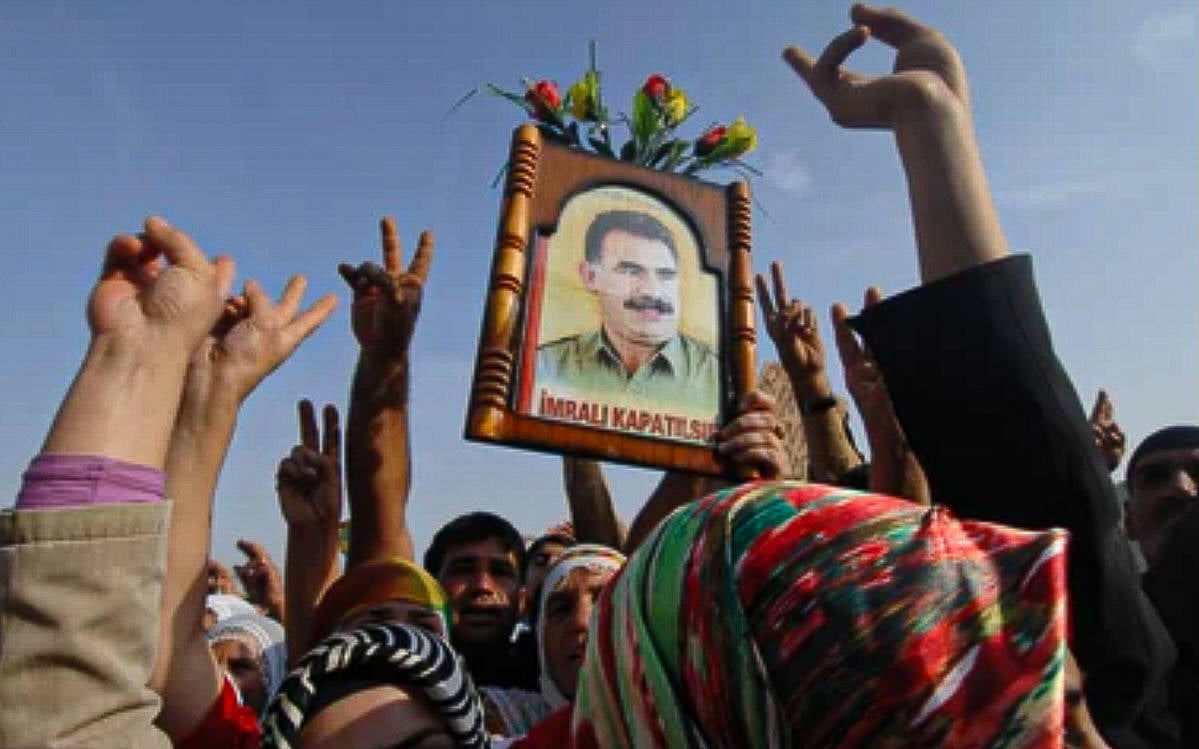



In a new action plan submitted to the Committee of Ministers of the Council of Europe, Turkey announced that it will not grant the "right to hope" to prisoners sentenced to aggravated life imprisonment, including Abdullah Öcalan, the jailed leader of the Kurdistan Workers’ Party (PKK).
The statement came ahead of a planned review by the Committee of Ministers in Sep 2025. The committee had previously announced that it would assess whether Turkey is complying with European Court of Human Rights (ECtHR) rulings concerning the right to hope for Öcalan and three other applicants, Emin Gurban, Civan Boltan, and Hayati Kaytan.
According to pro-PKK news agency ANF, Turkey submitted its new action plan to the Council on Jun 27, outlining its position on the ECtHR judgments in the four cases. Under the section titled "Conditional Release," the government described aggravated life imprisonment as “exceptional” and argued that such prisoners are not eligible for parole.
This legally rules out the possibility of conditional release for Öcalan, who has been held in solitary confinement on İmralı Island since 1999.
The issue of the “right to hope” returned to political debate in Turkey last year, when Nationalist Movement Party (MHP) leader Devlet Bahçeli suggested during a parliamentary group meeting that Öcalan could be eligible for the right if the PKK ended its armed struggle, which also marked the beginning of Turkey's ongoing new peace process.
In May, Justice Minister Yılmaz Tunç rejected this suggestion, saying in response to reporters’ questions that “such a situation is out of the question.” His remarks drew strong criticism from the pro-Kurdish DEM Party.
Turkey’s action plan was submitted in response to the ECtHR’s call for implementation of its ruling that life sentences without the possibility of release violate Article 3 of the European Convention on Human Rights, which prohibits inhuman or degrading treatment. The Öcalan case falls under what is known as the “Gurban group” of cases.
ECtHR jurisprudence
The ECtHR first established its doctrine on the right to hope in its 2013 ruling in Vinter and Others v. the United Kingdom. The court held that prisoners must have “a possibility of release and a prospect of review” during their sentence. Without this, a life sentence could amount to inhuman treatment.
Following this precedent, the court ruled in 2014 in the case Öcalan (no. 2) that denying Öcalan any possibility of parole or review constituted a violation of Article 3.
Turkey’s responses to Committee
In its reply to the Committee of Ministers, Turkey made the following points:
It stated that “no further individual measures are necessary” in the case of those sentenced to aggravated life imprisonment, including Öcalan.
The government described such sentences as “exceptional” and referred to Article 107/16 of Law No. 5275, which stipulates that individuals convicted of terrorism-related offenses are not eligible for parole.
It also said there was no need to introduce a new regulation in domestic law to accommodate the “right to hope.”
DEM Party: Right to hope not negotiable
Newroz Uysal, one of Öcalan’s lawyers and a DEM Party member of parliament from Şırnak, criticized the government’s action plan as lacking substance. Speaking to ANF, Uysal described the document, which is nearly five pages long, as “a plan that says nothing.”
She noted that while the action plan refers to a new judicial reform strategy and a new human rights action plan, it does not outline any proposals related to aggravated life sentences.
“This is a plan that offers no concrete steps, fails to meet its commitments on aggravated life imprisonment, and does not respond to the Committee’s questions. It is merely a formal procedural submission,” Uysal said.
She recalled that the Committee of Ministers had warned, “If Turkey does not take the steps we expect by September 2025 or make any concrete progress, we will prepare a draft interim resolution.”
“As we approach September, there is an action plan but no concrete proposal for change. That’s why the Committee must prepare a draft interim resolution on the Öcalan case at its Sep 2025 session and use its full diplomatic and legal leverage to press for change,” she said.
Uysal emphasized that the right to hope is not a matter that Turkey can avoid or use as a bargaining chip.
“If the Committee of Ministers acknowledges that this is a structural issue and moves beyond merely receiving formal updates, real change is absolutely possible,” she said.
“We are pursuing this effort in parliament. After all, Turkey must comply with its international obligations and the demands of the ongoing process.”
Since the PKK announced its disbanding in May in line with an appeal from Öcalan, the group has demanded its leader's physical freedom to direct efforts in the new peace process, as part of the right to hope. (AEK/VK)