



Nearly two and a half years after the Feb 2023 earthquakes devastated 11 provinces across southern Turkey, tens of thousands of residents are still living in temporary container camps.
Amid this situation, President Recep Tayyip Erdoğan revised his housing pledge in Oct 2024, updating a promise first made the previous year. The original target was 319,000 homes within a year and 650,000 in total; it was later adjusted to 450,000 by the end of 2025.
The government’s promises regarding permanent housing have drawn criticism from experts, who argue the process lacks transparency, suffers from poor planning, and fails to reflect the true situation on the ground.
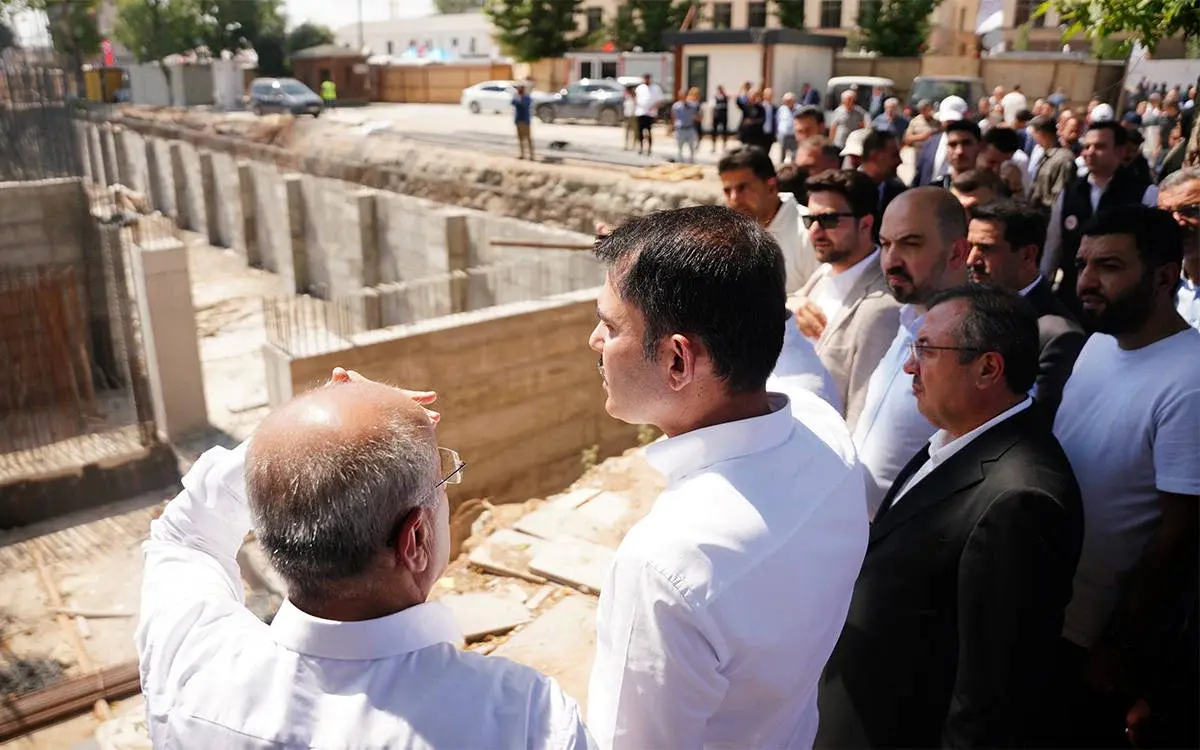
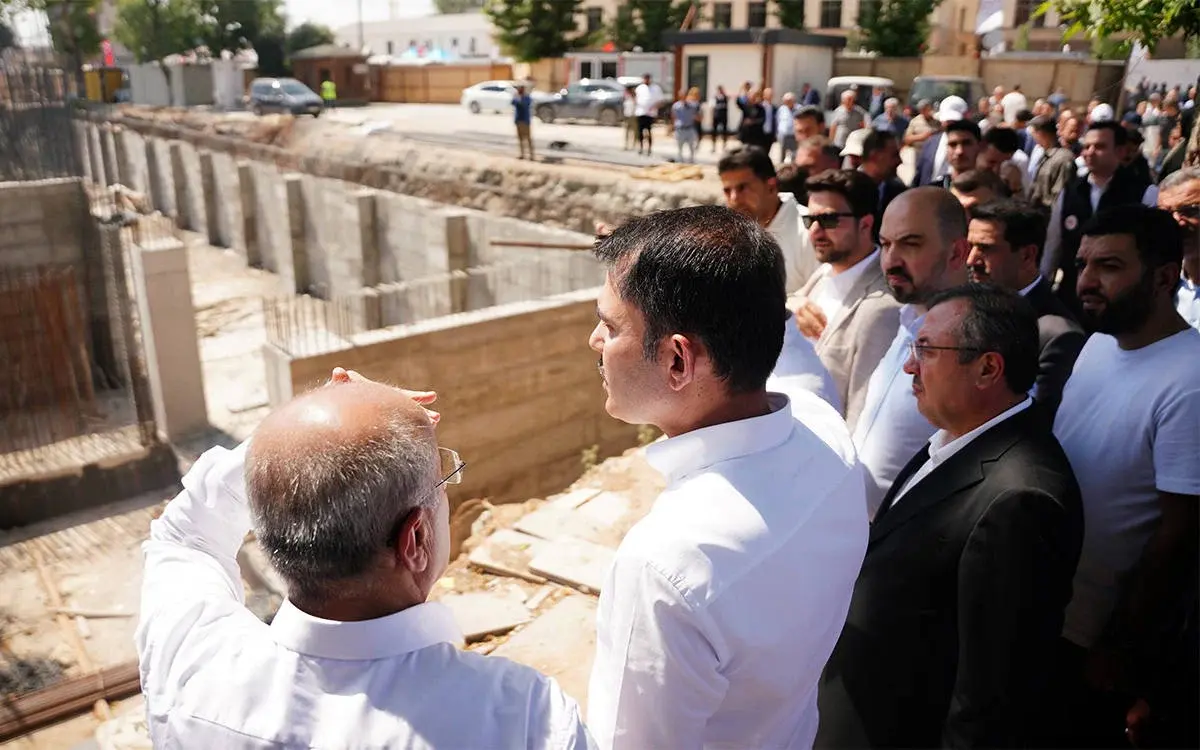
During a Jul 19 visit to Malatya, Murat Kurum, the environment, urbanization and climate change minister, expressed dissatisfaction with the pace of construction in front of cameras and issued a directive to contractors to work around the clock. “If you don’t work, I’ll do what’s necessary,” he warned.
Roughly one-third of the planned 453,000 homes in the 11 affected provinces are slated for Hatay, the hardest-hit region. Malatya is expected to receive around 79,000 units, Adıyaman 43,000, Gaziantep 30,000, with the remainder distributed among the other provinces.
Safety risks amid construction pressure
The government’s target to deliver nearly 453,000 homes by the end of the year, coupled with mounting pressure to meet deadlines, has raised concerns about worker safety and construction quality. Reports cite violations of occupational safety measures, excessive workloads, lack of oversight, and poor-quality building practices at many construction sites.
According to 2024 data from the Social Security Institution (SGK), 552 of the 1,897 workers who were killed on the job were employed in the construction sector. Of those fatalities, 119 occurred in the four provinces most severely affected by the earthquakes: 50 in Hatay, 30 in Maraş, 20 in Malatya, and 19 in Adıyaman. This means nearly one in four construction-related deaths occurred in the quake zone.
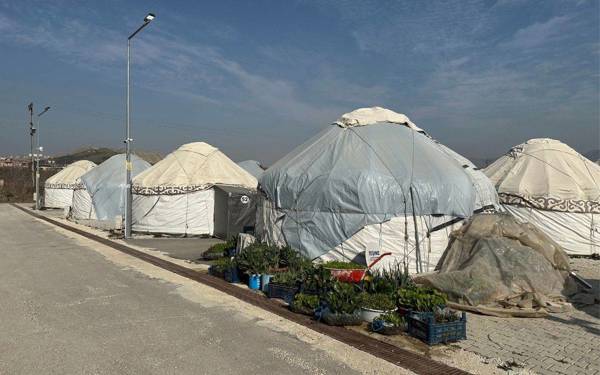
ANNIVERSARY OF FEB 6 QUAKES
The never-ending 'temporary' life in a Hatay tent city
Workplace fatalities in these provinces totaled 143 in 2023 and 57 in 2022, highlighting a sharp increase beginning in 2023.
According to a February report by the Health and Safety Labor Watch (İSİG), at least 169 construction workers died during post-earthquake reconstruction efforts—107 in 2024 and another 11 in the first 37 days of 2025.
Murat Çakır, general coordinator of the İSİG, said, “Under this kind of pressure to meet deadlines, safety measures are ignored, and workers are subjected to unhealthy and dangerous conditions. That’s what leads to so many deaths.”
Çakır emphasized the sharp increase in construction worker deaths across the earthquake-affected provinces, saying, “In the first year after the earthquakes, fatalities occurred during excavation. That trend continued into 2024 and 2025 during the construction phase.
"One-quarter of all construction worker deaths in Turkey are happening just in these provinces. That shows the sheer intensity of construction activity in the region."
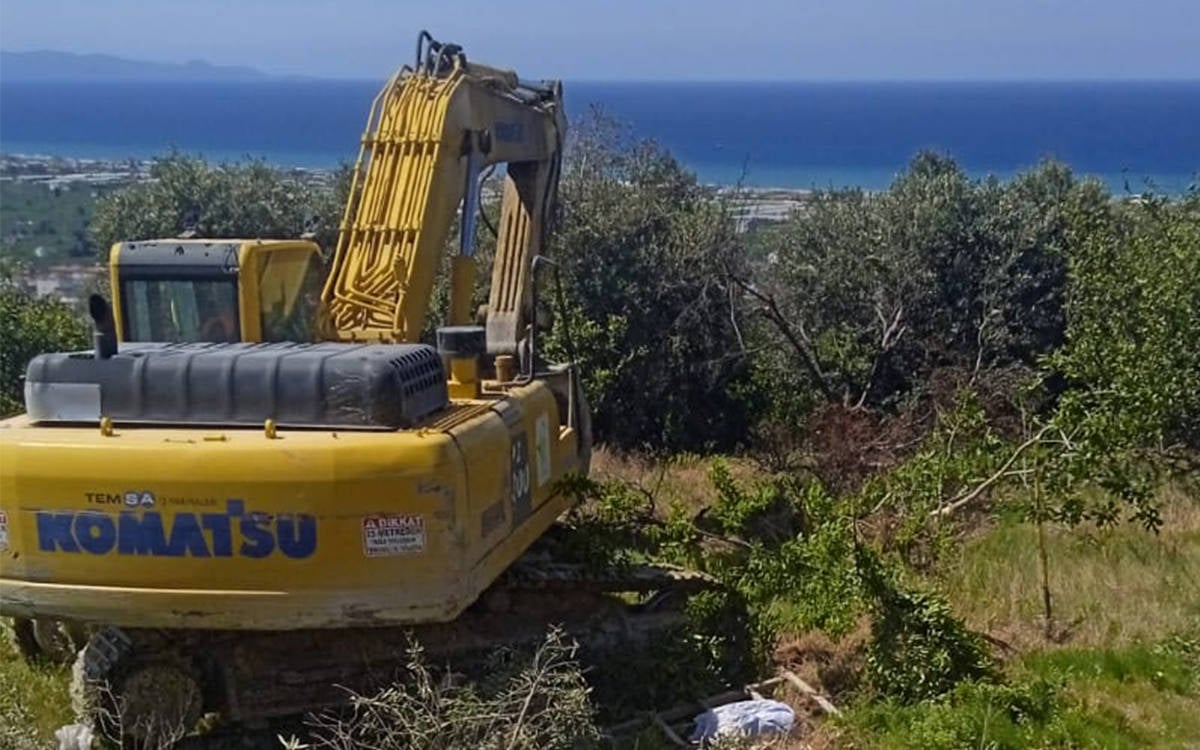
Forced land seizure in Hatay: 'We survived the earthquake, but the government is killing us'
He also pointed to SGK data showing a 10% increase in workplace accidents nationwide, with more fatalities resulting from collapses, falls from height, and even child labor.
The İSİG Assembly recorded at least 213 worker deaths in the construction sector in the first six months of 2025, with a significant portion again occurring in the quake-hit provinces.
Çakır also noted widespread unregistered labor and poor living conditions at worksites. “Workers are not getting paid. People can’t even access water. This is a clear reflection of unsafe and unhealthy working conditions."
He added that this is the first time such a high concentration of Iranian migrant workers has been observed in the region. “Workers are on 12-hour or even 14-hour shifts. Unsafe scaffolding, a lack of safety precautions, crushing injuries, truck accidents—these are all consequences of the rush to complete the work."
End-of-year goal 'unrealistic'
Nusret Suna, chair of the board of the Chamber of Civil Engineers affiliated with the Union of Chambers of Turkish Engineers and Architects (TMMOB/UCTEA), said the official statements about the housing efforts in the earthquake zone are not grounded in reality.
“So far, only about a third of the planned housing has been completed. Given the current pace, finishing the rest by the end of the year is highly unrealistic,” he said.
Suna argued that the original promise to build 650,000 homes in a short time was never feasible. “This is a matter of logistics and calculations. No matter how much funding you have, you can’t complete a poorly planned project in such a short time."
Minister Kurum’s order for round-the-clock construction was "an admission that things are not going as planned” according to Suna.
“Of course, construction can involve long hours, but what matters most is worker safety. If someone works eight hours a day, they also need eight hours of rest," he furthr said. "If you make them work overnight, you won’t be able to prevent accidents. That leads to more deaths and lowers the quality of the work. In the end, while we try to build earthquake-resistant structures, many flaws go unnoticed due to a lack of oversight.”
Planning and transparency
Suna criticized the permanent housing process as unplanned and opaque, arguing that the public deserves a transparent and realistic roadmap.
He pointed to continued use of container shelters across the region, noting field visits in Hatay and Adıyaman. “This situation is the result of a non-transparent process and unrealistic goals,” he said.
“There’s also a severe shortage of resources and skilled labor in Turkey today, from cement and iron to qualified workers,” Suna added, warning that these challenges, combined with rushed deadlines, are leading to low-quality concrete, poor formwork, and structural defects.
“If, from the start, a three-year plan had been announced and tenders arranged accordingly, many of these issues could have been avoided. Promising ‘we’ll finish by the end of the year’ has lost all credibility,” he concluded. (VC/VK)