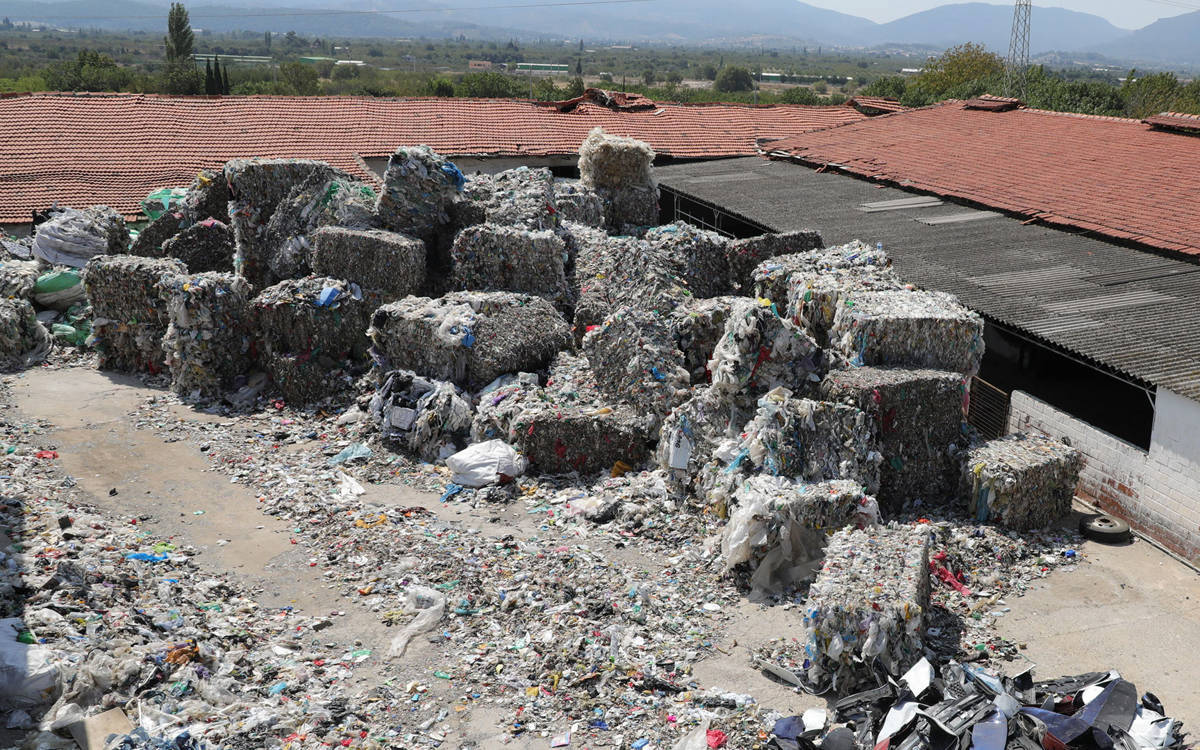




Following China's 2018 ban on plastic waste imports, European countries have increasingly turned to alternative destinations to offload their waste. Turkey has since emerged as a key route for European plastic waste, drawing growing concern from environmental groups.
According to research conducted by Greenpeace Mediterranean and its European offices, Turkey has been the leading importer of plastic waste from Europe for the past five years. Between 2004 and 2023, the European Union’s exports of waste to non-EU countries rose by 72%, with Turkey’s share seeing a significant increase during this period.
Data from the research reveals that the UK was Turkey's biggest plastic waste exporter 2023. It was followed by Germany, Belgium, Italy, and the Netherlands:
UK: 140,907 tons
Germany: 87,109 tons
Belgium: 74,141 tons
Italy: 41,580 tons
Netherlands: 27,564 tons
According to figures from Eurostat and the United Nations Comtrade database, 24% of the EU’s total plastic waste exports in 2023 were sent to Turkey. Moreover, Turkey received 56% of the EU’s plastic waste exports to OECD countries.
Toxic chemicals detected at waste sites
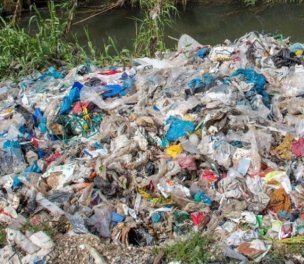
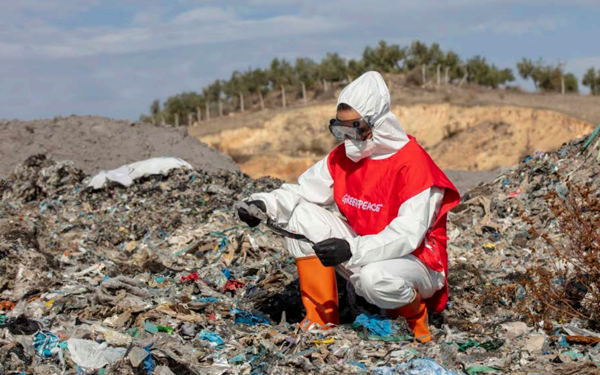
Greenpeace offices in the Mediterranean, Germany, and the UK conducted field studies in the southern province of Adana in 2020 and 2021. During the investigations, soil, ash, water, and riverbed sediment samples were collected from five different waste dumping sites.
Laboratory analyses revealed the presence of hazardous chemicals in all the samples. Greenpeace reported high levels of heavy metals and toxic organic compounds in plastic fragments. Chlorinated dioxins and furans were found in significant concentrations in both soil and ash samples. These chemicals were linked to the dumping and open burning of imported plastic waste.
Restrictions ineffective
Turkey introduced its first major restriction at the end of 2019, lowering the import quota for waste processing from 80% to 50%. In 2021, temporary bans and new regulations on plastic waste imports were enacted. Notably, polyethylene plastic imports were banned in May 2021, although the ban was reversed in July of the same year.
Despite these regulatory efforts, Greenpeace reports that plastic waste imports from the UK to Turkey in 2024 have returned to levels close to those seen in the previous year.
Global plastics treaty talks
At the INC-4 meeting held in April 2024, the Turkish delegation proposed a draft for the upcoming Global Plastics Treaty. The proposal emphasized environmental protection while calling for a gradual transition that would not obstruct international trade.
Spearheaded by the United Nations, the treaty aims to regulate the global production, use, and disposal of plastics. The European Union plans to ban plastic waste exports to non-OECD countries starting in 2026. However, as an OECD member, Turkey would not be affected by this restriction.
Citing Turkey’s role in the global plastic waste trade, Greenpeace Turkey has called on European countries to halt exports. The group pointed to ongoing issues, including environmental pollution, health risks to local populations, and the lack of transparent data on waste disposal processes.
So far, there have been no known legal investigations or sanctions in Turkey related to plastic waste imports and their management according to Greenpeace. (NÖ/HA/VK)

.jpg)