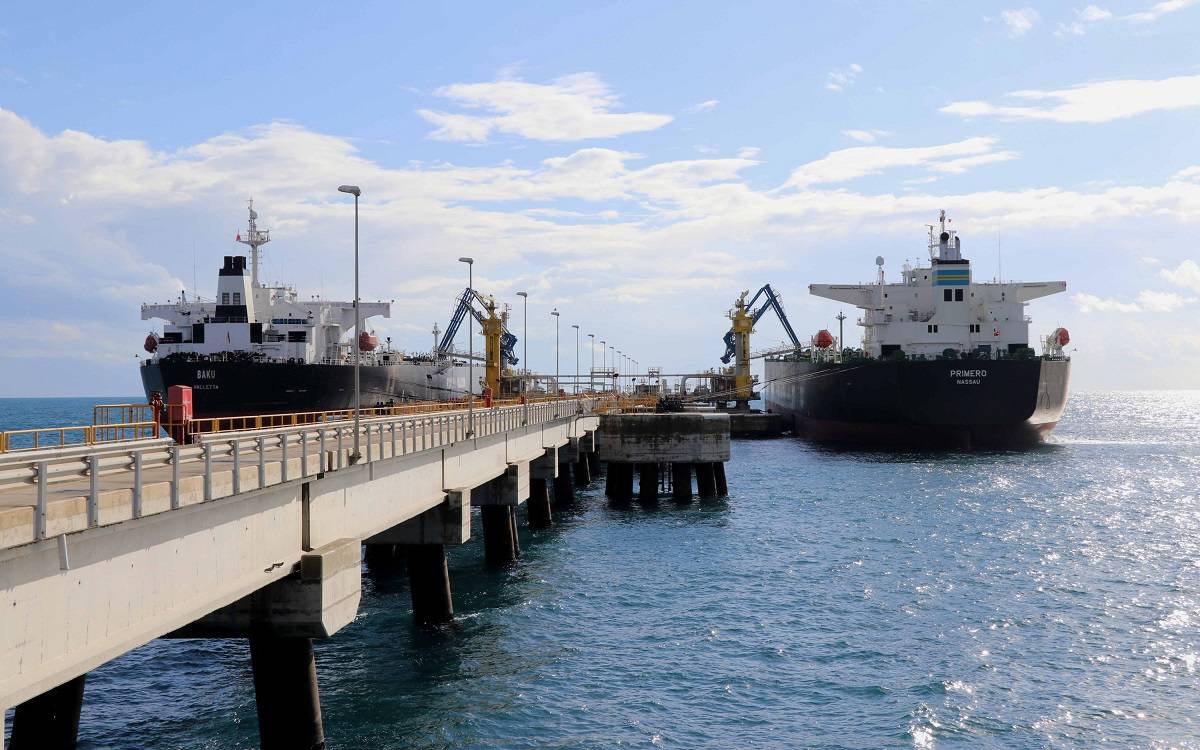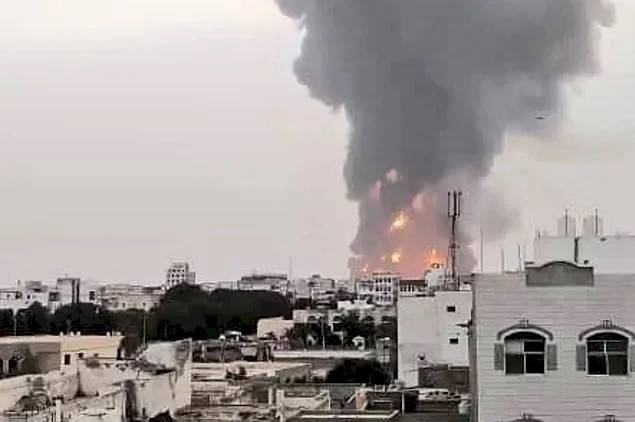




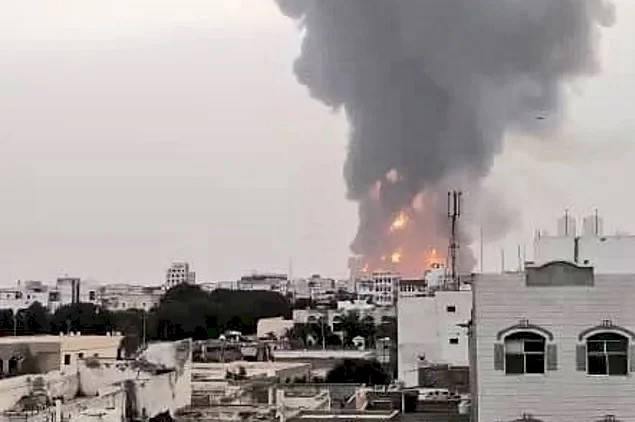


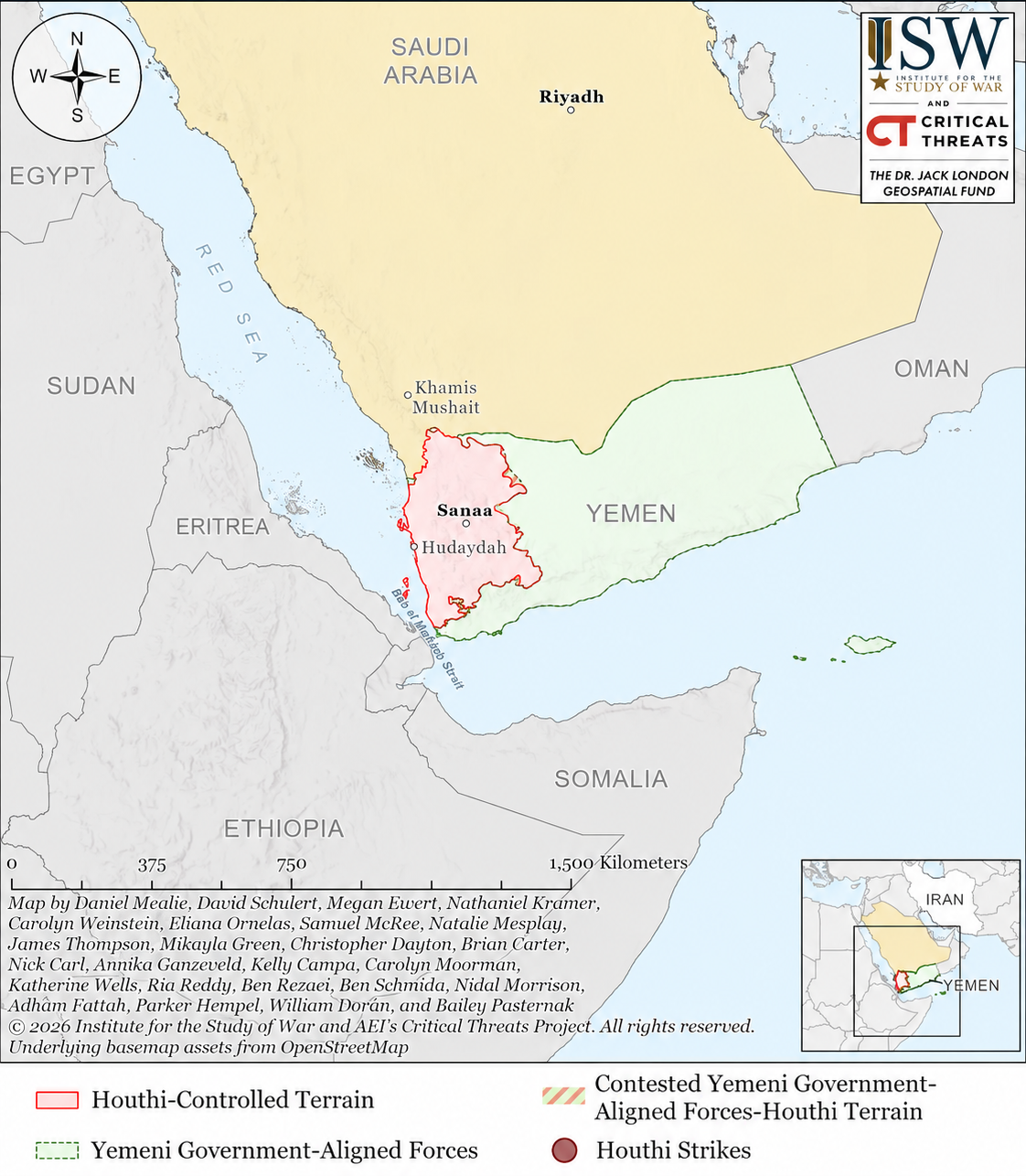
The war in Yemen between the Iran-backed Ansarallah group, also known as the Houthis, and the Saudi-backed, internationally recognized government continues to escalate. The Houthis have also been regularly striking targets in Saudi Arabia, including airports and oil infrastructure.
The 12-year war had remained largely dormant since 2021, until Saudi Arabia on Jul 13 bombed what it described as an unauthorized landing by a plane arriving from Tehran. The aircraft was carrying a delegation from the Houthi-led government in Sanaa that had attended the funeral of Iran's late supreme leader, Ali Khamenei, who was killed alongside family members and other senior Iranian officials in Israeli airstrikes on Feb 28.
In response to the bombing, the Houthis resumed strikes against Saudi Arabia as part of a campaign they call "blockade against blockade." The strikes were followed by a renewed conflict between the Saudi-backed government and the Houthis, who seized large swaths of territory in early October, effectively gaining control of Bab al-Mandeb, a strategic waterway leading to the Red Sea.
With Saudi air support, the Aden-based government reportedly recaptured some of the lost territory, though the situation on the ground remains fluid.
The escalation has raised questions about whether the trilateral collective defense pact between Saudi Arabia, Turkey and Pakistan will be invoked against the Houthis.
The Mecca pact follows a principle similar to Article 5 of NATO's founding treaty, which considers an attack on one member an attack on all. This has fueled speculation about a possible deployment of Turkish troops.
While Pakistan has reportedly joined the campaign against the Houthis, Turkish Foreign Minister Hakan Fidan addressed the speculation at an Oct 8 press conference. He said Turkey had no intention of deploying troops for offensive operations against another country. However, Turkish military officials would consider providing air defense, electronic warfare capabilities and technical support.
“But this is a defensive agreement. When a country party to the pact comes under attack, you stand by it in its defence. This is not an offensive agreement. Turkey will not send troops to another country to carry out attacks on its territory," Fidan said.
Balancing Iran
Political analyst Mehmet Akif Koç said that this is to be expected. Turkish support will likely be in an intelligence, and deterrence-based capacity, according to Koç.
Even as a NATO member, Turkey has often remained reluctant to engage in direct confrontations, he noted. Principles of collective security do not necessarily require Turkey to engage in direct warfare.
The US also had requested Turkey send troops during the US invasion of Iraq, which Ankara refused. During the US invasion of Afghanistan, Turkey did send troops, but only as military police to secure cities and regions, rather than to fight with the Taliban.
“Turkish foreign policy is not operating, is not necessitating, directly sending any troops to hot regions, but of course there are some proxy actors that Turkey may mobilize for the interests of Saudi Arabia … so that would be an option for solving this collective security article,” Koç said.
Ultimately, the pact does not indicate a significant shift in Turkey’s geopolitical maneuvering in the region, often centered on counterbalancing the influence of other parties.
Koç said that among what he calls the four major actors in the Middle East — Turkey, Israel, Iran and the Gulf Arab states, such as Saudi Arabia — Saudi Arabia is in a particularly vulnerable position right now due to its war with the Houthis. By bolstering Riyadh, Ankara will balance Israel and Iran.
“Turkey is trying to balance the power in the Middle East by leveraging, by strengthening, the Gulf Arabs against Israel and Iran in Middle Eastern geopolitics,” Koç said.
Conflicting interests
Writer and international relations analyst Aydın Sezer also noted the pact’s impact on Tehran.
“With the Mecca Agreement, Turkey has effectively positioned itself in the Gulf in opposition to Iran,” said Sezer. Although Erdoğan and Fidan frequently state that the Mecca pact is not directed against Iran, this is the reality.”
According to Koç, Iran is not a direct threat to Turkey, but does threaten Turkish geopolitical interests in the Middle East, which is why balancing Iran is important for Ankara’s foreign policy agenda. Turkish and Iranian interests often go head-to-head across the region, such as during the Syrian civil war, where Turkey supported armed opposition groups and Iran supported the Bashar al-Assad regime; in Lebanon, where Turkey supports the Lebanese state and Iran supports Hezbollah; and in Iraq, where Turkey is supporting Turkmen and Sunni Arabs, while Iran is supporting the Baghdad government and Shias.
Through strengthening Sunni-Arab and Turkish cooperation in the region, the pact will also counteract the influence of militant non-state actors, which threaten the status quo of traditional regional powers, like Turkey, Israel and Saudi Arabia. Many of these actors receive support from Iran, such as Hezbollah, Hashd al-Shaabi, Ansar Allah (the Houthi rebels) and Hamas.
Outmaneuvering Iran without total destruction
Iran expert Reza Talebi said that although a weakened Iran amplifies Turkey’s regional leverage, a total collapse would pose an issue for Ankara due to spillover across their shared border. Ankara hopes to outmaneuver Iran without direct conflict or complete destruction.
“While both Ankara and Tehran are wary of Israeli influence, the simultaneous weakening of both Israel and Iran could position Turkey as the primary alternative anchor for regional security pacts in the absence of a cohesive US strategy,” Talebi said.
Sezer, Koç and Talebi all agreed that a direct military intervention by Turkey or Pakistan is unlikely. Talebi said that it might only take place in the case of a Yemeni Houthi operation that would expand to threaten Mecca or Medina. No other event could create the necessary justification for such a large-scale intervention.
Talebi also said that Ankara’s geopolitical calculus is calibrated entirely on this delicate balance. Consequently, he does not anticipate any fundamental shifts or strategic overhaul in Iran-Turkey relations any time soon.
“While we may witness occasional tactical alignments or localized rapprochements, these will remain strictly temporary and transactional,” he said.
Koç said that historically as two regional powers with imperial legacies, Turkey and Iran have always taken great care not to get into direct conflicts with one another.
“Iran and Turkey are accepting this rivalry, but of course they are behaving wisely to find a way not to war — and Turkish and Iranian leadership are attaching importance to this,” Koç said.
Although not brokered by the United States, all three countries in the pact also maintain close ties with the US, and the alliance furthers US interests amidst its and Israel’s war on Iran. When speaking to US reporters at the White House on Oct 7 about the pact US President Donald Trump said, "I think they want to help Saudi Arabia, and I think that’s great."
Separately, Turkey has also acknowledged US sanctions on Tehran. Major Turkish carriers have halted flights to Iran, however, natural gas imports continue.
Koç does not believe that either the Mecca pact or Turkey’s application of US sanctions present a serious threat to Turkey-Iran relations as they stand. He noted that Turkey was also obligated to follow US sanctions on Iran imposed during the first Trump administration and this did not significantly strain the Iran-Turkey relationship.
The alliance may also provide much needed economic opportunities for Ankara. Talebi views the pact also through a commercial lens, rather than a strictly security-oriented one. He believes the framework will be mutually beneficial for Islamabad and Ankara. As relations grow, so will opportunities for new commerce from the Gulf Arab states.
“These three countries are aimed at expanding the framework of this pact with new commerce, especially Arab countries in the region — for their willingness also the power of this pact is important,” Koç said.
Sezer said that Turkey needs Saudi Arabian capital to attempt to solve its economic crisis. Turkey will also heavily focus on selling weapons at this stage.
“The fundamental problem in Turkey today is the need to take steps to avert the economic crisis in light of the upcoming elections,” said Sezer. “At this point, Erdoğan believes he can secure both the financial resources he needs and his legitimacy through his relations with the US." (İK/VK)