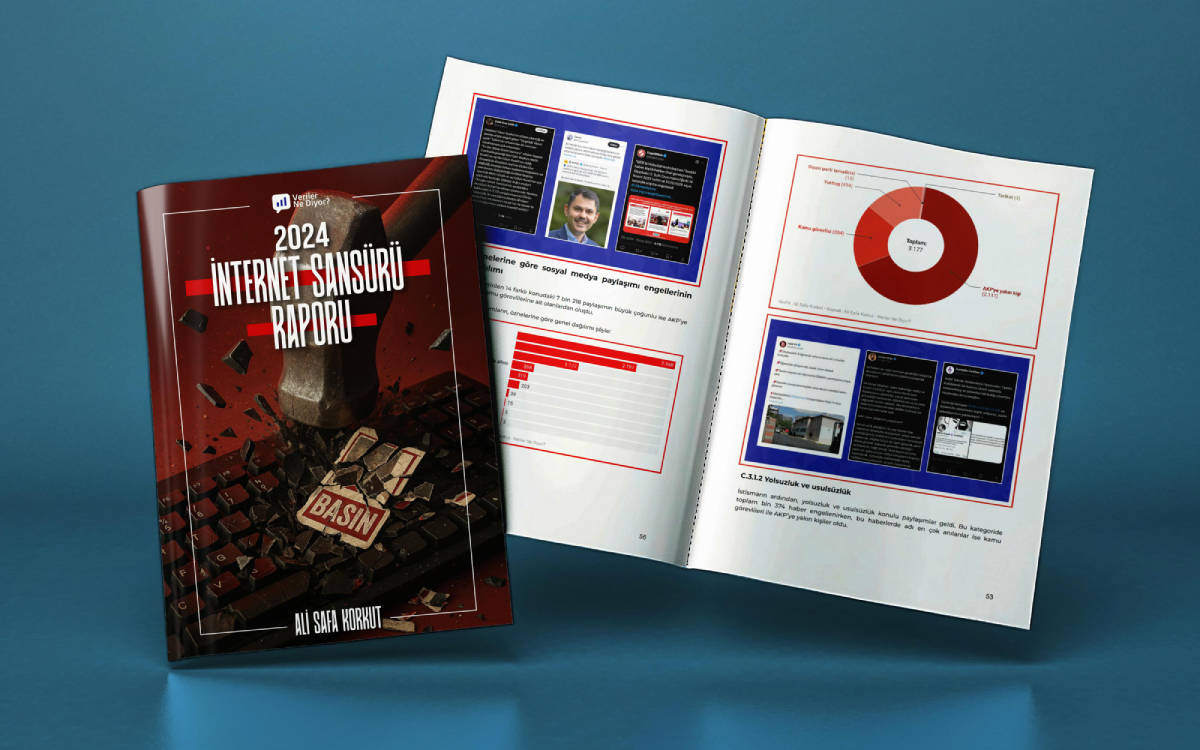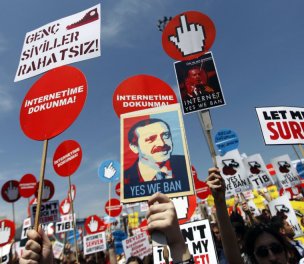



Turkey blocked access to over 311,000 web addresses last year, marking the highest annual total since the country began regulating internet content in 2007, according to a new report by the Freedom of Expression Association (İFÖD).
The figure represents a significant increase from 240,857 blocks in 2023 and 137,717 in 2022.
“Access blocking practices based on domain names continued at full speed in 2024, with numbers far exceeding the annual average,” the says the report, İFÖD’s annual series. The average number of blocked addresses per year since the enaction of the Internet Law No. 5651 2007 is around 70,250.
A total of 1,264,506 websites and domains have been blocked by 852 different authorities and courts since 2007, the report noted. In 2024 alone, the association identified access restrictions on 270,000 URLs, 17,000 X (formerly Twitter) accounts, 75,000 tweets or posts, 25,500 YouTube videos, 16,700 Facebook posts, and 16,000 Instagram posts.
Only a fraction of access bans were ordered by courts
Of the 311,091 access blocks recorded in 2024, only 938 were based on court decisions.
The majority of blocks, 254,130, or 82%, were issued by the head of the Information and Communication Technologies Authority (BTK). The Turkish Football Federation, which received blocking authority in 2021, issued 50,120 decisions. Other agencies issuing blocks included:
General Directorate of the National Lottery: 2,796
Capital Markets Board (SPK): 1,834
Penal courts and prosecutors: 938
Tobacco and Alcohol Department (Agriculture and Forestry Ministry): 768
Health Ministry: 310
Turkish Medicines and Medical Devices Agency: 132
Spor Toto Organization: 62
Advertising Board: 1
Censorship on news media
The report also examined the use of Law No. 5651’s Article 9, which allows for the removal or blocking of online news content based on personal rights violations. İFÖD found that 5,740 news URLs were subject to 803 different decisions by 257 different penal judgeships in 2024.
The news outlet with the most blocked content in 2024 was Hürriyet, with 248 news articles restricted. It was followed by Sabah with 246 and Borsa Gündem with 196.
Since 2014, courts have issued 8,793 decisions under Article 9, affecting 49,533 news articles. The number of blocked articles has increased steadily over the years, with 8,658 blocked in 2023 alone.
Although the Constitutional Court ruled on Oct 11, 2023, that Article 9 was unconstitutional, the ruling will not take effect until Oct 10, 2024. İFÖD criticized the continued enforcement of the article during this interim period.

BIA Media Monitoring Reports
“Penal judgeships have continued to issue content removal and access blocking decisions as if the provision had not been annulled,” the report said.
İFÖD warned that the continued enforcement of a law found unconstitutional amounted to a systematic disregard for the authority of the Constitutional Court and led to the institutionalization of politically motivated censorship practices.
“The extensive application of a repealed provision until its official expiration date has intensified violations of freedom of expression and press freedom,” the organization said. (HA/VK)