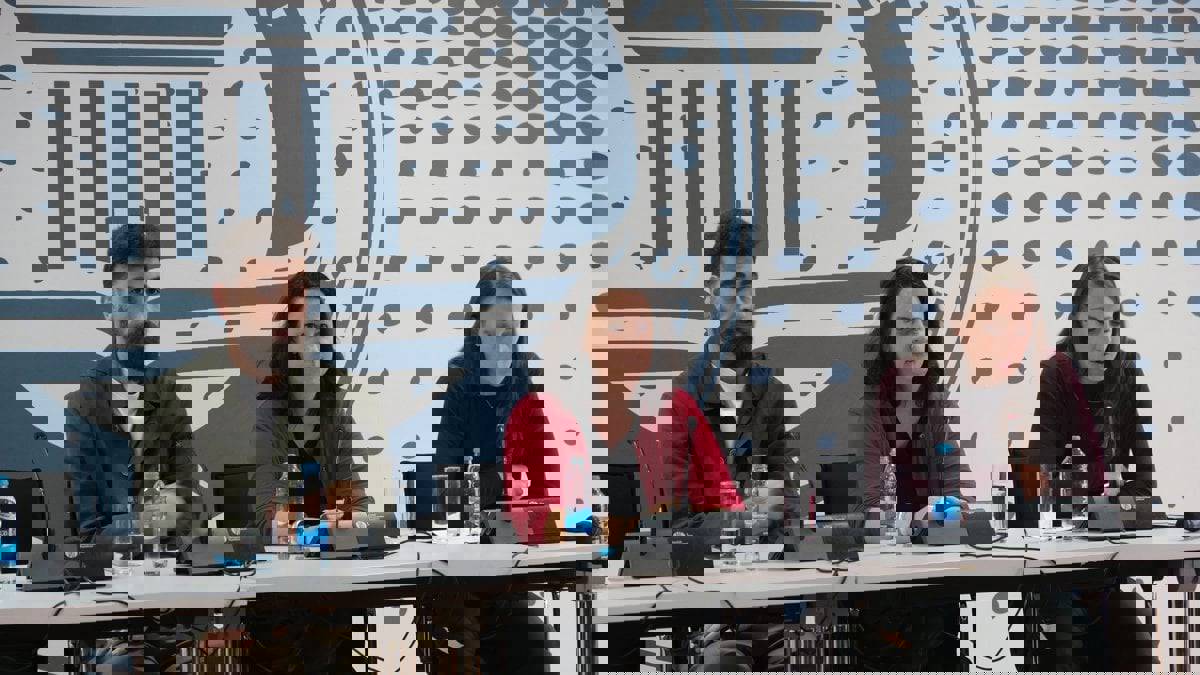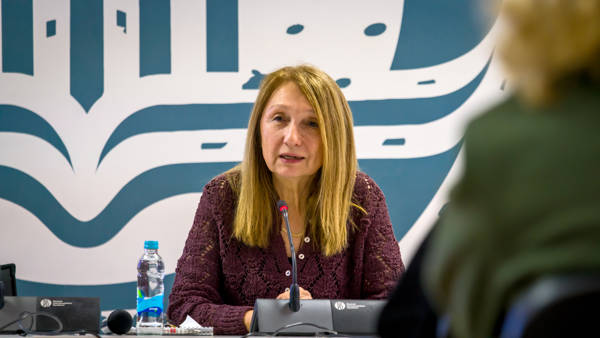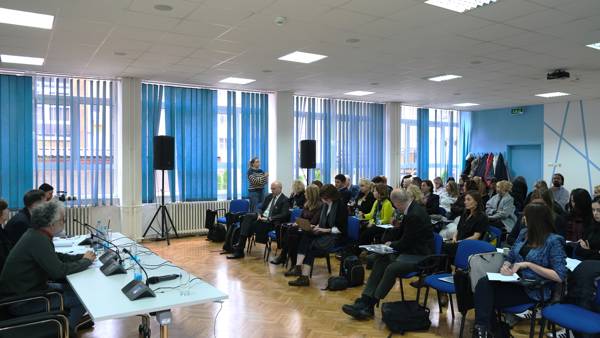

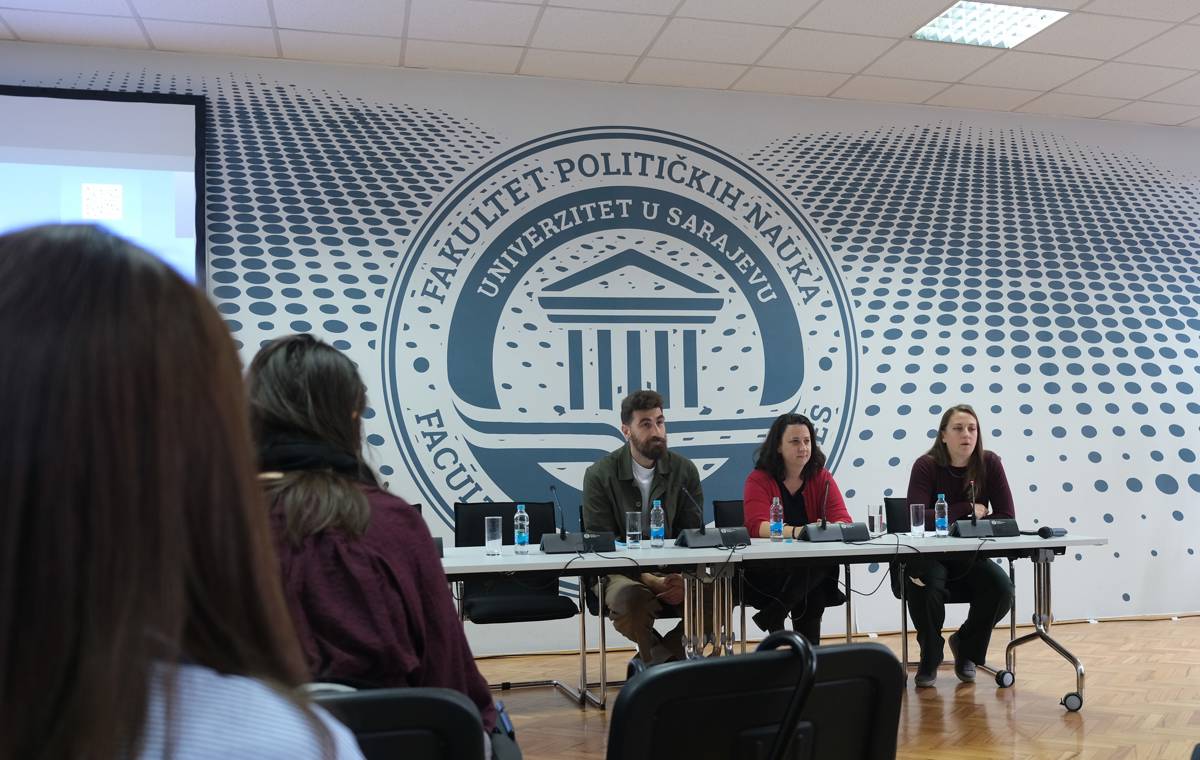



Panelists at the Our Media conference, organized by the South East European Network for Professionalization of Media (SEENPM) and Mediacentar Sarajevo, confronted the ethical and strategic dilemmas civil society faces when operating on corporate social media platforms.
In the panel titled “Fueling the machine causing issues we are fighting against - Ethical dilemma about using social media for civil society causes,” held on Oct 3 at Sarajevo University, the discussion focused on how journalists, activists, and rights organizations can navigate the tension between engaging audiences and participating in exploitative digital systems.
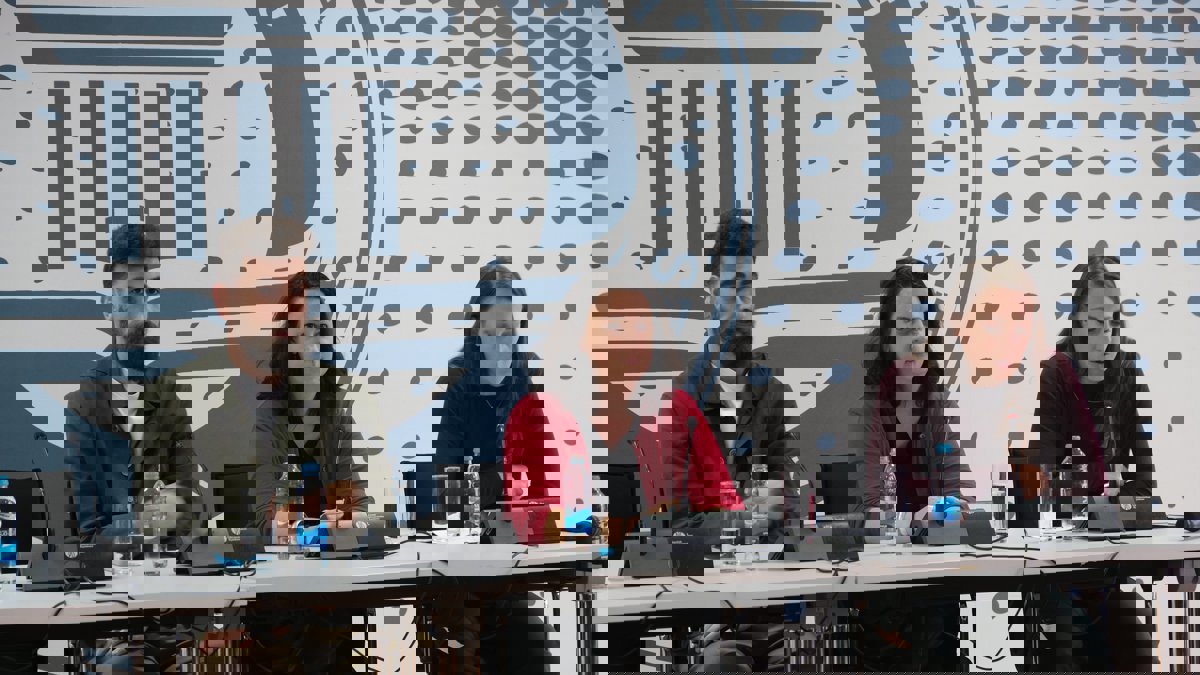
Moderated by Marina Grnja of the Novi Sad School of Journalism, the panel brought together Victoire Rio of What to Fix, a non-profit organization focusing on tech policy and accountability, Feđa Kulenović, a data and digital transformation expert from Bosnia and Herzegovina, and Rima Sghaier, a researcher and advocate for internet freedom based in Italy.

‘Our Media’ conference: Freedom of expression in times of crisis
Stay or leave?
Kulenović began by framing the core dilemma: Should journalists and media outlets remain on social platforms, or is it ultimately counterproductive? He answered, “It's both yes and no. It depends on a strategic approach to how you manage your presence.”
Abandoning these platforms without an alternative would allow them to be overtaken by "quasi-media presenting themselves as legitimate sources” and would diminish the already fragile influence of media institutions, he argued.
Journalists are already losing the “gatekeeper” role, Kulenović asserted, and politicians are increasingly bypassing them to appeal directly to audiences. “If we don't keep them in check even on social media, then it will be even worse for us. And worst of all, it will be even worse for the community we are trying to serve by creating new knowledge within that community.”
Moreover, even if media outlets stop sharing their content on these platforms, others can share or repurpose them, potentially to generate income, he said.
DIGITAL MEDIA LITERACY - 5
Transcending the boundaries of media: Appropriation of collective knowledge, transformation of labor and alternative futures
‘Media can’t win in this environment’
Victoire Rio highlighted the contrast between the purpose of journalism and structural issues embedded in social media platforms' business models, especially new monetization policies. “They're not interested in creating community or bringing information. They're interested in selling as many ads as possible,” she said.
Algorithms prioritize content designed to maximize user retention, which often means political and journalistic content is demoted, according to Rio.
“On Facebook, it used to be that you had your friends, some media pages and other sources of information you had chosen. Now over 35% or 40% of the content you see is actually unconnected,” she said. “In an ideal world for YouTube, for Facebook, for TikTok, they would love to have a situation in which they generate an AI timeline for you that is designed just for you to keep you engaged as long as possible.
“That's the ideal scenario for them. Getting content that no one really is producing, that they don't have to pay for, but that really retains you.”
With monetization models in which social media platforms distribute their advertisement income to publishers, Rio said, “they incentivize a lot of stakeholders that just push and blast content,” whose goal is to maxmize their profit by managing as many pages as possible.
Most of such content is AI-generated or plagiarized, sometimes from media outlets struggling to maintain visibility, she added.
Moreover, social media platforms treat AI-generated content pushed by such accounts the same as carefully produced journalism, she noted.
“Media can’t win in that environment because they are bound by ethical standards and can’t operate like the thousands of bot-run, AI-generated content farms,” Rio argued.
To address these issues, she urged a rethinking of how content is valued and how advertisers allocate their spending accordingly. She also pointed to new approaches such as Rappler’s community portal in the Philippines, where journalists and audiences can engage directly.
However, she acknowledged the limitations: “That’s easier for investigative outlets with low-volume output. For daily content producers, it’s much harder to maintain direct relationships”.
DIGITAL MEDIA LITERACY - 3
How to approach 'accurate' Information in the digital age
Building resilience
Rima Sghaier, who joined the panel remotely, expanded on the opaque and manipulative nature of algorithmic systems on mainstream platforms, which she said has long distorted visibility for content shared by independent media.
“Issues around organic engagement are compounded by the noise—there’s just too much of it,” she said, referring to the proliferation of content from “quasi-media” and self-proclaimed sources that crowd out legitimate journalism.
“Unfortunately, we see this universally,” she said, which makes it a challenge for people to know whether information they see is credible. “And now this has become even more challenging with the introduction of AI-generated media content,” she added.
To respond to this, Sghaier advocated for strategic digital resilience within newsrooms and civil society organizations.
DIGITAL MEDIA LITERACY - 1
Basic concepts and theoretical framework of digital media literacy
“For journalists it's important to have a strategic understanding of ethical use of social media. This includes resilience building. Everyone in the newsroom should be aware of and recognize the limitations and the harms of these platforms and build mitigation practices," she said.
Such measures include enforcing strong privacy settings, practicing digital hygiene, and ensuring backup channels for communication, especially where censorship is widespread, added Sghaier.
She also stressed the need for ethical transparency in data practices, saying “Be clear about what you collect from audiences, and ensure that they have agency in how their data is used,” she said.
Urging journalists to prioritize marginalized voices in their strategies and content, Sghaier said, “Understand how these voices are being erased or demoted. And understand how engagement algorithms and recommenders work, because that’s what’s shaping public discourse.” (VK)

The regional program “Our Media: A civil society action to generate media literacy and activism, counter polarisation and promote dialogue” is implemented with the financial support of the European Union by partner organizations SEENPM, Albanian Media Institute, Mediacentar Sarajevo, Press Council of Kosovo, Montenegrin Media Institute, Macedonian Institute for Media, Novi Sad School of Journalism, Peace Institute and bianet.
This article was produced with the financial support of the European Union. Its contents are the sole responsibility of bianet and do not necessarily reflect the views of the European Union.