








Those seeking to impose uniformity on the public in Turkey and target pluralistic media used every means at their disposal in 2025 to disrupt the public’s access to news, including interventions in the judiciary.
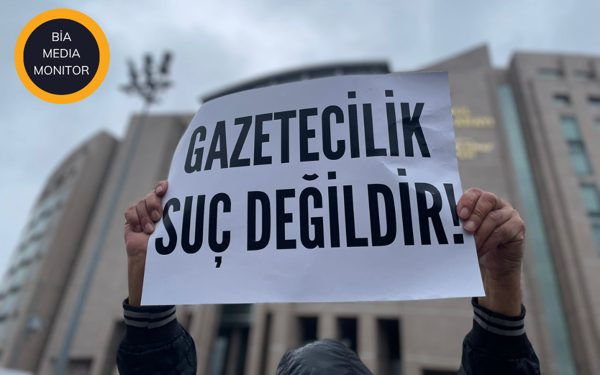
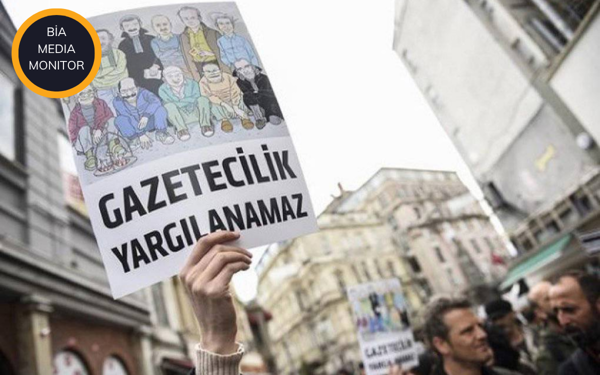
The detention of photojournalists covering the Saraçhane protests in İstanbul in Mar 2025, the imprisonment of Fatih Altaylı who was later convicted of “threatening the president,” the espionage charges against Merdan Yanardağ during the trustee appointment process to TELE1, and the arrest of Furkan Karabay, who brought allegations of unlawfulness to public attention, all occurred during a period when the government was imposing a singular public discourse.
29 arrests, 3 house arrests, 58 detentions in 2025
According to the four BIA Media Monitoring Reports published in 2025, at least 29 journalists (including Elif Akgül, Yıldız Tar, Yasin Akgül, Zeynep Kuray, etc.) were arrested over the past year, while three others (İsmail Saymaz, Özlem Gürses, Ender İmrek) were held under house arrest for months. Dozens more were subjected to judicial control in ways that violated their freedom of movement.
A total of 58 journalists, including representatives from BirGün newspaper, the Halk TV team, Medyascopetv editor-in-chief Ruşen Çakır, Timur Soykan, Murat Ağırel and Barış Terkoğlu from the YouTube program “Onlar,” Semra Pelek, and bianet editor Tuğçe Yılmaz, were either detained or forcibly brought in for questioning by the police.
28 convictions, 41 acquittals under the Penal Code and Anti-Terror Law
The Reports, which also tracked media representatives’ proceedings through local courts, appellate courts, the Court of Cassation, and the Constitutional Court, show that out of an average of 150 journalists tried annually, 28 were sentenced under the Turkish Penal Code and Anti-Terror Law to a total of 45 years, 7 months, and 26 days in prison (including 3 years, 2 months, and 1 day of deferred sentences) and a total of 52,190 liras in judicial fines, while 41 journalists and cartoonists were acquitted.
Trials against journalists covering public demonstrations for “violating the Law on Meetings and Demonstrations” often resulted in acquittals, affirming the arbitrary nature of the prosecutions.
“Insulting the president”: Two more convictions in 2025
Following the Deniz Yücel and Charlie Hebdo cases, the arrest and conviction of Swedish journalist Joakim Medin from the Dagens ETC newspaper once again brought Turkey’s “insulting the president” law to the international stage in 2025. Despite the European Court of Human Rights’ ruling against Turkey in the “Vedat Şorli” case in Oct 2021, Turkey's judiciary continued to prosecute over 20 journalists with the Justice Ministry’s authorization, and convicted two (Joakim Medin and Furkan Karabay) under Article 299 of the Penal Code. During President Erdoğan’s more than 11 years in office, the number of journalists sentenced to prison or fined (some with deferred sentences) under Article 299 has reached 80.
Penalty distribution reflects RTÜK’s partisanship
The Reports indicate that independent journalism, already weakened economically, has been further targeted with financial sanctions imposed by institutions like the Radio and Television Supreme Council (RTÜK), which is supposed to function as an “independent regulator” but is under government control.
In 2025, RTÜK imposed a total of 32,820,709 liras in fines on TV outlets for news, talk shows, and similar programs. Excluding TELE1, which had a trustee appointed, both Halk TV and Sözcü TV were brought to the brink of license cancellation. İlhan Taşçı, RTÜK member appointed from the Republican People’s Party (CHP) quota, reported that while 52 penalties were issued to critical outlets in 2025, not a single report was prepared against pro-government channels.
Broadcast bans, bandwidth throttling, news censorship, account restrictions…
Although the Constitutional Court annulled the article on “violation of personal rights” in the Internet Law No. 5651 as of Oct 10, 2024, criminal judgeships of peace continued to censor journalism content throughout 2025 by labeling at least 81 news articles and journalistic materials, whether related to “corruption” or “personal rights," as “threats to national security and public order.”
In 2025, during demonstrations held in support of detained İstanbul Metropolitan Municipality Mayor Ekrem İmamoğlu, bandwidth throttling was implemented to restrict internet access, and a broadcast ban was imposed regarding the Bolu Kartalkaya fire. Access was blocked to websites such as KaosGL, bianet, Artı Gerçek, MedyaRadar, and LeMan, as well as YouTube accounts belonging to Can Dündar and Fatih Altaylı, and X (formerly Twitter) accounts of both domestic and exiled journalists including Altan Sancar, Ali Macit, Amberin Zaman, Metin Cihan, and Erk Acarer, all on the grounds of “national security and public order.”
Turkey's media lacks 'positive regulation'
While the European Union has taken steps to promote media pluralism, public broadcasting, social media platforms, and copyright with regulations like the European Media Freedom Act (EMFA) and the Digital Services Act, authorities in Turkey have shown no initiative to regulate the journalism sector, including its dimensions involving artificial intelligence and social media platforms. After facing political and legal pressure, the media in Turkey has now been severely impacted by economic fragility. The country ranked 159th out of 180 countries in the 2025 World Press Freedom Index published by Reporters Without Borders (RSF).
Altaylı and Karabay released, Yanardağ and Aysever imprisoned
Merdan Yanardağ, editor-in-chief of TELE1, now under trustee control, has been awaiting indictment since his arrest on Oct 26, 2025, over “espionage” allegations. A criticism of right-wing politics by Enver Aysever was also cited as grounds for his arrest under the charge of “inciting hatred and hostility.” Journalist Can Taşkın, who reported on “extortion” allegations in Nevşehir, has been in detention since Sep 1. According to RSF, Turkey is among the countries where the “arrest-release” mechanism operates most rapidly.
In 2025, Justice Minister Yılmaz Tunç deflected journalists’ questions with the remark, “I can't comment, that’s up to the courts.” During the detentions of Fatih Altaylı, LeMan magazine staff, and Merdan Yanardağ, government officials made statements—both in public and on social media—that could be interpreted as attempts to influence the judiciary and intimidate the public. The year stood out for the targeting and prolonged imprisonment of journalists on unusual charges such as “threatening the president” or “espionage.”
28 journalists and two media outlets attacked
In 2025, at least 28 journalists (including Murat Ağırel and İsmail Arı) and two media outlets (Evrensel and LeMan) were targeted in physical attacks, while 10 other media representatives (such as Şule Aydın, Evrim Deniz, and Şehriban Aslan) faced threats either online or in public spaces.
Political threats and attacks against local media representatives raised concerns, while the shooting at Evrensel newspaper’s İzmir office evoked memories of the dark atmosphere of the 1990s. Women journalists continued to face gender-based attacks and threats online, often in an environment of impunity, due to their reporting and opinions.
Journalist associations called for a full investigation into all aspects of the incident involving journalist and environmental documentarian Hakan Tosun (50), who died after being assaulted in İstanbul on the evening of Oct 10, 2025.
Constitutional Court: 385,980 liras in compensation to three journalists and one outlet
In 2025, the Constitutional Court ruled in favor of Murat Aksoy, Hayko Bağdat, Hasan Cemal, Tuğçe Tatari, Aydın Gelleci, and the newspaper Evrensel in applications it deemed violations of “press and expression freedom.” The Court ordered the administration to pay a total of 385,980 liras in compensation, including legal expenses.
The Court also ordered 166,500 liras in moral damages to Merdan Yanardağ, editor-in-chief of TELE1, which had a trustee appointed, for his 100-day detention two years earlier over remarks regarding PKK leader Abdullah Öcalan. However, this ruling did not prevent Yanardağ’s re-arrest on Oct 26, 2025, on new charges of “espionage.” On the other hand, the Court unanimously rejected the application of journalist Ragıp Duran regarding the prison sentence he received for his symbolic solidarity with the newspaper Özgür Gündem.
No accountability: Mumcu murder unsolved for 33 years, Dink for 19 years
The prosecution of Oğuz Demir, identified as the person who placed the bomb under journalist Uğur Mumcu’s car on Jan 24, 1993, and reportedly sought via Interpol, continues only through the persistence of the Mumcu Family and their lawyers. In the trial scheduled to resume on Feb 9, efforts are underway to locate the bomber and his family, who are said to be in Australia, after 32 years.
Since the assassination of journalist and peace advocate Hrant Dink 19 years ago, members of the Pelitli Group in Trabzon and security officials who neglected their duties and allegedly paved the way for the murder “on behalf of FETÖ” have been prosecuted. However, no one has been held accountable for the threats and targeting Dink faced prior to his killing. Numerous public officials and local administrators who were protected during investigations, not prosecuted, or acquitted, remain subjects of pending applications before the ECtHR and the Constitutional Court.
Crisis and trusteeship in media: 70 unemployed
In a case concerning journalists’ rights, the European Court of Human Rights (ECtHR) ruled that Binali Erdoğan, a chief cameraman at state broadcaster TRT who was dismissed from public service for allegedly “insulting the president,” was entitled to 7,600 euros in compensation.
In 2025, hundreds of media workers either resigned or were forced to leave their positions under the pretext of economic crisis or restructuring. However, in circumstances suggesting political motives such as the trustee appointment to TELE1 or editorial stance, at least 70 media workers were found to have lost their jobs.
(EÖ/HA/VK)