

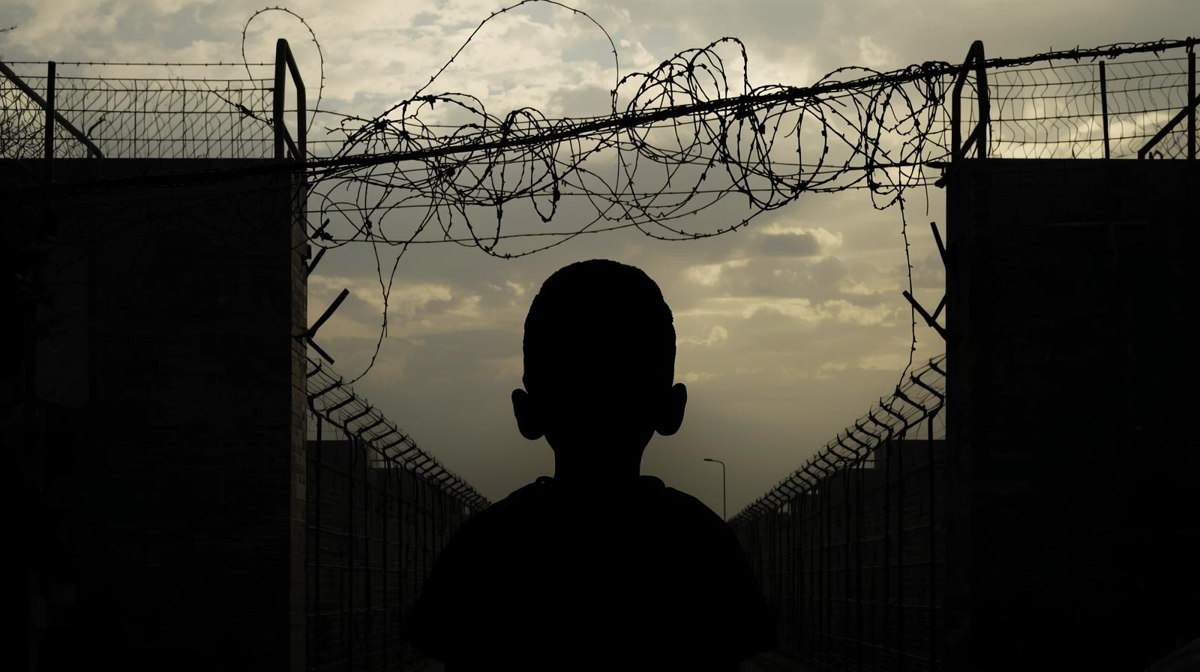


In this report, the name of the person answering the questions has been changed in accordance with the principles of privacy regarding personal information and child-focused journalism.
Juvenile delinquency, widely discussed in relation to the 10th and 11th Judicial Packages expected to be introduced soon, were debated on screens and in newspaper columns for days without being given a chance to speak for themselves. Politicians, legal experts, and journalists made various judgments about both the actions and futures of these children. Some demanded that children in conflict with the law be sent to closed prisons and that their sentences be increased, while others criticized these regulations for not protecting the best interests of the child.
We spoke with Burak, who was forced to experience what it means for a child to come into contact with crime, to enter the justice system, to survive in closed prison conditions, and to be stigmatized.
'There was no one working, we made a living through theft'
First, can we get to know you a little? What kind of home were you born into, what kind of family life did you have?
I was born in such a place that there was no family, no education, only chaos.
It wasn’t a home with any order, I can’t even call it a family, I just say that because that’s what it’s called. There was no one working, we made a living through theft. School life was irregular, the house was always full of fights and noise. My father had problems with alcohol and gambling, and my mother wasn’t in a good state either.
When I was 9 years old, the police carried out a raid in our neighborhood due to crimes like theft and extortion, in which my mother and father were also involved. Almost all the children in the neighborhood were placed in state care because their families were sent to prison. That’s how my life in the dormitory began, along with my four siblings.
I think the place you are born and your family are very important for the rest of your life.
Report highlights worsening child poverty, abuse
What kind of life did you encounter in the dormitory, and how did the process leading to prison begin?
While I was staying in the dormitory, I continued my education, I didn’t get involved in anything, my life was in order. In the last year of high school, my older sisters contacted me. They wanted me to come live with them, and since I would have to leave the dormitory soon anyway, I accepted.
One of my sisters was living through theft, she was always like that and she is still in prison. For example, if she has a 30-year sentence, 20 of those years are from crimes she committed as a minor. One day, this sister took me out saying, “Let’s go out and have fun.” About 10 days after that day, I was taken into custody and learned that my sister had stolen a mobile phone from the shopping mall we had gone to. A case was opened later on, and because I was seen with her in the store in the security footage, the judge ruled that there was “unity of intent and action” and sentenced me to 5 years in prison. But the footage clearly showed that she was the one who stole it, and it was clear that I hadn’t stolen anything.
'There is no law inside, everyone fends for themselves'
Did you go to prison immediately? What happened at the court, did you face any intervention by law enforcement while in custody?
My sentence was not finalized immediately, I was outside during this period. There is a special law for those who leave state protection upon turning 18. If you graduate from high school on time and pass the threshold with the civil service exam (KPSS), you can become a civil servant. I applied to use this right, and I was appointed to a position at a university. However, just as I was about to start working, I was sent to prison.
The court session lasted only five minutes. While I was in custody, when they walked me in front of the cameras, I covered my head with the hood of my coat. The police got angry and said, “Why are you covering your face? Didn’t we say no one is allowed to cover their face?” Then, when they put me in the car, they started hitting me.
Report highlights worsening child poverty, abuse
What kind of place is prison for children and young people, what is life like behind those walls?
I stayed in the youth ward for those aged 18 to 21. There is no law inside, everyone fends for themselves, whoever has more power prevails. In the ward, there is a representative, an assistant, and someone who watches over people like a vizier. The rest clean toilets and wash dishes. At least 20 people stay in one ward. You have to ask permission from the ward representative even to stand up, sit down, eat, or smoke.
There are white plastic chairs from the canteen that you can lean back in, but they’re forbidden because only the representative can sit on them. The others sit on stools without backrests. For example, if you forget to empty the ashtray, they beat you first, then lock you in the bathroom in the evening and make you talk to yourself in the mirror for hours. You can’t ask your family for money on visiting day, you can’t buy anything from the canteen because the canteen slips are handled by those in charge of the ward.
These bans are not imposed by the state, they are the rules of the inside. Beatings and intimidation happen in every ward... This has become the norm in youth and juvenile wards.
There is no state inside, I saw people setting each other on fire.
Poverty grips Turkey’s children amid policy inaction
'The guard only comes if your mouth and nose are broken'
Can’t you report these things to the prison guards or the administration?
Those who break ward rules are called “troublemakers.” If one rule is to ask for permission, another is not to tell anything to the guards.
They scare you from the start, saying don’t tell the guards what happens. Those who do are called “snitches.” First they beat you, then send you to another ward. There, they already know why you came, and you get beaten again. Life in prison continues with you being beaten like that.
If you get slapped or punched, the guard doesn’t intervene. But if your mouth and nose are broken, if your teeth fall out, then they come. They start a procedure, but nothing comes of it, and you are left with the beating. In short, it’s a process that only pretends to function inside.
'Is crime something a person creates, or is it the result of conditions pushing them?'
Did you see anyone continuing their education inside or was there any psychological support?
I didn’t see anyone pursuing education or anything like that. There was a prison psychologist, but they only called you once a year, whenever they felt like it, to ask “Is there any problem in your ward?” and then sent you back. Rarely, there were religious events where an imam would come.
Could the children and youth inside understand why they were there?
They take you and lock you inside, and you just stay confined for years. There is no activity to encourage you to hold on to life, no support to make you reflect on what you did, even if you committed a crime. Nothing is done to teach you why you shouldn’t commit a crime. The system just locks you up and leaves you there until you’re released, and then says, “This person has been rehabilitated.” How so? I ask you, how can anyone come out of there better under these conditions?
PARLIAMENTARY INQUIRY BY HDP
Child poverty in Turkey: ‘Meals skipped almost every day’
Then let me ask it this way: how can a person come out of there better? What impact does this approach you criticize have on children and young people inside?
Now society says, “They go in and come out worse.” Of course they do, nothing is done for them inside. Even this conversation you’re having with me right now isn’t being done by a psychologist. If the opposite were done, if support was provided inside for the person, if it were explained why a healthy individual shouldn’t commit crimes, would the result be the same? Is crime something a person creates, or is it the result of conditions that push them there? If this were studied, if 90 out of 100 people reoffend after release, maybe this could be reduced to 50. So, even if we can’t monitor a person while they’re inclined to commit a crime, at least we can prevent them from being dragged into it again.
'The child doesn’t know what they’re doing when committing the crime'
How does life continue after being released?
After being released from prison, you still carry a criminal record that follows you. You’re not hired, and after a certain point, you can’t earn money and sustain your life. A person is automatically pushed toward crime.
What you experienced in the past creates prejudice, affects you psychologically, and leads you to hopelessness about the future. Luckily, I’ve always been open to learning, I learned both the bad and the good. I want to focus on the strengths I have. I’m improving myself so as not to be a helpless person who commits crimes.

Over 800,000 children in Turkey are out of education, report finds
'Don’t give up, ever'
So how could everything we’ve talked about have developed differently? What could have changed your life’s direction?
If I hadn’t been born into that family, into that home, I would have been a different person today. If I hadn’t gone to live with my family while preparing for university after leaving the dormitory, these events wouldn’t have happened to me. Still, if they had employed me and started me as a civil servant afterward, even today, I could have been more involved in life.
I wish a system had been developed on this issue. What really matters is identifying and preventing children at risk of committing crimes, but I know that’s very difficult, because at that moment, the child doesn’t know what they’re doing, they can’t ask for help. This issue should be viewed in two stages; can we identify the child before they commit a crime, and if they’ve already committed one, how can we support and transform them?
Children or young people who are going through what you experienced in your childhood might read this interview somewhere. What would you like to say to them?
If they’ve gone through similar things as I have, I want to say this: don’t give up, be open to learning—never give up. They should improve themselves. Even if everything is really bad, they should learn something from that moment and take the necessary lessons. In Silivri, in a ward for 50 people, we were only two who read books. To anyone who’s going through or has gone through these difficulties, I say this: even if one day they can just tell their own stories, that’s a good thing.
In numbers: Juvenile delinquency in Turkey
According to the Turkish Statistical Institute (TurkStat) 2024 data, the number of incidents involving children brought to or arriving at security units increased by 9.8% compared to 2023, reaching 612,651. A 13% increase was recorded in just one year.
The number of children pushed into crime in Turkey has doubled rapidly over the past 10 years. In 2022, more than 200,000 children were pushed into crime. Between 2010 and 2022, the number of children in conflict with the law rose by 148%. Two out of three of the alleged crimes were assault and theft.
According to data from the Justice Ministry, 63,712 children were convicted last year, while 32,236 were acquitted.
The report titled “Monitoring Group Study on the Right to Education of Child Prisoners” by the Turkey Foundation for Children in Need of Protection (TCYOV), the FİSA Child Rights Center, and Social Work Specialist Dr. Emrah Kırımsoy, included data from the General Directorate of Prisons and Detention Houses.
According to this data, as of Nov 3, 2025, there were a total of 4,682 children in penal institutions. When analyzed based on status and gender, significant differences emerged:
By status:
→ Number of detained children: 1,233 (26.3%)
→ Number of convicted children: 3,449 (73.7%)
By gender:
→ Number of boys: 4,488 (95.9%)
→ Number of girls: 194 (4.1%)
The data indicate that the number of boys is approximately 23 times higher than that of girls.
By institution type:
→ Number of children in open penal institutions: 464 (9.9%)
→ Number of children in closed penal institutions: 4,218 (90.1%)
The current statistics show how many children are in open and closed penal institutions, but do not provide any breakdown by age within either institution type.
(NÖ/VK)