









Tensions are mounting at the COP31 climate summit in Antalya, Turkey.
When European Commissioner for Climate, Net Zero and Clean Growth Wopke Hoekstra was asked at a press conference around 2 pm local time (GMT+3) what progress had been made in the negotiations, his response revealed just how complicated the situation had become.
“It’s hard to say where we’ll be in 48 hours,” he said.
When he added, “If there is going to be a deal,” alarm bells began to ring.
Earlier in the day, civil society organizations had sharply criticized countries obstructing the negotiations, particularly the European Union (EU).
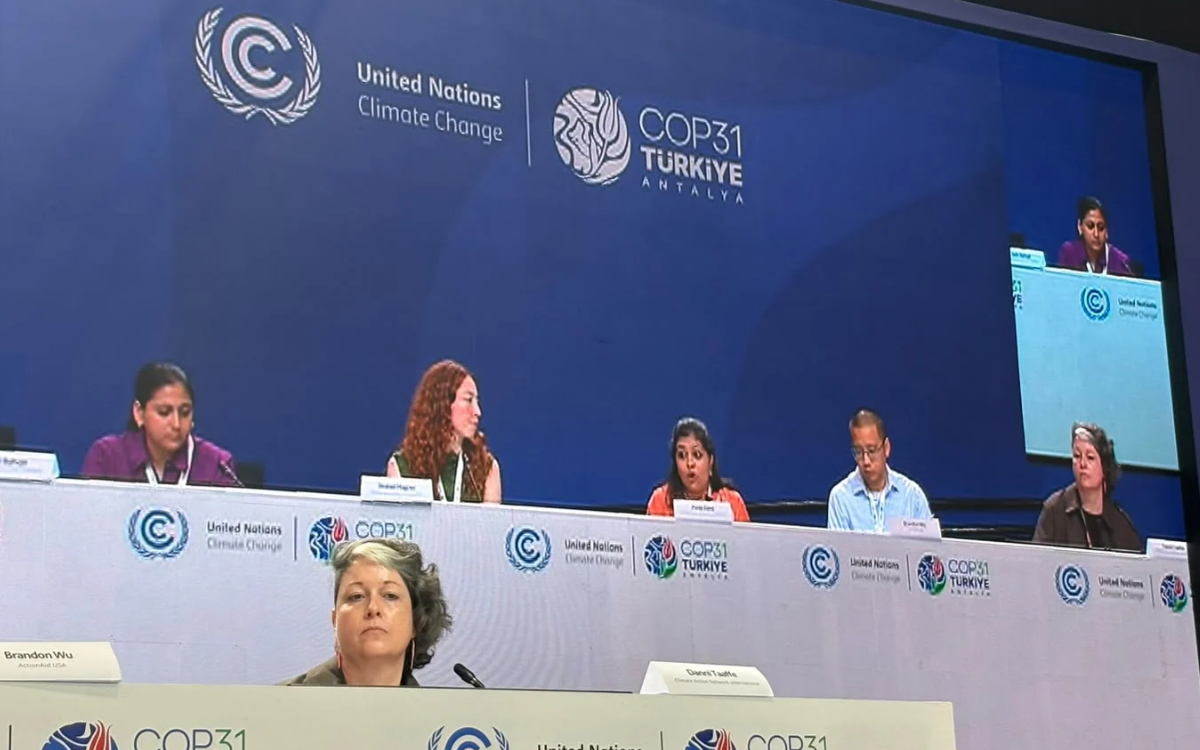
Brandon Wu, director of policy and campaigns at ActionAid, compared COP31 in Antalya to the disappointing climate summit in Baku.
“Finding a solution looks somewhat difficult. We are seeing major setbacks on climate adaptation finance and just transition,” he said.
Wu said the EU was leading efforts to block progress on both issues.
“We are at a complete impasse on adaptation finance. Once again, developed countries led by the EU do not want to discuss the transition period they agreed to last year. Once again, developed countries led by the EU are opposing the idea of a just transition mechanism they agreed to last year,” he said.
“So this is becoming something of a familiar pattern. They spend the next few years undermining what they have already agreed to.”
Wu also pointed to what he described as maneuvers intended to divert attention during the negotiations.
He noted that the electrification announcement contained no safeguards to ensure that new electricity generation would come from renewable sources or that energy would reach communities rather than data centers.
“You are playing with our lives”
Pooja Dave, adaptation lead at Climate Action Network International, accused developed countries and the EU of failing to meet their climate finance commitments.
“You are playing with our lives,” Dave said.
She compared their contributions to the Adaptation Fund to a drop in the ocean.
“You made a promise, you made a commitment, and now you are breaking that commitment. You are pledging only 50 million US dollars. That is not even 25 percent of the agreed resource mobilization target for the Adaptation Fund,” she said.
“At the same time, you are blocking any discussion of tripling adaptation finance, a commitment that was already agreed upon last year at COP30.”
“If you are not going to commit today to the finance you agreed to years ago, to your responsibility for the harm you have caused, and to repairing that harm, when will you make that commitment?”
According to Dave, the only way to ensure that adaptation measures are implemented on the ground is to provide sufficient public, grant-based adaptation finance without relying on loans.
“The only way we can ensure that adaptation actually happens on the ground is by providing adequate adaptation finance that is grant-based, publicly funded and no longer includes loans,” she said.
Dave argued that developed countries must first commit to at least tripling adaptation finance, with the increase implemented before 2035.
The amounts being discussed at the negotiating table were also deemed insufficient in the United Nations Environment Programme’s 2026 Adaptation Report.
The report found that even if the COP30 commitment to triple adaptation finance were fulfilled, it would cover only 20 to 29 percent of actual adaptation needs.
Dave concluded her remarks at the press conference with a direct message to the EU.
“In conclusion, I have a clear message for the EU. When you historically colonized us, you deprived us of our resources. Do not deprive us of our right to survive, because adaptation is a right, and we have the right to a climate-safe future.”
Negotiations remain deadlocked
The draft framework decision released earlier this week failed to produce a breakthrough in the negotiations.
The COP31 presidency is expected to release a more streamlined version of the draft either this evening or tomorrow morning.
A press conference by COP31 President of Negotiations Chris Bowen, scheduled for 1 pm local time (GMT+3) tomorrow, is expected to provide an important indication of the direction of the talks.
Watch the recording of the press conference.


