





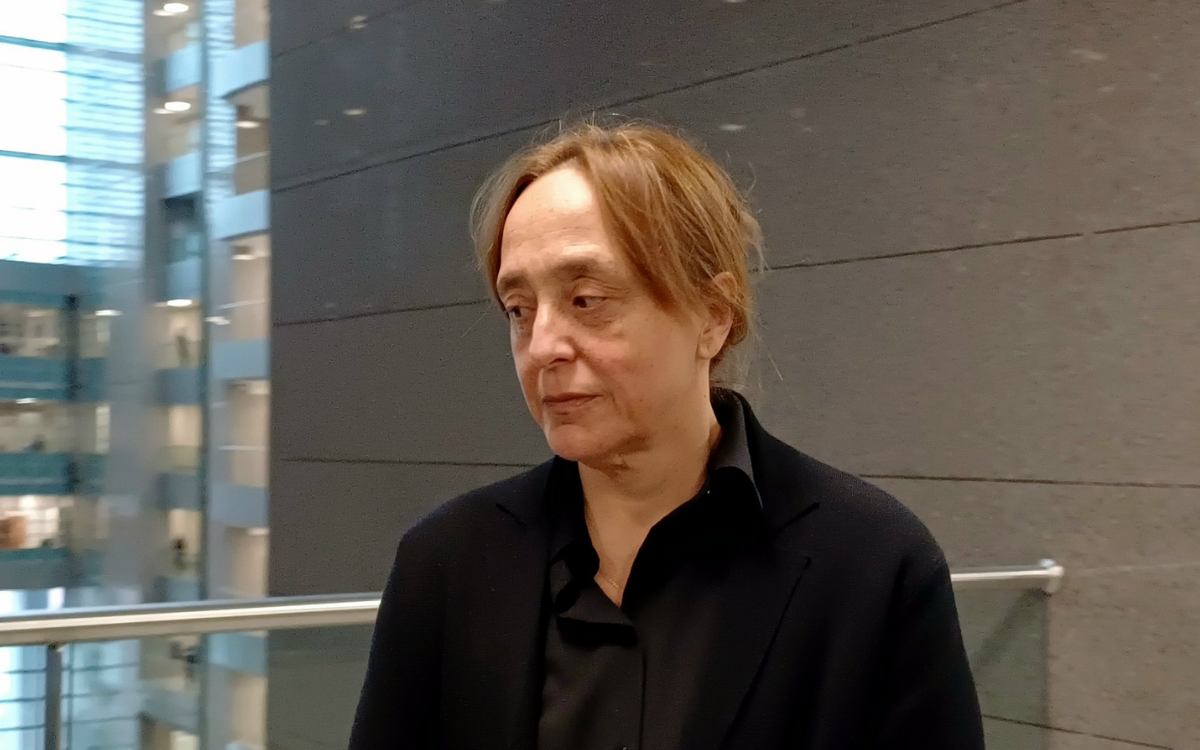



The İstanbul 26th Heavy Penal Court today sentenced talent manager Ayşe Barım to 12 years and six months in prison for "aiding an attempt to overthrow the government of the Republic of Turkey" during the third hearing of her case.
The prosecutor had requested aggravated life imprisonment in the formal opinion, accusing Barım of "attempting to overthrow the government." The charges involve allegations that Barım directed actors under her management to participate in the Gezi Park protests, the massive anti-government protests in 2013.
Barım addressed the prosecutor's opinion during the hearing. "Since 2025, I have been going through a process unlike anything I have ever experienced in my life. I did not direct my actors to Gezi Park. I have never been a political person," Barım stated as reported by the Media and Law Studies Association (MLSA).
Mentioning her health issues and previous surgeries, Barım added, "I am innocent. I am a woman who is loyal to her country and tries to fulfill her civic duties. I have worked my entire life. I expect a decision from you that protects my right to life."
'Trying to prove a negative'
Defense lawyer Sedat Özyurt told the court that the defense was in the position of "trying to prove a negative."
"We are trying to prove that the defendant, who did nothing, did not commit a crime. According to the Constitution, there can be no crime without a law. There is an allegation of an unlawful crime within this case file, and the opinion is not based on any evidence," Özyurt said, citing Article 38 of the Constitution regarding the principle of legality in crimes and punishments.
Özyurt argued that the elements of force and violence required for the charge were not proven. He stated that the artists went to Gezi Park of their own free will rather than on Barım’s instructions. "The defendant has no actions involving force or violence; she has no actions or social media posts praising force or violence. Likewise, the actors of ID İletişim have no actions involving force or violence or any words praising them," the lawyer said.
Özyurt also reminded the court that actors Halit Ergenç and Ceyda Düvenci had met with then-Prime Minister Recep Tayyip Erdoğan at the time. "Even if Ayşe Barım had sent them there, this situation shows that those who attended the meeting established contact with the country's elected prime minister within the scope of democratic solution processes," he stated.
'No joint autorship'
The lawyer further noted that no "joint authorship" relationship had been proven between Barım and Osman Kavala, Can Atalay, or Çiğdem Mater, who were convicted in the main Gezi trial. "Joint authorship requires each of the perpetrators to establish joint functional dominance over the act. This element does not exist and has not been proven. In this concrete case, there are no facts indicating the defendant wanted to overthrow the Republic of Turkey," Özyurt argued. He noted that Barım had actually advised Mehmet Ali Alabora against publishing a press release of unknown content, suggesting she offered no encouragement for the protests.
Lawyer Aslı Kibar pointed out that the Court of Cassation had previously acquitted Mücella Yapıcı, Hakan Altınay, and Yiğit Ali Ekmekçi in the main Gezi trial, re-evaluating their actions under Law No. 2911 on Meetings and Demonstrations. Kibar argued that Barım should also be acquitted in line with that decision, noting Barım only visited the Gezi Park protests once for professional reasons.
Defense lawyer Deniz Ketenci criticized the evidence, stating the investigation began with a tip-off that lacked any proof of a crime. "Mr. Judge, you asked the informant yourself. The informant said they wrote what they read on social media in the report and did not know Ayşe Barım. When asked about their motivation, they replied, 'I did it with civic sensitivity.' Furthermore, the witness claimed to have no criminal record, but their records surfaced."
Conversations with Kavala and Mater
Regarding phone conversations and HTS records involving Osman Kavala and Çiğdem Mater, both convicted in the Gezi case, Ketenci explained they were professional in nature. Barım spoke with Kavala a year after Gezi regarding an after-party for a Fatih Akın film screening at Kavala’s Cezayir Restaurant, while her contact with Mater was related to Mater's role as the coordinator of the Boğaziçi University Mithat Alam Film Center. Ketenci noted these records were not even included in the main Gezi trial.
In her final statement, Barım said, "I agree with my lawyers' statements and request my acquittal."
Following a break until 2 pm, the court announced its verdict. The judges initially sentenced Barım to aggravated life imprisonment for "attempting to overthrow the Government of the Republic of Turkey by using force and violence."
The sentence was reduced to 15 years because the act remained at the "aiding" stage, and was further reduced to 12 years and six months due to a good conduct adjustment.
The court also ruled that Barım, who is receiving treatment for an illness, will remain under judicial control measures in the form of a ban on traveling abroad. (AB/VK)