










A woman who sought asylum in Switzerland from Turkey, O.A., is pursuing a legal battle in both countries over allegations of physical, psychological, and economic abuse by her husband, as well as claims of child abuse.
Swiss courts confirmed the father's tendency toward violence and findings of abuse against the children. Nevertheless, the court ruled for the mother and her three children to be returned to Turkey.
Following the decision, Swiss authorities began preparations for the family's return. Plane tickets were purchased for early March. O.A. argues that returning to Turkey with her children would expose them to a serious security risk.
Abuse allegations
O.A. left Turkey with her children using a travel consent letter provided by her husband for a trip to Albania. She later entered Switzerland and applied for asylum.
In Switzerland, experts conducted separate interviews with the children. During these sessions, the 11-year-old son stated that he had been sexually abused by his father. Experts noted that this allegation required further investigation. O.A. said she learned about this claim during the expert evaluations in Switzerland.
Another child in the family attempted suicide in Turkey due to psychological abuse. This incident was officially recorded, according to reports.
bianet is Monitoring Male Violence
Violence confirmed but no ‘grave danger’
A local court in Switzerland, followed by the Federal Supreme Court, acknowledged the father’s violent tendencies and the children's fear of him. However, the courts rejected the asylum claim, citing the existence of domestic violence protection mechanisms in Turkey.
The ruling did not stipulate that the children would be handed over to the father, emphasizing that custody is shared between both parents. The court found that returning to Turkey did not meet the threshold of “grave danger.”
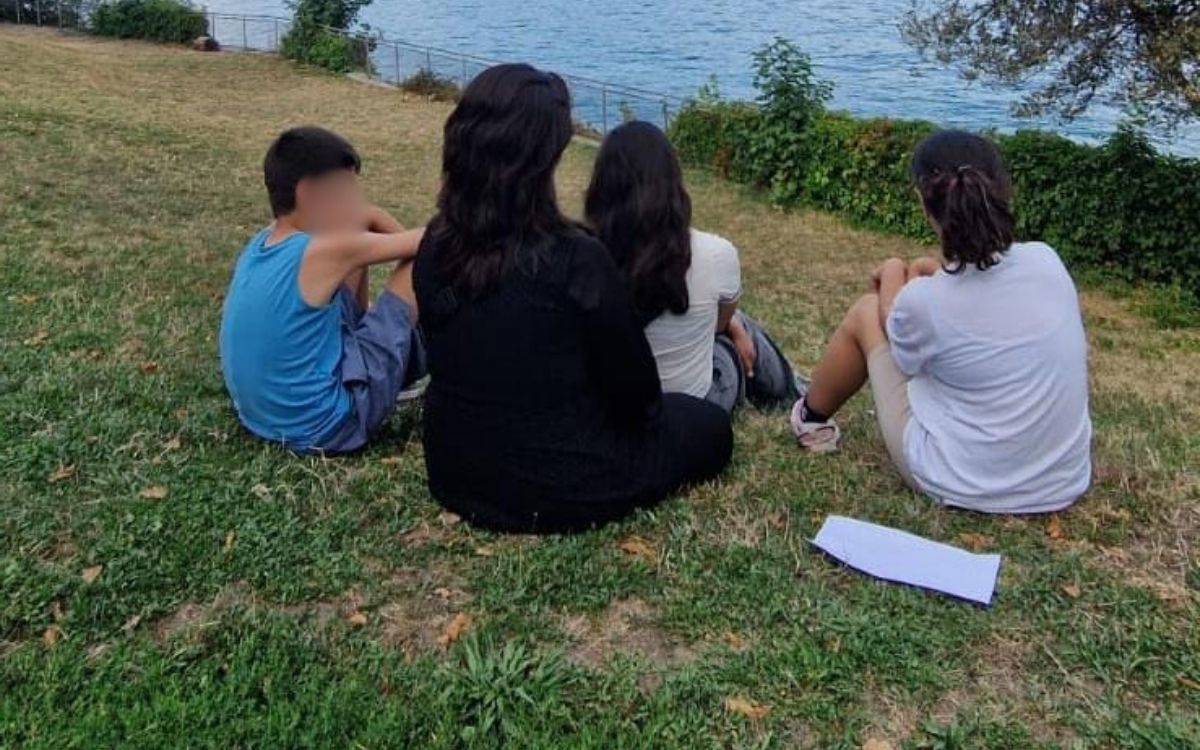
After the ruling, O.A. was barred from taking the children out of Switzerland. She is now required to take them to a police station once a week to confirm their presence in the country. “If we return to Turkey, our lives will be in danger. We have no safety,” she said.

Women in Turkey say their most important problem is 'violence'
Lawsuits in Turkey
O.A.’s lawyers filed a divorce case and sought sole custody of the three children at the Orhangazi Family Court in Bursa. The court requested a social assessment report, but the family's presence abroad complicated the process.
Meanwhile, the father filed a criminal complaint claiming the children had been “abducted.” However, the Bursa Chief Public Prosecutor’s Office dismissed the complaint, citing the father’s written consent for international travel.
The prosecutor also sent a letter to O.A.’s father stating that authorities should be notified if the mother and children return to Turkey and that they would be provided protection. This development coincided with the Swiss court’s argument that Turkey has protection mechanisms in place.
O.A.’s lawyers presented the Swiss court’s findings of violence and abuse as evidence in the Turkish family court and requested interim custody. The Orhangazi Family Court denied the request.
‘I might lose access to my children’
O.A. is asking authorities to block her return to Turkey, grant her sole custody of her children, and lift the international travel ban placed on them.
“My concern is not financial comfort, it’s our safety,” she said, adding that her husband could use his connections in Turkey to harm the children and prevent her from ever seeing them again.
She claims that her husband previously sent threatening messages and that some relatives pressured her not to disclose the sexual abuse allegation. According to her, her 11-year-old son refuses to see his father and has called him a “pervert.”
‘This ruling is contradictory’
Legal experts following the case say the Swiss court's decision to approve the return despite recognizing evidence of violence and abuse is contradictory. They argue that while the ruling cites Turkey’s protective mechanisms, it does not sufficiently prioritize the principle of the best interest of the child.
They also point out that the sexual abuse claim was clearly recorded during expert interviews with the child, and that it was noted as a matter requiring further investigation.
Swiss authorities plan to finalize the return process in early March. Legal efforts continue on behalf of O.A. and her children. A potential interim custody decision by a Turkish family court could significantly affect the ongoing legal process in Switzerland.
Lawyers criticize Swiss court
The family’s lawyers strongly criticized the Swiss court’s decision. They stressed that protecting women and children should not be left to the discretion of a single country.
“Protecting children and women is not an optional responsibility to be fulfilled upon request by individual countries. This duty must be claimed on behalf of the entire world. Legal professionals, the media, and advocates for human and women’s rights must uphold this principle,” they said, adding that the court contradicted its own findings.
According to the lawyers, the Swiss court confirmed both the father's violent tendencies and signs of abuse. Yet, it ruled for return, claiming there was no “grave danger,” which they find unacceptable.
“If a court acknowledges violence and abuse but denies the right to asylum, that’s a major contradiction. These findings should have been sufficient to provide humanitarian protection. The court chose to overlook them,” they said.
‘Protection is not enough’
The lawyers also criticized the reasoning that Turkey has protection mechanisms in place. Referring to the prosecutor’s letter promising protection upon the family's return, they argue this does not guarantee actual safety.
“Sending a letter that says ‘notify us, we’ll provide protection’ does not ensure real security. Assigning two officers at a police station does not eliminate the risk of severe violence. We all know that femicides continue despite protection orders,” they said.
They pointed out that in some cases, perpetrators have committed suicide or escalated to more serious crimes, emphasizing that “placing a police officer next to someone is not always sufficient. The risk remains.”
‘Politicization’ concerns
Legal experts believe the court's decision may have a political undertone rather than being purely legal.
“A judge’s duty is to rule based on law, not the political climate of the country. In this case, the court acknowledges the abuse but still orders the return. This raises questions about whether Switzerland’s judiciary has become politicized,” they said.
They also detected an implicit reluctance in the ruling: “The subtext of the decision seems to say, ‘We don’t want to open this door.’ There’s a concern that accepting this application might lead to an influx of women and children fleeing violence in Turkey,” they argued, stressing that this is incompatible with universal legal principles.
‘The best interest of the child was not protected’
Lawyers emphasized that the sexual abuse claim came not from the mother, but from the child's testimony during expert interviews in Switzerland.
“Before leaving the country, the mother was speaking about physical and psychological violence. But the sexual abuse claim emerged during expert sessions in Switzerland. This was not something she alleged—it was a professional finding. That alone should have triggered protective measures under the best interest of the child,” they said.
The lawyers also questioned whether the public and judiciary would have reacted differently if the same allegations had been made by a Swiss woman.
“Violence against women and children is a universal problem. It knows no borders. A country cannot avoid responsibility simply by saying ‘we have legal mechanisms.’ The best interest and right to life of the child must come first.” (EMK/VK)
Note: We reached out to the children's father. He denied the allegations and said he did not want the story to be published.