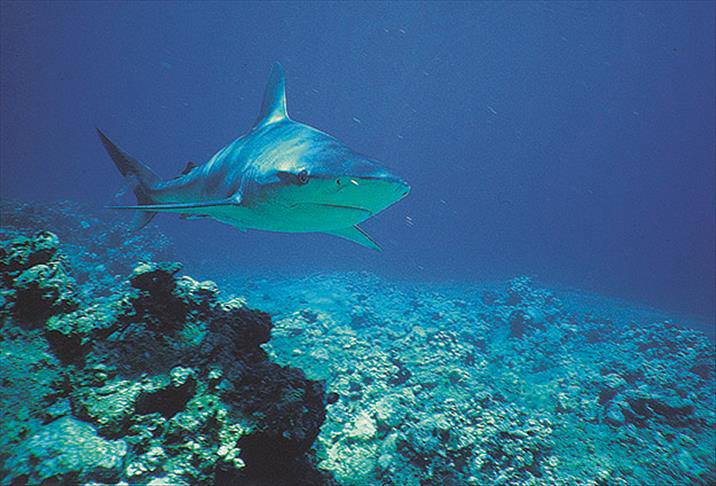






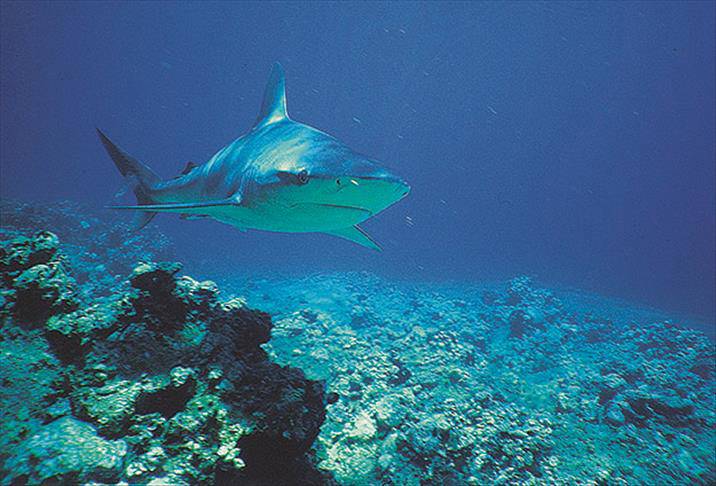



Shark sightings in the Sea of Marmara have been on the rise recently, with social media users sharing footage of sharks caught in fishing nets or spotted near beaches. Counterintuitively, this increase does not indicate a growing population but rather a declining one, according to decade-long research.
Prof. Firdes Saadet Karakulak, head of the Department of Fisheries Technology at İstanbul University, who leads the research, said due to oxygen depletion in the sea, particularly in its deeper layers, deep-sea species are forced to move closer to the surface.
“Oxygen levels have begun to drop more significantly in the three deep-sea basins of the Marmara Sea. As a result of these oxygen declines, marine life is now under stress,” she explained to Anadolu Agency (AA). “Sharks, which should be found in deep waters, are now emerging from depths of 1,000 meters and moving toward the coastal continental shelf.”
“And this leads to more interaction with fishers and people,” she added.
Sharks are seriously endangered both globally and in the Sea of Marmara, the professor said, noting that “it is essential that they are not hunted and that their habitats are also protected.”
Experts warn of impending 'disaster' in Marmara Sea due to oxygen depletion
Protection of sharks
More than 70 species of sharks inhabit the waters of Turkey’s surrounding seas, and nearly 30 of them are protected, according to Prof. Karakulak. However, the same level of protection does not apply to their habitats. In the Sea of Marmara, three deep basins where sharks typically live are used as sewage discharge zones. This means that wastewater from a region home to roughly one in every three people in Turkey flows directly into the deep layers of Marmara.
The Sea of Marmara is a small, enclosed body of water bordered by some of Turkey’s most densely populated and industrialised provinces, including İstanbul. Its limited circulation makes it especially vulnerable to pollution.
Over time, this pollution, combined with warming waters and weak currents, created the conditions for a major ecological crisis.
Mucilage problem
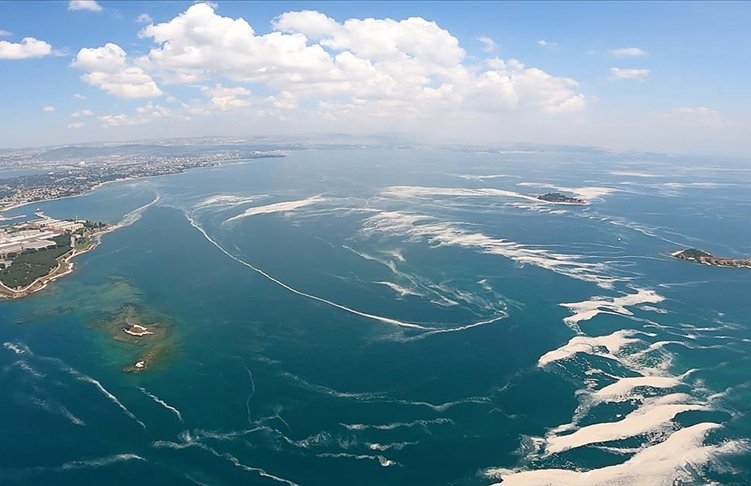
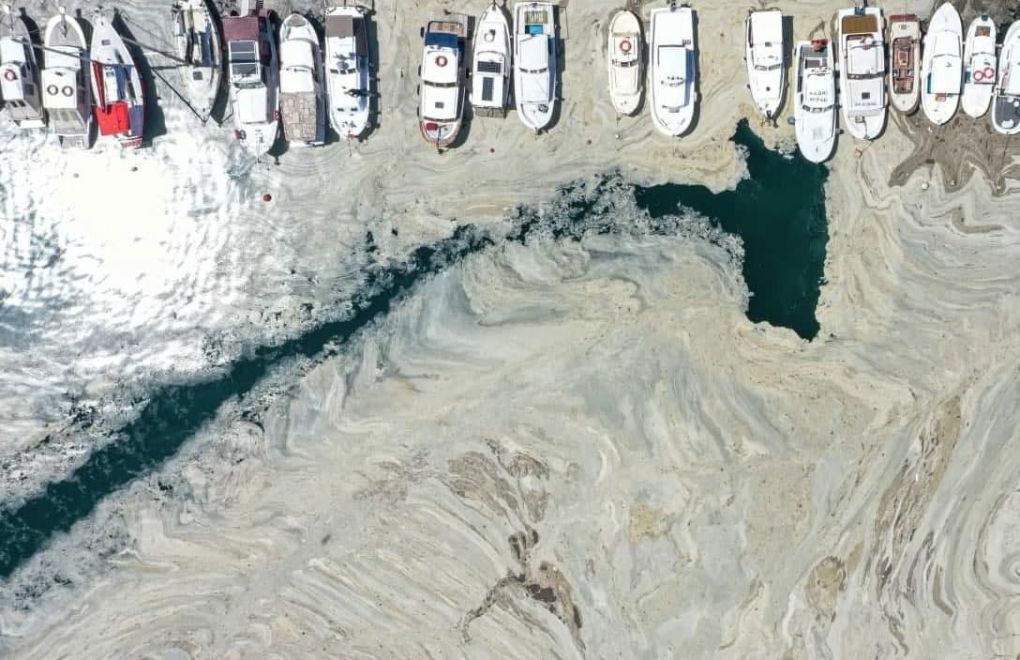
In the first half of 2021, the sea was hit by a massive outbreak of marine mucilage, also called “sea snot.” Mucilage is a thick, sticky substance formed by the excessive proliferation of organic matter and microorganisms in the sea, and is triggered by factors like rising sea temperatures, stagnant water movement, and a surplus of nutrients like nitrogen and phosphorus. I
t covers the sea surface and floor, suffocating marine life and damaging coral colonies, which are vital for maintaining the ecosystem underwater.
Industrial waste directly discharged into Sea of Marmara 'to protect Ergene River'
Marine scientists report that oxygen levels below 30 meters are now critically low, with Prof. Dr. Mustafa Yücel describing the sea as being in a “comatose state,” and too low to support most marine species. At depths of 150 to 200 metres, there is almost no oxygen left. Light penetration has dropped, disrupting photosynthesis and worsening oxygen loss, resulting in unsurvivable conditions for fish.
This hypoxia is now forcing larger species like sharks into shallower waters. As oxygen disappears from the depths, these animals move closer to the surface, becoming more visible, not because their numbers are rising, but because their habitat is shrinking.
Experts warn that this is a sign of ecological collapse. As Prof. Mustafa Sarı, an academic observing Marmara, put it, “we are facing the consequences of an improper relationship.” Earlier this year, he warned that mucilage had come back, albeit not on the surface.
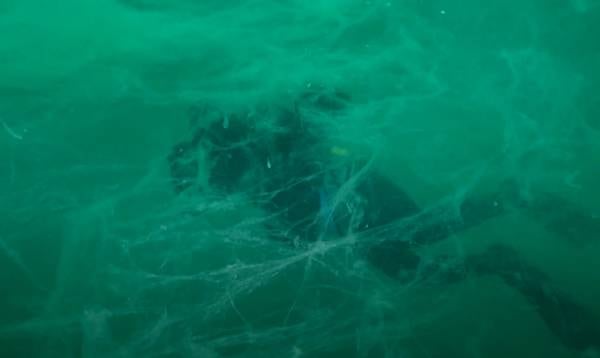
Underwater video reveals return of 'sea snot' in Marmara Sea
Sharks are especially vulnerable in this scenario; they grow slowly, reproduce infrequently, and cannot quickly recover if their populations decline, according to Prof. Karakulak. The degradation of coral beds, which often serve as shark breeding grounds, only worsens this situation, triggering a chain reaction that pushes this already fragile species closer to danger.
During the 2021 outbreak the Environment, Urbanization, and Climate Ministry released the 22-point “Marmara Sea Action Plan” as an emergency response to the severe mucilage outbreak and aimed to curb pollution through measures like wastewater treatment upgrades.
However, four years later, the results are limited. Mucilage is returning, and deep-sea oxygen levels remain dangerously low. Only a small fraction of wastewater upgrades have been completed, and many cities have missed targets. (LÖ/VK)